On this page
At an accounting firm of a few hundred people, the week goes to the same jobs: keying client receipts and bills, closing each client's books, working the firm's inbox, running tax season through a portal and answering tax questions.
The five tools below each take one of those jobs, chosen from what accountants run and talk about. None of them does the work between them, which is what we build at Qvery.
1. Dext: Receipt and Bill Capture
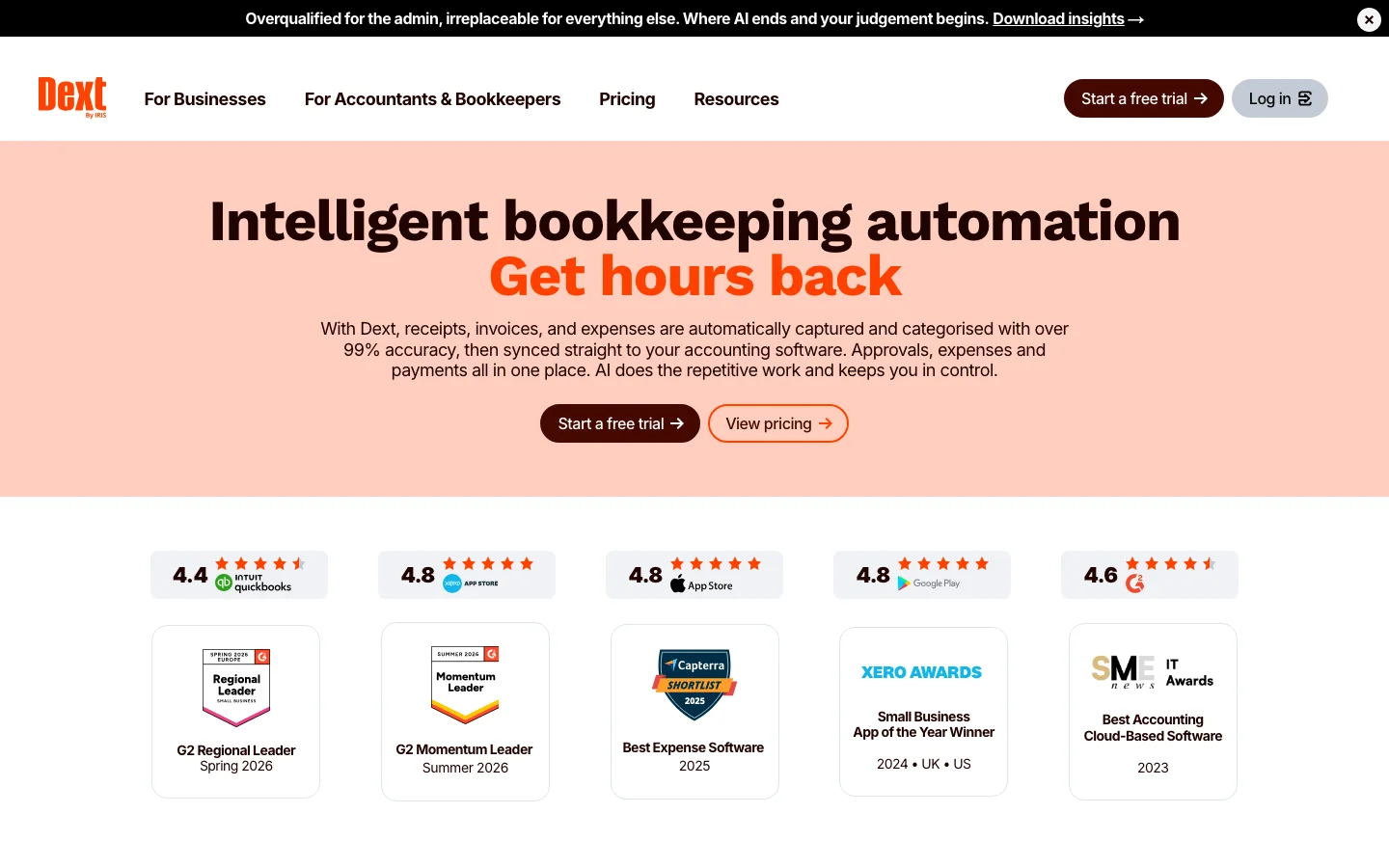
Dext takes the keying out of bookkeeping: what clients photograph, email or upload lands in QuickBooks or Xero already coded.
- Receipts, bills and invoices captured from photos, email and uploads
- Supplier rules that carry the account, tax rate and class every time
- Line-item extraction where you switch it on
- Publishing straight to QuickBooks and Xero
What Reddit says
63.5 / 100
26 independent mentions in 10 threads, 13 vendor posts set aside
Yep, you got it. It's our source of truth. We process around 7k documents per month. Without it, I'd probably shut down the firm lol it's how we do our data entry week to week.
Dext absolutely for automating the data entry side. You setup rules for vendors and assign GL or item cost codes and classes if that's applicable, and mark if you want auto-line item extraction.
Dext can get clunky once you're dealing with lots of POs and line items. Lightyear or AutoEntry handle matching and extraction better.
Pros
- A capture tool many bookkeepers already run
- Supplier rules carry the coding on every document
- Priced per client, built for practices
Cons
- Some users find it clunky with many purchase orders and line items
- A 10-client minimum
- Capture only: the reconciliation and the close are another tool's job
2. Double: The Monthly Close
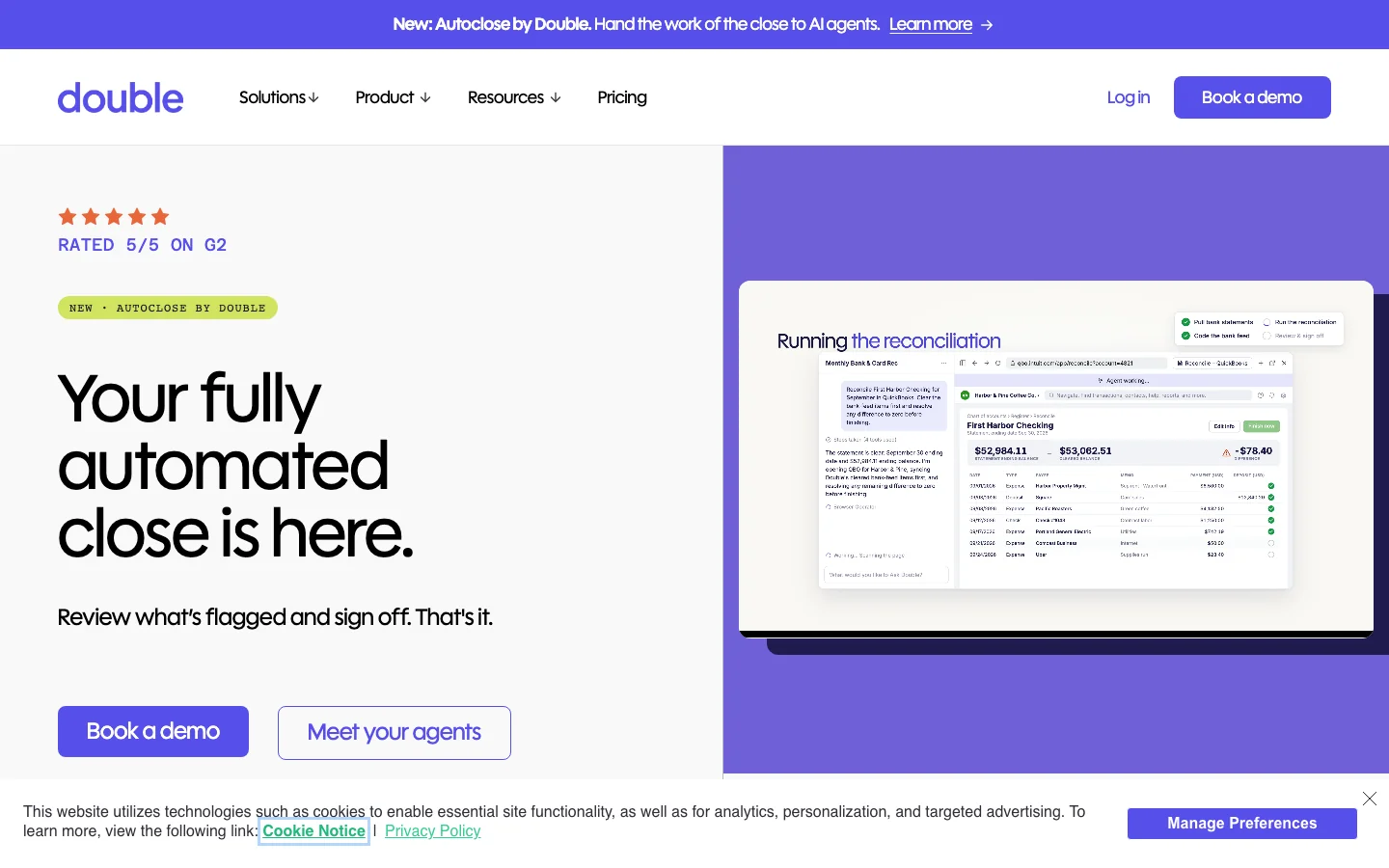
Double, called Keeper until its rename, runs the monthly close for each client, with the portal and the close tasks in one place.
- AI categorization on the bank feeds
- AI journal entries and bills
- Flux analysis and one-click financial summaries
- AI reconciliation fixes on the Plus and Scale plans
- Autoclose, its newest agent, for the close as a whole
What Reddit says
69.6 / 100
23 independent mentions in 7 threads, 1 vendor post set aside
I run a firm with over a hundred clients and have been using Double for a year and a half. I could not run my company without it.
I switched from Asana to Double (used to be called Keeper). I absolutely love it for client management and closing tasks.
My biggest complaints are their file storage system. It works fine for sharing documents with clients and attaching work papers to tasks but I cannot use it beyond that. I really wish they would integrate with Google Drive.
Pros
- The close, the client portal and the tasks in one place
- Unlimited users; you pay per client
- The highest Reddit score in this list
Cons
- Per-client pricing climbs quickly past the first tier
- File storage too thin for some firms
- Fits bookkeeping work better than a tax-heavy practice
3. Karbon: Email and Firm Workflow
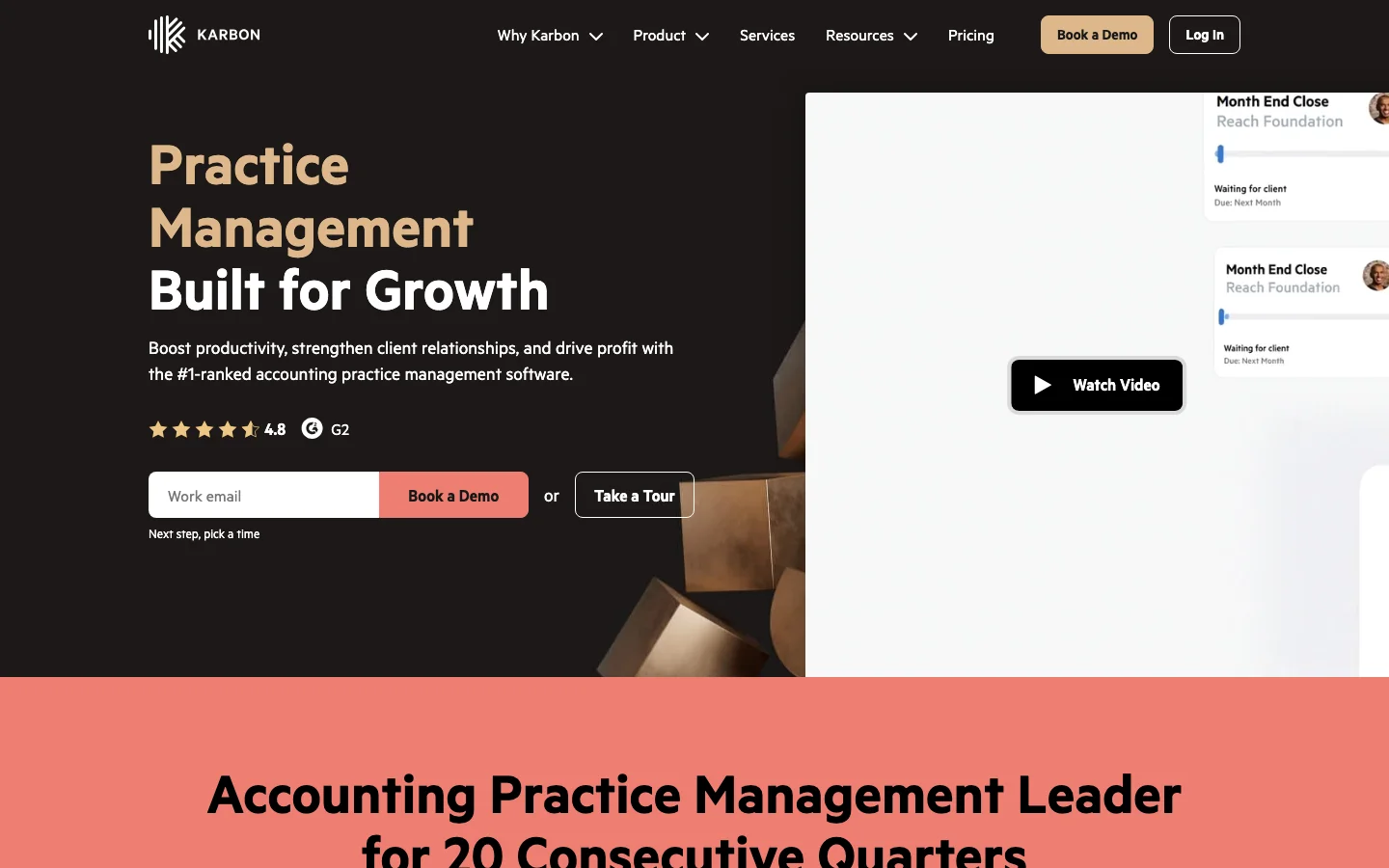
Karbon runs a firm's work around its email, and its AI comes included on every paid plan.
- Email triage shared across the team
- Work templates, scheduled jobs and dashboards
- Client requests, a portal and document storage
- AI summaries of emails, work items and whole clients
- AI-drafted emails and quick replies, and flagged missed time
What Reddit says
33.3 / 100
21 independent mentions in 8 threads, 3 vendor posts set aside
Karbon does Triage and Workflow amazingly well. A little overkill if a one man shop, but I still find a lot of value you in it.
Once a client is set up properly with the related work items, you don't need to do anything else. It's on autopilot.
Karbon seems great until you realize you need to pay more for all the integrations you'll want to use/connect so it's just as pricy as canopy.
Pros
- Built for firms whose work arrives by email
- AI included in the price
- Strong workflow and triage, by its fans' account
Cons
- The lowest Reddit score in this list
- Integrations can raise the real cost
- Priced per user, which adds up in a large team
4. TaxDome: The Tax Firm's Client Portal
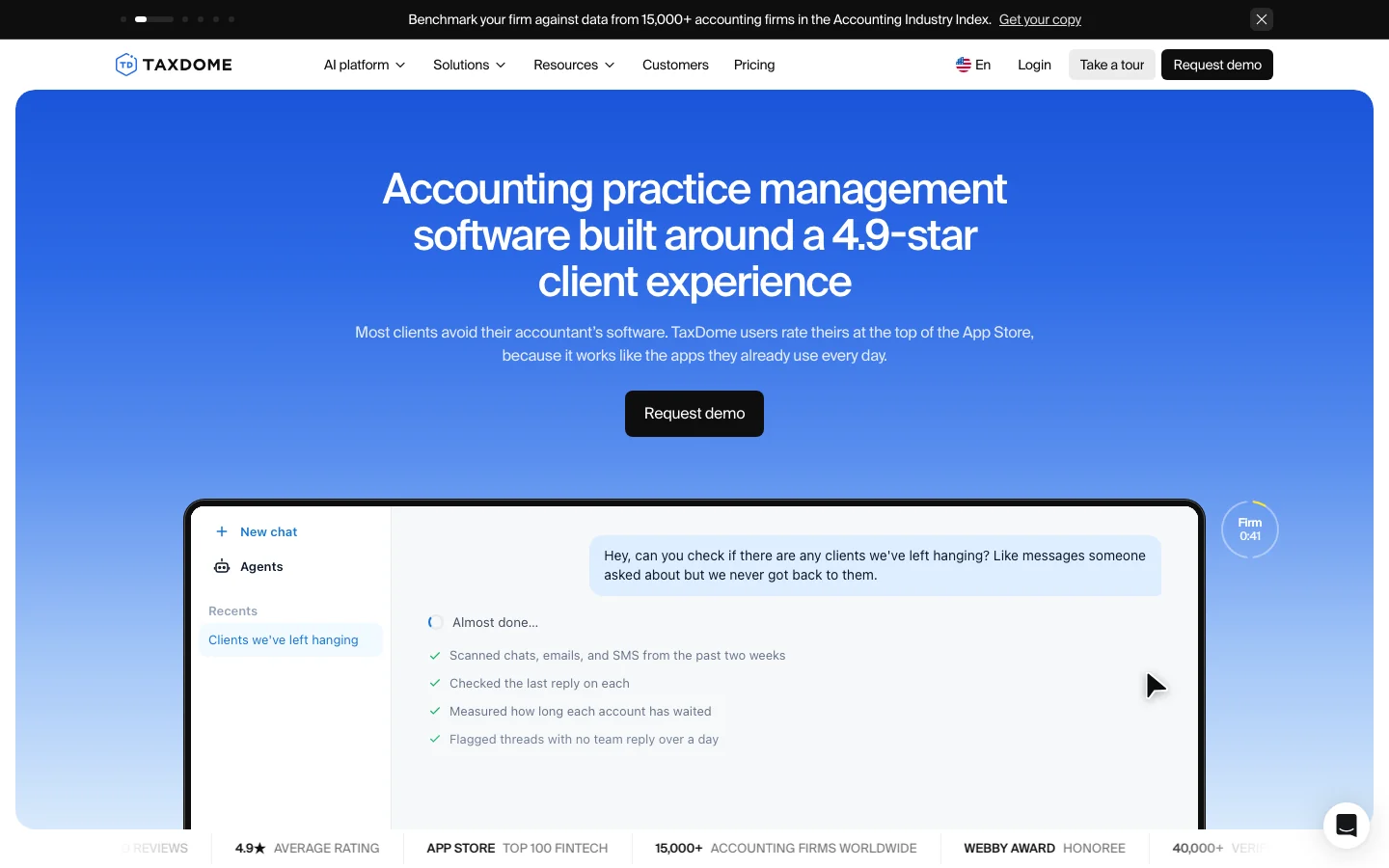
TaxDome puts a tax firm's client portal, documents, e-signatures, invoices and workflow in one system, with AI as an add-on.
- Client portal with secure upload and e-signature
- Proposals, invoices and payments in one place
- Workflow automation and firm management
- AI document organization and tax return delivery (AI add-on)
- API, MCP and agents (AI add-on)
What Reddit says
49.0 / 100
52 independent mentions in 7 threads
The portal portion of tax dome alone is worth it.
TaxDome is less polished but highly customizable, and new features are added all the time.
The features constantly break. The invoice creation looks amateurish.
Pros
- A client portal its users say is worth the price alone
- No per-seat charge up to 20 seats
- New features arrive often
Cons
- Setup takes a long time
- Some users report features that break
- AI costs extra
5. Blue J: Tax Research With Sources
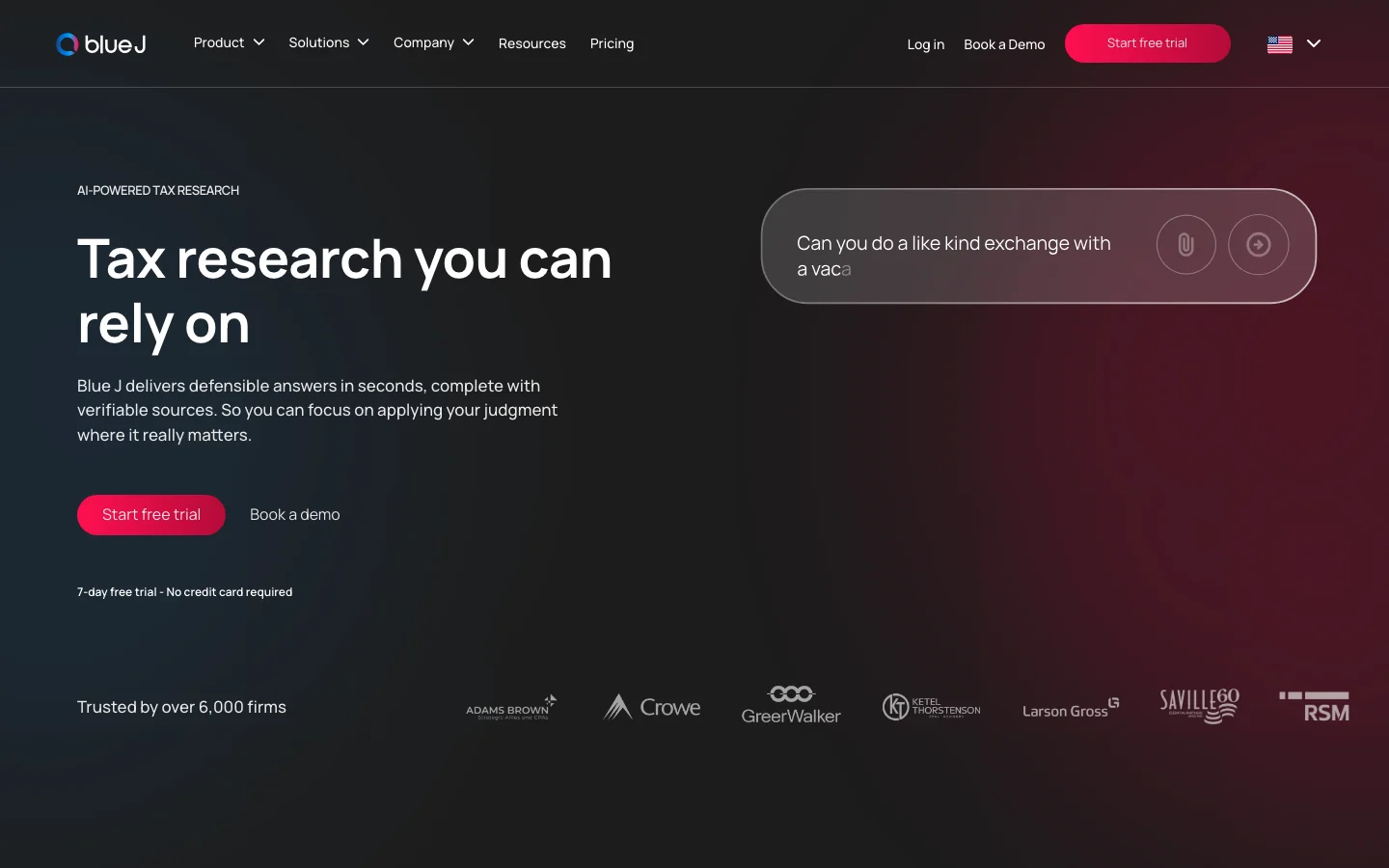
Blue J turns a senior's research hour into a check of the sources: it answers tax questions with citations you can open.
- Answers to tax questions with in-line citations
- A tax database curated by experts and updated daily
- Drafting, file uploads and unlimited questions
- Firm-wide usage insights on the Team plan
What Reddit says
65.3 / 100
36 independent mentions in 5 threads, 5 vendor posts set aside
I love how it references the sources so you can confirm the output. I ended up canceling my $8,000 CCH AnswerConnect subscription.
It seems to have less of a tendency to outright hallucinate - I've never caught it making up sources - but sometimes it misinterprets sources, so all the usual caveats about vetting AI responses before relying on them still apply.
BlueJ didn't provide the depth or back up that CoCounsel does and was very easy to incorrectly talk out of positions.
Pros
- Cites its sources, so answers can be checked
- Some users replaced a larger research subscription with it
- One flat yearly price per user
Cons
- Some users caught citations that did not hold up
- Easy to argue out of a position, by one user's account
- Priced per user, which adds up across a tax team
The Five Tools Compared
| Tool | Start with it if | Price | Reddit score |
|---|---|---|---|
| Dext | Your staff key client receipts and bills | From $17.70 per client a month | 63.5 |
| Double | The month-end close runs on spreadsheets and email | From $10 per client a month | 69.6 |
| Karbon | Your firm lives in its inbox and work slips between people | From $59 per user a month | 33.3 |
| TaxDome | Tax season lives in a client portal | $1,500 a year, plus $200 a month for AI | 49.0 |
| Blue J | Seniors spend hours on research a citation could settle | $1,498 a year per user | 65.3 |
Where the Tools Stop
Each of these does its own job well. What stays with your staff is the work between them: a client's documents in Dext, the ledger, the practice platform and an email thread that all have to agree, checked against your firm's own rules before anyone signs off.
At Qvery, we help accounting firms spend less staff time sorting what clients send and more on the advice they are paid for, with custom AI agents that read each client's documents, check them against the ledger and the engagement, and hand your staff only what needs a decision.
Each agent connects to the systems the firm already runs, so nobody changes how they work in Dext, the ledger or the practice platform.
Frequently asked questions
Is AI accurate enough for bookkeeping?
For capture and categorization it is good enough to change the work, as long as a person reviews the exceptions. Accountants on Reddit describe Dext as the backbone of their data entry, and also describe misread vendors and clunky line items. Every tool here keeps a review step for that reason.
Do these tools work with QuickBooks and Xero?
Dext and Double work with both. Karbon and TaxDome manage the firm's work around the ledger rather than inside it, and Blue J is research, so it does not touch the books at all.
Do these tools replace QuickBooks or Xero?
No. The ledger stays the record. Dext publishes into it, Double closes the books on top of it, and Karbon and TaxDome run the firm's work around it.
Are there AI agents for accounting firms yet?
A few, and they are new. Double's Autoclose takes on the close as a whole, Karbon offers agentic workflows in early access, and TaxDome's AI add-on includes agents. Each still hands its exceptions and its sign-off to a person.
Can our clients use these tools too?
Some of them. Clients photograph, email or upload receipts into Dext, and TaxDome and Double each give clients a portal for documents, signatures and requests. Karbon and Blue J are for your staff.
Does a firm need both a practice management tool and a close tool?
Usually, because they do different jobs. Karbon or TaxDome runs the firm: who does what, the client portal, billing. Double runs the books for each client.
Is it safe to put client data into these tools?
Check each vendor's terms before any client data goes in. Karbon says its AI keeps your firm's data inside Karbon and never uses it to train models. Your engagement letters and your clients' expectations decide what may go where.
Will AI replace bookkeepers?
It replaces the keying, not the judgment. Every tool here hands the exceptions, the client questions and the sign-off to a person. The hours are worth the most when they go to advisory work and more clients.
What can't these tools do?
Each one works inside its own job. None of them checks a client's documents, ledger, engagement and emails against each other and against your firm's rules. That work between the tools is still done by hand, or by a custom agent.
What is the best AI tool for accountants who key receipts?
Dext. What clients photograph, email or upload lands in QuickBooks or Xero already coded, with supplier rules that carry the account, tax rate and class every time. It starts at $17.70 per client a month, with a 10-client minimum.
What does Double do for an accounting firm?
It runs the monthly close for each client, with the client portal and close tasks in one place: AI categorization on bank feeds, AI journal entries, flux analysis and Autoclose, its newest agent. It was called Keeper until its rename.
How much does Double cost?
$10 per client a month on Core, $25 on Plus and $50 on Scale, with unlimited users on every plan. AI reconciliation fixes come on the Plus and Scale plans.
What is Karbon used for in accounting firms?
Running the firm's work around its email: shared email triage, work templates, scheduled jobs, a client portal and AI summaries of emails and clients. Its AI is included on every paid plan, from $59 per user a month billed annually.
How much does TaxDome cost?
$0.83 per active client a month, $1,500 billed annually with 20 seats included. The AI add-on is $200 a month for the whole team, and more than 20 seats is custom pricing.
Which AI tool answers tax research questions with sources?
Blue J. It answers tax questions with in-line citations you can open, from a tax database curated by experts and updated daily. The Individual plan is $1,498 a year per user.
Which of these AI accounting tools do accountants rate highest on Reddit?
Double, with a Reddit score of 69.6 from 23 independent mentions, then Blue J at 65.3 and Dext at 63.5. TaxDome scored 49.0 and Karbon 33.3.
Which AI accounting tool should a firm start with?
The one for the job that eats the most staff hours: Dext if staff key client receipts and bills, Double if the month-end close drags, Karbon if the inbox runs the firm, TaxDome for tax season through a portal, Blue J for research.
Do accounting firms rely on Dext at volume?
Some do. One accountant on Reddit described it as their source of truth for around 7k documents a month and said they would probably shut down without it. Others describe misread vendors that a person still has to catch.
Is Blue J worth it compared with a research subscription?
Some accountants think so. One on Reddit liked that it references its sources so the output can be confirmed, and said they cancelled an $8,000 CCH AnswerConnect subscription after switching.