See How Often Your Deals Use Your Partners
Ancillary Services Tracking Agent reads your closed deals against your title, mortgage and insurance partner list. It counts partner use by branch, and counts deals with no provider named separately.
See How Often Your Deals Use Partners.
- Partner use counted by branch and by partner
- Named other providers and blanks counted apart
- The deals whose records need filling in
 Vlad Shvets, Partner @ Qvery
Most brokerages can't say how often their title, mortgage and insurance partners are used, because the closing records are patchy. A blank field is the trap: it doesn't mean the buyer went elsewhere. At Qvery, we help brokerages spend less time counting partner deals, with custom AI agents that read every closed deal. A named partner counts, a named other provider counts as other, and a blank stays unknown. Leadership sees real numbers beside the size of the unknown.
Ancillary Services Tracking Agent.
Partner use, with the missing records in view.
Your Closed Deals And Your Partner List
Once a month, the agent reads your closed-deal export and your list of title, mortgage and insurance partners. It works from the export your transaction system already produces.
It needs no buyer contact details to do this. The names of providers and the deal records are enough.

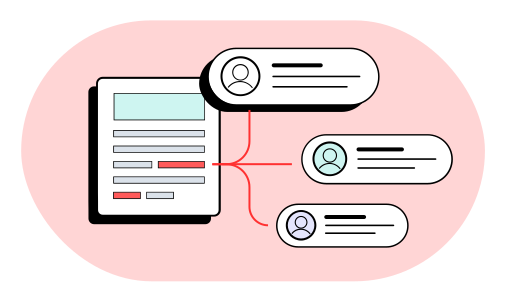
Who Handled Each Part Of The Deal
For each deal, the agent finds who handled the title, the loan and the insurance. It matches names spelled several ways to the right partner on your list.
A deal counts as partner use only when the record names your partner. Another named provider counts as other, and a blank stays unknown.
Counted By Branch And By Partner
The agent counts partner use by branch and by partner, and shows every rate beside its count. Unknowns are counted and shown, never folded into a rate.
The report covers branches and partners, never individual agents. A deal record shows who handled a service, not what anyone offered the buyer.
One Page For Leadership
Leadership gets one page on how often each partner is used, plus the deals with records to fill in. The records to complete are listed one by one.
In your build, each partner can get a view of only its own deals. What to do with each partnership stays with your leadership.
What Tracking Partner Use Costs You.
Put in your own team's numbers. The result updates as you type.
Your Numbers
- Saved a year
- $10,280
- Today
- $37,700
- With the agent
- $27,420
- Pays back in
- 2.4 years
- Three-year return
- 23%
- Deploys for about
- $25,000
Saved a year $10,280
Read The FAQs.
What does Qvery do for brokerages?
At Qvery, we help brokerages spend less time counting partner deals, with custom AI agents that read every closed deal. We build them around your own closed-deal export, partner list and systems. You have partner arrangements for title, mortgage and insurance, but your closing records are patchy. Nobody can say what each partnership is worth. The agent turns the records you have into one page of numbers for leadership. A closed-deal export is all it needs to start. The size of the unknown sits beside every number.
Why track which title company a buyer used?
Title, mortgage and insurance partnerships are part of the business. Without clean records nobody can say how much each one is used. Once a month, the agent reads your closed-deal export and your list of partners. For each deal, it finds who handled the title, the loan and the insurance. It matches names spelled several ways to the right entry on your list. A deal handled by a title company that isn't on your list is still recorded, as another provider. A deal counts as use only when the record names one of your partners. It runs once a month, so the count stays current.
Is it useful with patchy closing records?
Yes, and it shows you how patchy they are. A blank field does not mean the buyer went elsewhere, so it stays unknown. A deal with no provider named is tallied apart from the rest. Unknowns are counted and shown, never folded into a rate. The records to fill in are listed one by one, so your team knows where to start. Leadership sees real numbers beside the size of the unknown. Your team fills in the missing records, and the next report shows the difference.
Does it rank our agents?
No. The report covers branches and partners, never individual agents. A closed-deal record shows who handled a service, not what anyone offered the buyer. There is no per-agent view and no ranking of people. The agent sets no target and promises no revenue. It tallies what your records show, and every rate sits beside the number it rests on. Branches are compared with each other, never one person with another. Nothing in the report points at one person.
Does it check referral rules or disclosures?
No. It works only from your records. Referral arrangements, disclosures and licensing stay with your compliance team and your counsel. The agent does not judge any of them, and it does not encourage steering a buyer. It shows how often each partner appears in your closed deals. What to do with each partnership stays with your leadership. A deal record can't show what a buyer was told, so the agent says nothing about it. A partner named on the record is the only evidence the agent uses.
Can partners see only their own deals?
In your build, yes. The agent can produce a separate view for each partner, showing only the deals it handled. Each partner sees its own deals and nothing else. Leadership keeps the full one-page report on how often each partner is used, so the comparison stays in your hands. A partner's view is the part of the report that concerns its own deals. Partners never see another partner's deals. Which partners get a view stays leadership's call.
How much does it cost to build?
It costs about $25,000 to build and $400 a month to run. The calculator above puts that against your team's time. You enter your own team's numbers, and the result updates as you type. It shows what tracking partner use costs you today, from reading each closed deal to finding who handled each service. Counting use by hand across branches is the work it measures.
How is our deal data kept safe?
The agent reads only the exports you connect it to. It needs no buyer contact details, because the names of providers and the deal records are enough. It works from the export your transaction system already produces. You decide where it runs and how long anything is kept. Branches and providers by name are enough to produce the report. You choose the exports it can read and the ones out of reach.
How soon can it track our partners?
We deliver a working agent in about two weeks, set up with your partner list and your transaction export. Your leadership sees the first report before it runs monthly. From then on, it reads the new closed deals once a month. The partner list you give us is what names are matched to, so the first report reflects your own records. Blanks show up as unknowns from that first report.
What does the free try send back?
How often each partner is used, on one page, plus the deals with missing records. The page shows each partner's use for each of your branches, with the unknowns beside it. You send your closed-deal spreadsheet and your list of partners. The sample is a four-branch brokerage's month of closed deals. It comes from vlad@qvery.ai within 15 minutes. We delete your files as soon as the result is sent.