Match Your Bank To Your Books On Autopilot
Bank Reconciliation Agent proposes matches for your bank lines, each with the reason it fits. Your reviewer checks the proposals and spends the day on the few lines that don't match.

Reconcile One Month Of Your Bank.
- Proposed matches for your bank lines, each with its reason
- The short list of lines that don't match
- A question wherever a difference needs your rule
 Vlad Shvets, Partner @ Qvery
Exact matches were never the hard part of month-end reconciliation. The month gets stuck on the payment four cents off and the three deposits booked as one. At Qvery, we help finance teams spend less time on month-end, with custom AI agents that match bank lines in groups. Your people stay on the real exceptions. Every match comes with its reason, and a difference with no rule gets a question, never a guess.
Bank Reconciliation Agent.
Proposed matches, each with its reason.
Your Statement And Your Ledger
At month end, the agent takes each account's bank statement and your ledger export. It reads them in the format your bank and your books already produce.
A PDF statement or a spreadsheet export works as it is. The agent reads only what you give it and never logs in to your bank.

Matched In Three Passes
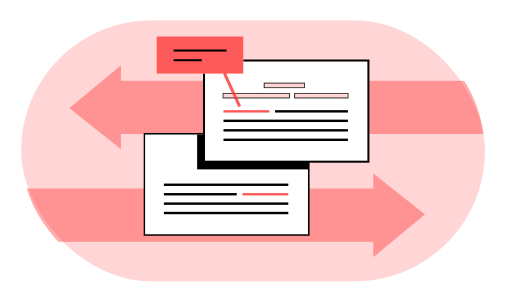
First it matches the lines that agree exactly. Then it matches within the amount and date limits you set, and in groups.
One deposit can pay several invoices, and a partial payment is matched for the part that fits. A difference you have no rule for is shown to you, never matched on a guess.
Every Match With Its Reason
Each proposed match shows the bank line, the ledger lines and why they fit. A reason reads like "same amount and reference" or "inside your two-day rule".
The lines that don't match go on their own short list. Small differences, grouped deposits and missing references are the usual ones.


Your Reviewer Signs Off
Your reviewer checks the proposed matches and works on the lines left over. The day goes to the differences that need a person.
The agent never posts, clears or changes an entry in your books. Posting and sign-off stay with your team, in your own accounting system.
What Reconciling The Bank Costs You.
Put in your own team's numbers. The result updates as you type.
Your Numbers
- Saved a year
- $15,138
- Today
- $36,250
- With the agent
- $21,113
- Pays back in
- 19.8 months
- Three-year return
- 82%
- Deploys for about
- $25,000
Saved a year $15,138
Read The FAQs.
What does Qvery do for finance teams?
At Qvery, we help finance teams spend less time on month-end, with custom AI agents that match bank lines in groups. We build them around your own statements, ledgers and rules. The first working result comes in about two weeks. Month-end stops stalling on the payment four cents off and the three deposits booked as one. Your people work on the real exceptions, while posting and sign-off stay with your team. Every account's statement gets the same treatment every time.
How does it go beyond exact matches?
It works in three passes. First it takes the lines that agree exactly. Then it pairs lines within the amount and date limits you set, and in groups. Every proposal shows the bank line, the ledger lines and the reason, for example same amount and reference. A reason can also read inside your two-day rule. Your reviewer checks that reason instead of rebuilding the pairing. Exact matches clear first, so the later passes only see what is left.
Can it match grouped and partial payments?
Yes. One deposit can pay several invoices, and three payments can be booked together. The agent pairs one bank line with several ledger entries, or the reverse, and shows the whole group. A partial payment is matched for the part that ties, and the rest stays open. A group that does not add up is shown as it is, with the gap, instead of being trimmed to fit. Your reviewer confirms each group or sends it back. Small payments that add up to one transfer are grouped the same way.
What does this add to our bank feed?
Your bank feed handles what lines up cleanly. The agent works on the lines it leaves behind: small differences, grouped deposits and missing references. Those make up your unexplained list today. It takes the statement and your ledger export, both files your team already pulls. Then it proposes a pairing for each line, with its reason. What still doesn't fit goes on a short list, and your reviewer spends the day there. Your reviewer gets that list already sorted into proposals and exceptions.
Who decides what counts as close enough?
You do. Tolerances on amounts and dates are your rules, written into the agent when we build it. Give it an amount tolerance and a date window, and it applies exactly those. A difference with no rule behind it is shown as needing one from you. It is never matched on a guess. Your reviewer sees that question and decides. Because the rules are written in, a new reviewer applies the same limits as the last one.
Does it post or clear anything in our books?
No. It proposes matches and lists the exceptions, and that is all it does. It never posts, clears or changes an entry in your books. Posting, clearing and sign-off stay with your team, in your own accounting system. Your reviewer checks the proposals and works on the leftover lines. Whatever they confirm is recorded by your team, as it is today. Your reviewer works from the proposals and the leftover list, not from the raw statement.
How much does it cost to build?
An agent for this job costs about $25,000 to build, then roughly $400 a month to run. The $25,000 is a one-time build, and the monthly figure covers running it. The calculator above sets that against your team's time. It prices the hours your reviewers spend reconciling the bank today. Put in your own team's numbers, and the result updates as you type.
How is our bank data kept safe?
The agent reads only the statements and exports you connect it to. It has no access to your bank and never logs in to it. A PDF statement or a spreadsheet export works as it is, so nothing needs reformatting first. You decide where it runs and how long anything is kept. It writes nothing back to your books, and your reviewer sees every line it used. The agent reads each account's statement in the format your bank and books already produce.
How soon can it reconcile our accounts?
We deliver a working agent in about two weeks, set up with your accounts and your limits. It starts from the bank statements and ledger exports your team already produces. It runs beside your team on a past month first. Your reviewer compares its proposals with the work already done, which gives you a fair test before it touches a live month. Then it takes over the routine matching, and your team keeps the exceptions. Setting up with your limits means the first month's proposals already follow your rules.
What does the free try send back?
It sends back the proposed matches for your month, each with its reason, and the short list of leftover lines. Where a difference needs your rule, it asks a question instead of guessing. You send one month's bank statement and your ledger export. The result comes from vlad@qvery.ai within 15 minutes, and we delete your files as soon as it is sent. You see the work on your own month before any build. A sample month, such as a packaging maker's, shows what the result looks like.