Screening Calls Written Up In The Candidate's Words
Screening Interview Review Agent quotes the candidate on each of your criteria, with the time in the recording. It marks what never came up as a question for the next call.
Write Up One Screening Call.
- The candidate quoted on each criterion they covered
- The time of each quote, to replay it
- Questions for the criteria never covered
 Vlad Shvets, Partner @ Qvery
A screening call helps the next recruiter only if the evidence is in the candidate's own words. A summary of a summary is hard to check. At Qvery, we help staffing firms put recruiters on the work that matters, with custom AI agents that write up screening calls. Each quote comes with its time in the recording. Who goes through to the next call is your recruiter's decision.
Screening Interview Review Agent.
Screening evidence, ready for the next recruiter.
Every Recorded Screening Call
Your recruiters run the screening calls, as they do today. Your interview or calling tool sends each recording to the agent.
The agent writes the call out with times. It works on the recording after the call, so the conversation stays human.
Quotes On Each Of Your Criteria
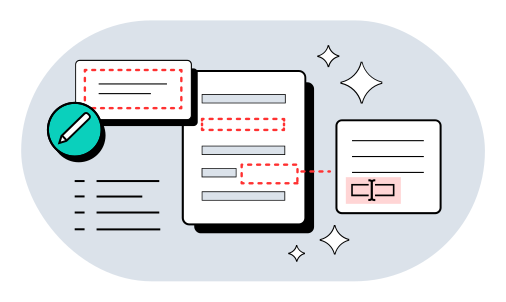
For each criterion, such as experience, availability, pay or licenses, the agent quotes what the candidate said. Each quote comes with its time in the call.
A recruiter replays the moment before relying on it. The time takes them straight to the candidate's words.
What Was Covered And What Wasn't
A criterion with a quote is covered. A criterion that never came up is marked not covered.
Each gap becomes a follow-up question for the next call. It is never a mark against the candidate.


One Page For The Next Recruiter
The next recruiter gets one page: your criteria, the quotes, their times and the questions still to ask. There's no score and no ranking.
Deciding who moves forward stays with your recruiters. The summary gives them the evidence to decide.
What Screening Write-Ups Cost You.
Put in your own team's numbers. The result updates as you type.
Your Numbers
- Saved a year
- $38,127
- Today
- $72,545
- With the agent
- $34,418
- Pays back in
- 7.9 months
- Three-year return
- 358%
- Deploys for about
- $25,000
Saved a year $38,127
Read The FAQs.
What does Qvery do for staffing firms?
At Qvery, we help staffing firms put recruiters on the work that matters, with custom AI agents that write up screening calls. We build them on your own criteria and systems. A screening call helps the next recruiter only if the evidence is in the candidate's own words. A chain of retellings is hard to check, so each quote comes with its time in the recording. For each criterion, the agent shows what the candidate said and when. Who goes through to the next call stays your recruiter's decision.
How is it different from a notetaker?
A notetaker summarizes a conversation. This agent quotes the candidate on each of your criteria, such as experience, availability, pay or licenses, with the time. It also marks what was never asked, so the next interviewer knows what to cover. A second-hand account is hard to check, so the agent keeps the candidate's own words. The next recruiter gets one page: your criteria, the quotes, their times and the questions still to ask.
Does it run the interview itself?
No. Your recruiters run the screens, as they do today. Your interview or calling tool sends each recording to the agent afterwards. Your recruiters can stay in the conversation instead of typing notes. It works on the recording after the call, so the conversation stays human. The candidate talks to a person, and the evidence is ready when the call ends.
Does it score or rank candidates?
No. There is no score and no ranking, and the agent never rejects or recommends anyone. A criterion with a quote is covered. A criterion that never came up is marked not covered, never counted against the candidate. Each gap becomes a follow-up question for the next call. The summary gives your recruiters the evidence to decide. Deciding who moves forward stays with your recruiters, who have the evidence in front of them. The agent only prepares what they read.
What if the transcript gets a word wrong?
Every quote has its time in the recording. Your recruiter replays the moment and hears the candidate's own words. Speech-to-text can be less accurate for some speakers, so the time is there for a person to check. The recruiter does not have to take the written words on trust. A line that reads oddly is easy to settle. Replaying takes a moment, because the time goes straight to the words. The agent writes the call out with times, so any line can be found again.
What about consent to record?
The agent works only on recordings your process already collects, under the consent rules you use today. It does not change how or whether your recruiters record. The recording comes from your interview or calling tool, as it does now. Whether a call is recorded at all stays a decision of your process. Your consent rules stay yours. The recording is the same one your recruiters would replay anyway.
How much does it cost to build?
An agent for this job costs about $25,000 to build. Running it costs about $450 a month. The calculator above shows what that means against your recruiters' time. Put in your own numbers and the result updates as you type. That time goes on writing up screening calls, each recruiter in a different way. The next person cannot check what was said. The calculator is set to screening write-ups, so it prices the writing, not the calls. The agent writes up every call the same way.
How are candidates' recordings kept safe?
The agent reads only the recordings you connect it to. You decide where it runs and how long anything is kept. Nothing leaves the recording except the quotes and times in the summary. The quotes are the candidate's own words, so the summary adds nothing the candidate did not say. Each quote carries its time, so a person can check it against the recording. The summary holds no score or ranking of the candidate.
How soon can it write up our calls?
We deliver a working agent in about two weeks, set up with your criteria. It runs on recent calls beside your recruiters first. Your interview tool sends each recording, and the agent writes it out with times. Your recruiters compare its summaries with their own write-ups. Then every screen leaves one page for the next recruiter, in the same shape each time. Recent calls give your recruiters something to compare with: the same call, written up twice.
What does the free try send back?
A one-page summary of your screening call on your criteria, with quotes, times and the questions still to ask. A criterion that never came up is marked not covered and becomes a question. Each quote comes with its time, so your recruiter can replay it. The result comes from vlad@qvery.ai within 15 minutes, and your file is deleted as soon as it is sent. It shows what the agent does with one of your real calls. The sample we show is a twelve-minute screening transcript with the role's criteria.