
On this page
Your next guests will search from their home countries, in their own languages. A tool that checks rankings from your own city measures searches they never made.
The first entry is ours, so read it as our pick: it measures AI answers, not search rankings, which the eight tools after it carry.
1. GEO Agent by Qvery: Your Guests' Questions, Asked Daily in the Countries You Choose
This one is our own product, and it measures the part of the trip that now starts in a chat window: a traveler asking ChatGPT or Google AI Mode where to stay, which tour to book, or which operator runs the route.
Qvery's GEO Agent writes the questions for your company from your brand, your industry and the competitors you name, then asks each one every day on ChatGPT and Google AI Mode, in the countries you choose.
A Lisbon hotel group can follow the questions its British, German and American guests ask, each in the market they ask from, and every answer and every citation is kept.
The report shows your visibility, share of voice and sentiment beside your competitors, by topic and by country, the questions where a competitor was named instead of you, and the sources the engines cite for your topics.
Its assistant answers questions about that data and can add or edit questions, start a run or export a report.
Its limits: two engines and no others, and no published price.
The GEO Agent does the measuring, and the work after it is a service: Qvery's team builds custom AI visibility agents and does the optimization work with you, on the pages, listings and sources the answers lean on, quoted for the job and not part of the GEO Agent.
Pros
- One question set per source market, asked from that market
- The cited sources for your topics, so the listings and reviews behind an answer are visible
- Qvery's team can do the optimization work and build custom agents around it
Cons
- Two engines only: ChatGPT and Google AI Mode
- No published price
2. Semrush: Every Market in One Campaign, From the Pro+ Plan Up
Semrush covers both halves of the job in one account, and the detail a travel company needs sits in the plan names.
On the SEO plan at $139 a month, a Position Tracking campaign follows one location.
Tracking the same search terms from several places, which Semrush calls multitargeting, starts on Pro+ at $299, with up to ten targets per campaign, down to postal code, and every term in every target counts against the 1,500 the plan includes.
Its own pricing page says as much: Pro+ is the plan "for growing teams and agencies scaling SEO and AI visibility across multiple markets, locations, or websites."
The AI side follows a different rule. Prompt Tracking covers more than 220 countries and territories, while the Brand Performance reports are tied to one location and language, with each extra location sold at $99.
- Position Tracking with up to ten location, device, language and engine targets per campaign on Pro+.
- Prompt Tracking in 220+ countries and territories.
- Site Audit, search-term and competitor research in the same account.
- AI visibility reports for any domain.
What Reddit says
Unfortunately, I've been extremely disappointed by what appears to be an aggressive upselling strategy.
We actively work on a total of 8 domains all targeting different aspects of our industry, which is why SEMrush was chosen to combat the sheer amount we have to maintain and to keep up with our competitors.
Pros
- Several markets inside one campaign, on Google and ChatGPT
- Prompt Tracking in almost any country
- Rankings, audit and AI answers in one bill
Cons
- Multi-location tracking starts on the $299 plan
- Every market multiplies the term count
- Each extra Brand Performance location costs $99
3. Nightwatch: Daily Ranks From Any City, Seats for the Whole Team
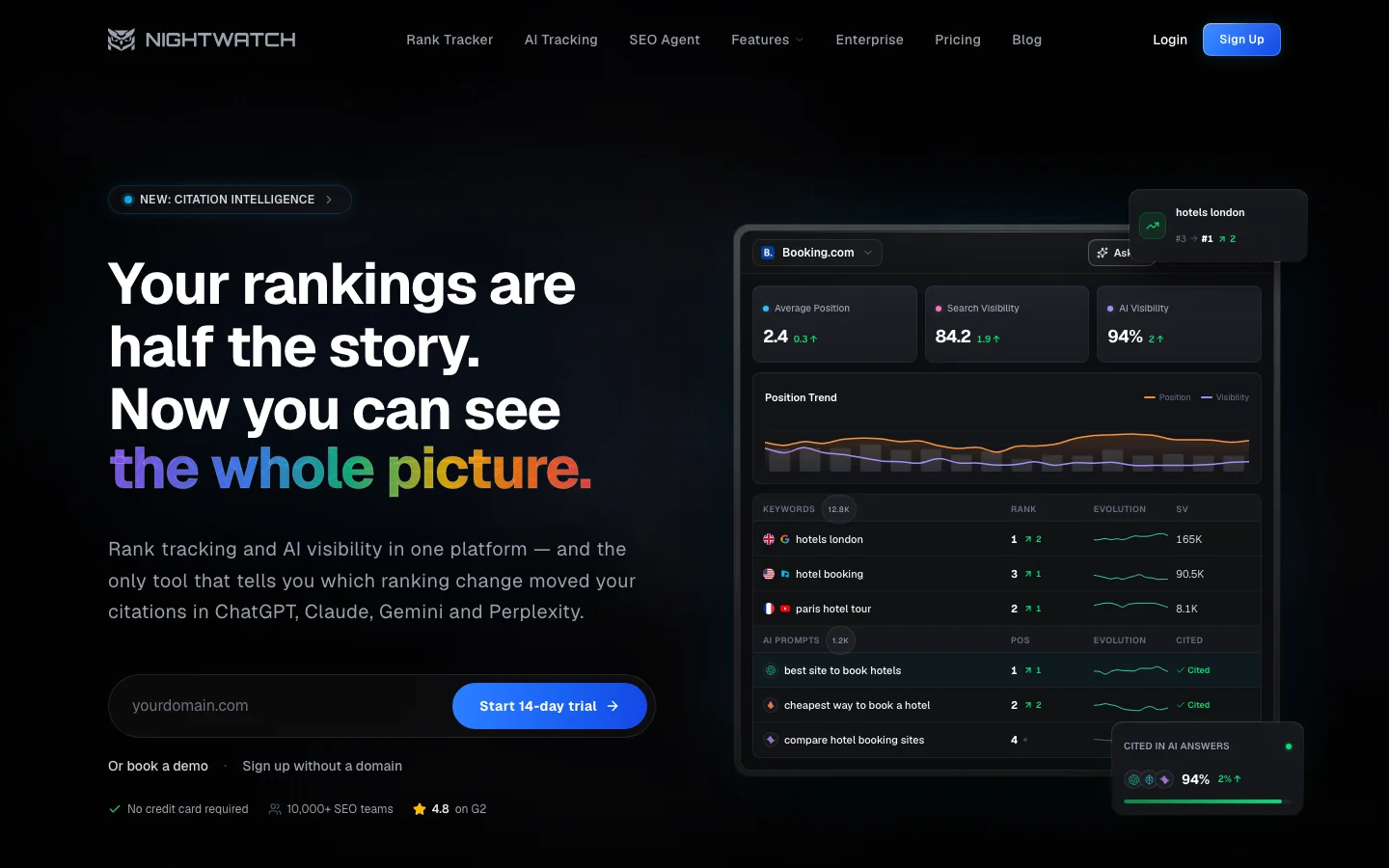
Nightwatch is a rank tracker that grew an AI side, built around location: 107,000+ locations across 190+ countries, in any language, with search terms "tracked daily, in any location or language."
Its Search Simulator shows a results page from any location or device, so nobody on the team has to check a German results page over a VPN.
It prices by the tracked term and not by the person: every plan has unlimited seats, so the sales lead for each market can open their own view. The AI side runs on ChatGPT, Claude, Gemini, Perplexity, AI Mode and AI Overview.
The one thing its pricing page does not say is how a term tracked from two cities is counted.
- Rank tracking in 107,000+ locations, 190+ countries, any language.
- AI questions on ChatGPT, Claude, Gemini, Perplexity, AI Mode and AI Overview.
- Search Simulator for any location or device.
- Unlimited seats on every plan.
- An MCP server on every plan.
Independent discussion of Nightwatch on Reddit is thin.
Pros
- Any city, any country, any language, daily
- The whole team on every plan
- Prices in euros, with a trial and no card
Cons
- How a second location counts is not published
- Little independent discussion to go on
- No backlink research (links to your site)
4. Google Search Console: Your Own Clicks and AI Impressions, Country by Country, Free
Search Console reports what real searchers did in Google, and it reports it by the country the search came from.
Its Performance report groups your clicks and impressions (the times your page was shown) by country, and Google's own help page explains why that matters: "Search results are specific to the time, place, device, and recent history of the person searching."
Since August 31, 2026, every site also has the generative AI report, which counts how often links to your site were shown in AI Mode and AI Overviews and groups those impressions by "the country where the search originated."
For a travel company that is the first free answer to a plain question: are German searchers seeing your pages in Google's AI answers, or only British ones?
It sees your own site and nothing else: no competitors, no ChatGPT, and no clicks or queries in the AI report.
- Clicks and impressions by country, page, query and device.
- The generative AI report: AI Mode and AI Overviews impressions by country.
Independent discussion of Search Console's AI report on Reddit is thin.
Pros
- Real searches, by origin country, measured by Google
- AI Mode and AI Overviews impressions per country
- Free
Cons
- Your own site only
- Google only
- Impressions without queries in the AI report
5. SE Ranking: A Project per Country, Plus the Reviews Guests Leave
SE Ranking's help pages state the rule: you create one project per site, "or per country/region if you track markets separately", and the tracking limit is shared across all projects.
Core's 2,000 search terms tracked daily is the most room any entry plan here gives five markets.
Two features matter for travel. The Local & Map Rank Tracker follows rankings by city or ZIP code, and Reviews Management collects and lets you reply to reviews from Google, Yelp, TripAdvisor and more, in the same account as the rankings.
Core already tracks 25 AI questions a day on five engines. SE Visible, SE Ranking's AI tracker sold on its own, starts at $89 a month for 75 questions a day on ChatGPT, Gemini, AI Mode and AI Overviews.
- Daily rank tracking on Google, Bing, Yahoo and YouTube, by location and device.
- Local & Map Rank Tracker by city or ZIP.
- Reviews Management across Google, Yelp and TripAdvisor.
- SE Visible, its AI tracker, also sold on its own.
- API credits and MCP access from Core.
What Reddit says
SE Ranking is solid. Their local marketing pack does a pretty good job of local SEO audits and tracking.
Their pricing model is annoying. Everything is an addon.
Pros
- The largest daily tracking allowance among the entry plans here
- Reviews from TripAdvisor and Google beside the rankings
- A trial with no card
Cons
- One manager seat on Core
- SE Visible is sold separately, from $89 a month
- Each country is its own project on a shared limit
6. Ahrefs: Last Season Beside This One, From the Standard Plan Up
Ahrefs publishes its counting rule in one line: one tracked term is one search term, in one location, in one project, so three terms in two locations use six. Its AI questions follow the same logic: "Tracking one prompt on one platform in one location uses 1 check."
Lite keeps six months, which never reaches back to the same season last year; Standard keeps two years, and Advanced five. Rank Tracker updates weekly on every plan.
Where Ahrefs earns its price is the web around you: Site Explorer studies any competitor's website, the travel editors and listings that outrank you included. API and MCP access come with every plan from Lite.
- Rank Tracker by location, updated weekly.
- Brand Radar and custom questions on Google AI Overviews, AI Mode, ChatGPT, Perplexity, Gemini and Copilot.
- Site Explorer, Site Audit and search-term research.
- API and MCP access from Lite.
What Reddit says
You get your subscription level. Even the lowest level is quite useful.
Ahref is still good for my weekly site audit.
Pros
- A one-line counting rule for locations
- Link data on the pages that outrank you
- Two to five years of history on the larger plans
Cons
- Six months of history on Lite misses last season
- Weekly rank updates
- Five AI questions on Lite
7. Similarweb: Which Countries Send Your Rivals Their Visitors
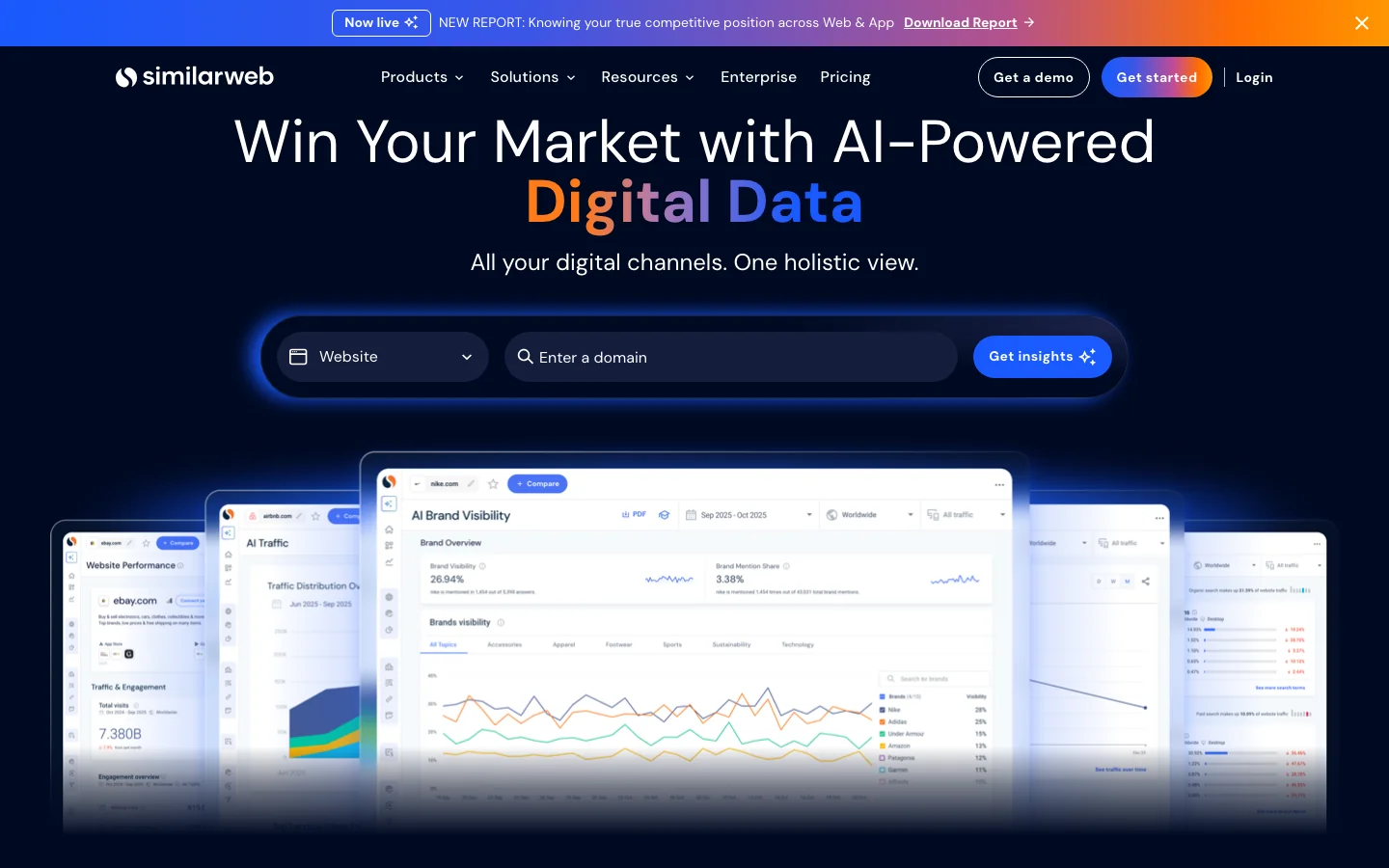
Similarweb answers the question the rank trackers cannot: where a competitor's visitors come from. Its Geography report shows a site's traffic share by country, yours or a rival's, and Similarweb's own help page frames it as a way to "identify the leading countries sending traffic to your competitors."
For a tour operator weighing a new market, that is a quick way to see whether the operator across the street already draws visitors from there. It will not tell you why your own German page sits on page three; that is a job for the trackers above.
The AEO Intelligence plan adds 150 tracked AI questions with citation analysis and AI Traffic; the $399 bundle adds rank tracking, site audit and backlinks. Its figures for a rival come from Similarweb, not from the rival's analytics.
- Geography: traffic share by country for any site.
- AEO Intelligence: 150 tracked questions, citation analysis, AI Traffic.
- Rank Tracker, Site Audit and backlinks in the $399 bundle.
- Traffic and engagement for competitors.
Independent discussion of Similarweb on Reddit is thin.
Pros
- Rivals' traffic by country
- Citation analysis and AI Traffic in the entry plan
- One login for market sizing and search data in the bundles
Cons
- Rival traffic is measured from outside
- One user on every self-serve plan
- Rankings start at the $399 bundle
8. Screaming Frog SEO Spider: Proof Each Language Version Points at the Right Market
A travel site with English, German and Spanish versions needs each page to declare its other language versions, usually with hreflang, which tells Google which version is for which language or region.
Google's own documentation says it helps Search "point users to the most appropriate version of your page by language or region."
A missing or broken tag changes nothing a visitor sees, so it can go unnoticed until rankings fall in the new languages.
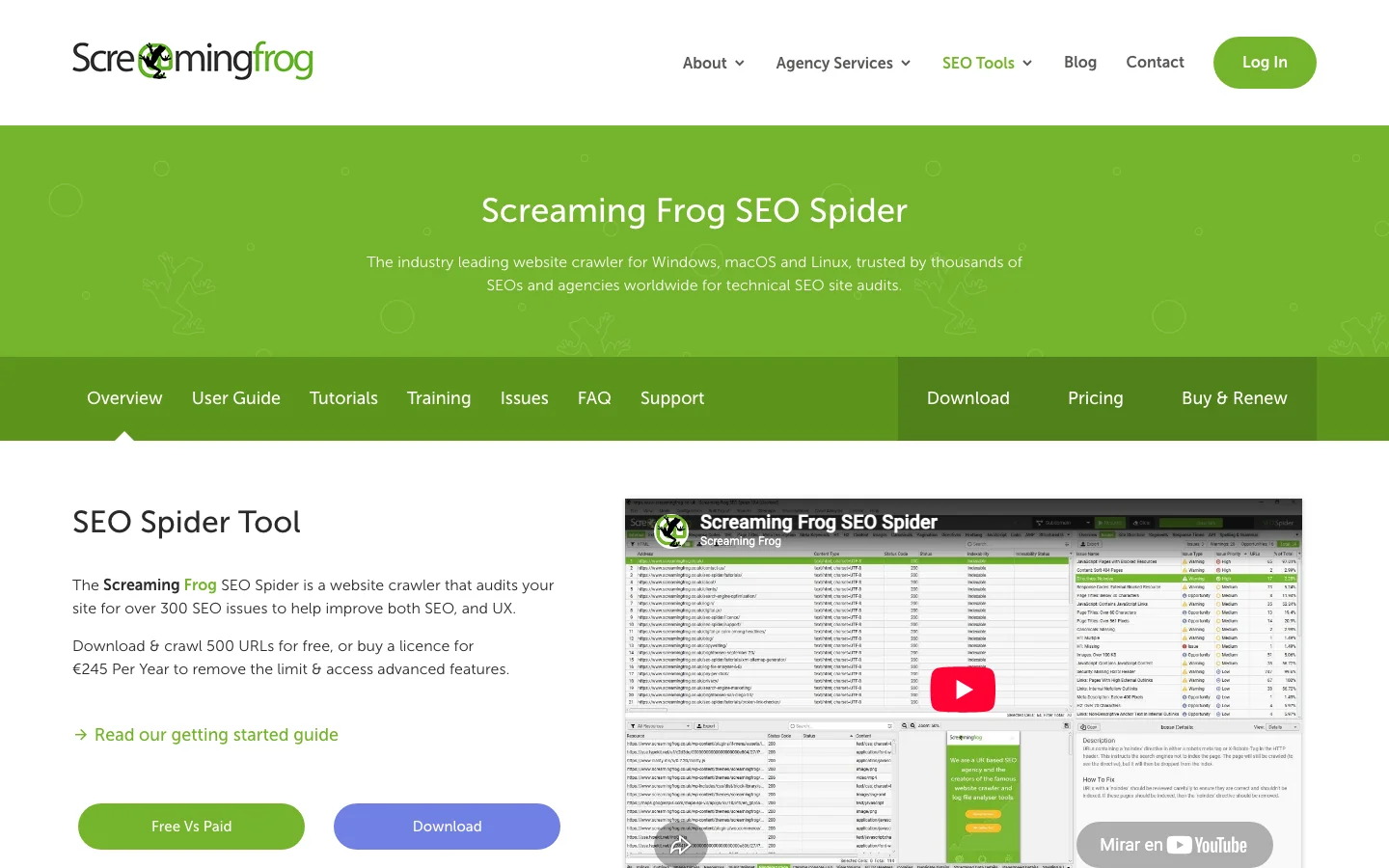
The SEO Spider audits hreflang across the whole site: missing return tags, wrong language codes, and tags that point at pages that no longer load.
The free version crawls 500 URLs (a crawl is a program visiting every page), which a site with three languages and a few hundred tours passes quickly; a license is £199 a year per user. It is a desktop crawler, not a tracker, and it reports nothing about rankings or AI answers.
- hreflang audit: missing return tags, wrong language codes, broken targets.
- Full-site crawl for broken links, redirects, titles and duplicates.
- Search Console and PageSpeed integrations.
- Free up to 500 URLs.
Pros
- Every language version checked against the others
- Free for a small site
- One yearly fee
Cons
- Desktop software, run by a person
- Reports nothing on rankings or AI answers
- One license per user
9. Moz: Weekly Ranks by City or Postal Code, at a Low Entry Price
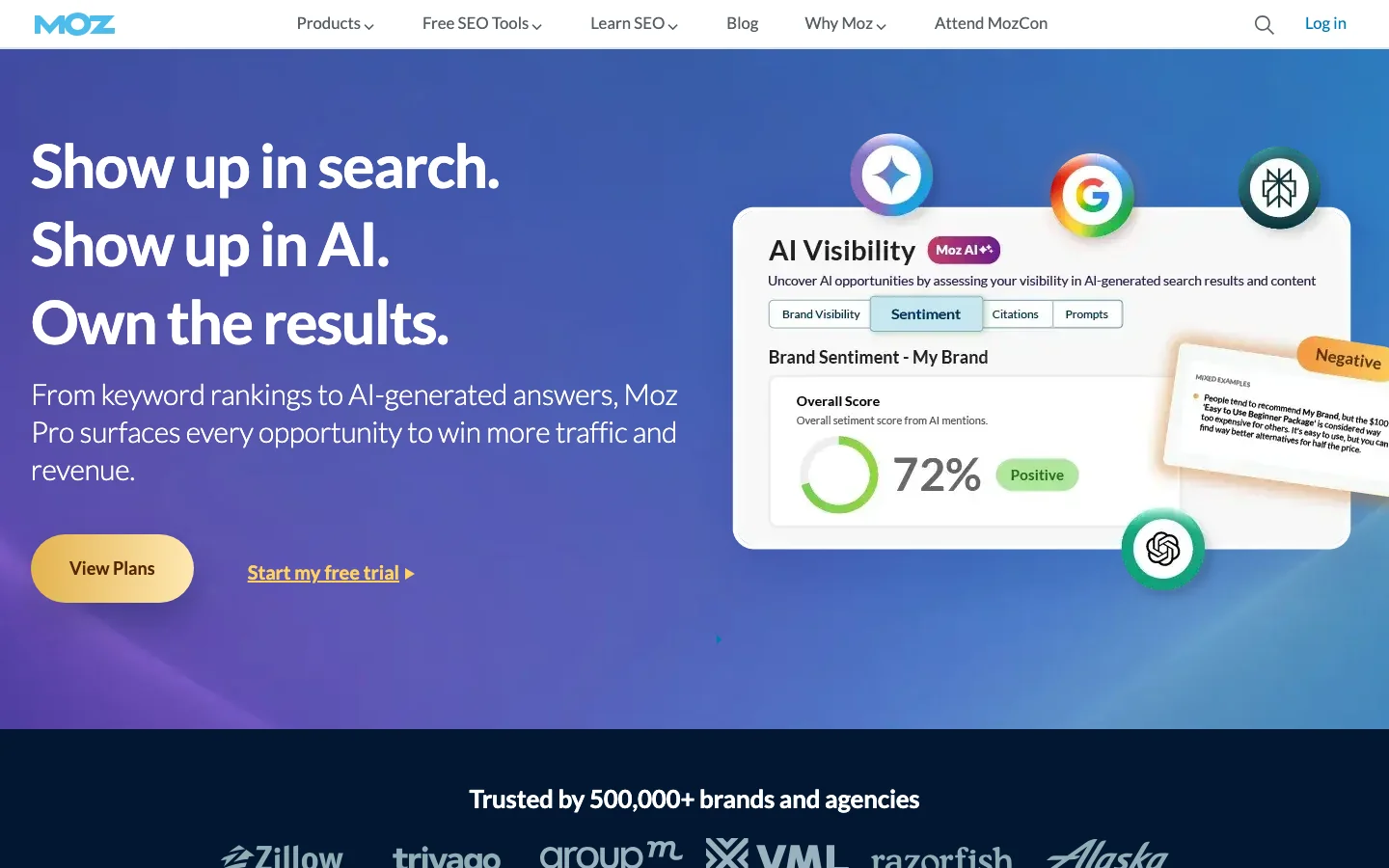
Moz tracks rankings nationally, by city or by postal code, and its help pages say to track several countries by adding each country's Google as a search engine, up to four per campaign. Each locally tracked term counts separately against the limit, and rankings update weekly.
Standard's 300 tracked terms become 60 a market across five, enough for your brand and a handful of destinations, not a catalog. A campaign holds four search engines, so a fifth country does not fit in one campaign.
The AI side is generous for the price: 150 questions on Standard across GPT, Gemini, Google AI Mode and Perplexity, checked weekly.
- Rank tracking by country, city or postal code.
- Up to four search engines per campaign.
- AI Visibility: questions across four models, weekly.
- Site crawl and search-term research.
What Reddit says
Moz is dated and hasn't added new features or had a major update in years - the UX is terrible
Yes, the UX is still clunky but they’ve been adding new features regularly the past couple of years.
Pros
- City and postal-code tracking at an entry price
- Four AI models from Standard up
- A starter plan for one site
Cons
- Weekly updates for ranks and questions
- Local tracking uses up the allowance fast
- Less talked about in r/SEO than the bigger suites
The Nine Side by Side
| Tool | Google, by market | AI answers, by market | From | Start with it if |
|---|---|---|---|---|
| GEO Agent by Qvery | None | Countries you choose | Pricing not published | Nobody has hours to read AI answers market by market |
| Semrush | Pro+: 300 terms per market across five | 220+ countries | $139/month; Pro+: $299 | Long-haul markets in many languages |
| Nightwatch | Any city; rule not stated | Not stated | €79/month, billed yearly | Long-haul markets in many languages |
| Search Console | Your site, every country | Google's AI answers | Free | Most guests come from your own country; no budget this quarter |
| SE Ranking | A project per country; Core: 400 terms per market across five | Not stated | Core: $129/month | Domestic guests or three to five neighboring markets in several languages |
| Ahrefs | Each location counts; Lite: 150 terms per market across five | One check per location | Lite: $129/month; Standard: $249 | You compare this summer with last: Standard |
| Similarweb | Visitors by country | Not stated | $129/month | You are weighing a new country |
| Screaming Frog | hreflang audit | None | Free to 500 URLs; £199/year per user | Three to five neighboring markets in several languages |
| Moz | Each local term counts; Standard: 60 terms per market across five | Not stated | Starter: $49/month; Standard: $99 | Most guests come from your own country: Standard |
 Piotr BabelPartner @ Qvery
Most of these tools count a tracked term once per location, so a second market doubles what you use: Ahrefs states it in one line, Semrush counts every term in every target, and Moz counts each locally tracked term on its own. Multiply your term list by the markets your guests book from before comparing allowances. AI answers work the same way: a question asked from Germany is a separate measurement from the same question asked from Britain.
Across five markets, the entry plans leave very different room per country: 400 terms on SE Ranking's Core, 300 on Semrush's Pro+, 150 on Ahrefs' Lite and 60 on Moz's Standard.
 Vlad ShvetsPartner @ Qvery
Buy for the countries your bookings come from. Start with Search Console, which is free and shows the countries that already find you in Google, then pay for one tracker sized to those markets: SE Ranking's Core at $129 a month for three to five neighbors, Semrush's Pro+ at $299 for long-haul markets in many languages. Add Similarweb only when a new country is on the table and you need to know whether a rival already draws visitors from it.
Matching Bookings to the Markets You Track
At Qvery, we help travel companies cut the hours spent reading reports market by market, with custom AI agents that set each month's bookings beside your markets and draft one note.
Qvery's agents flag booking countries missing from your tracked markets, and at first no change reaches your tools until your distribution lead approves it.
A rank tells you where a page sits; it does not tell you whether the German traveler asking an assistant for a family hotel in the Algarve hears your name.
Put Your Market Review to Work
Your distribution team shows us how it checks bookings against the countries in its search reports; the agents may read the booking export and those reports, nothing more. Two weeks into the work, they are setting your own bookings beside the markets you track.
Once a month, your distribution lead gets one note: the countries guests booked from, the ones your tools track, and the gap between them.
Frequently asked questions
Do travel companies need a separate tool for AI search?
Not always. Semrush, SE Ranking, Ahrefs, Nightwatch, Similarweb and Moz all track AI answers now, inside or beside their SEO plans. A separate tool earns its place when you need the same questions asked in each source market every day, with the answers and citations kept.
How many travelers already plan trips with AI?
In Kaspersky's 2025 survey of 3,000 people in 15 countries, 28% had used AI to plan a trip, and 66% of those used it to choose where to stay.
What is hreflang and why does a travel site need it?
It is the tag that tells Google which language or regional version of a page to show to which searcher. A site with English, German and Spanish versions needs each page to declare the others, and a missing tag changes nothing a visitor sees, so nobody spots it by browsing.
Is Search Console enough on its own?
For your own site in Google, it is Google's own count, and it is free. It shows nothing about competitors, ChatGPT or the questions behind AI impressions, so it pairs with one paid tool rather than replacing them all.
How many AI questions does a travel company need?
Enough to cover the decisions your guests make, not to fill the plan. Where to stay, which tour to book and who runs a route are different questions with different answers, so the list grows by guest decision and by market, not by rewording the same request.
Should I pay for daily AI tracking?
Pay for it when you need a record between your weekly reviews, because answers change from day to day. Weekly collection costs less, but it misses whatever happened between snapshots. Daily tracking buys more observations, not faster results.
Who should own the weekly SEO report?
The distribution lead is a natural owner, because the decision is which guest markets deserve attention. The person who runs the website owns the page fixes that follow. Being able to log in and being responsible for acting on the report are separate things.
What if two SEO tools disagree?
Check whether they measured the same thing. Your own Google impressions, a ranking snapshot and an estimate of a rival's traffic answer different questions, and two rankings only compare when the country, device, search term and date all match.
When will an edited tour page start showing up in AI answers?
No plan here promises a date. The tools say when they collect results, not how long an assistant takes to use your new page, so the first answer that reflects an edit tells you about that edit, not about the next one.
Is annual billing the better deal?
Compare the yearly bill with the months you need. Semrush's annual prices are monthly equivalents of a yearly bill, so a seasonal business may pay less buying month by month for the busy season than paying for the whole year.
Does more AI visibility mean more bookings?
Not directly. Being named in an answer is a step before a booking, and visibility, citations and traffic each measure a different step. Your booking data, market by market, is where the payoff shows.
Can the tool decide what we should publish?
No, that stays with your team. A rival's mention or a cited source points to a subject worth a look, but the person who owns your hotel pages, tour descriptions and listings decides which change comes first and approves the wording.
Do all teammates need a paid seat?
Not always. The people who change the tracked markets and questions need a login; how everyone else gets the weekly report depends on the plan's seats, sharing and exports. Count who operates the tool before upgrading for seats.