
On this page
- 1. GEO Agent by Qvery
- 2. Rankscale
- 3. Peec AI
- 4. LLMrefs
- 5. Knowatoa
- 6. OtterlyAI
- Twenty-Five a Day or Five Hundred a Week: What Each First Plan Holds
- Pick by How Long Your List Is and How Often Someone Reads It
- Have an Agent Decide Which Questions Run Daily and Which Run Weekly
- How Qvery Puts Your Question List to Work
- Choose an Owner Before Another Plan
- Frequently asked questions
Before comparing plans, count your buyer questions by service, buyer type, and country. Three services, two buyer types, and two countries start at twelve; different phrasings can bring that closer to thirty.
Mentions.so tracks company mentions in AI answers and turns findings into recommendations. Its $49 Starter asks 25 prompts daily on three models, about 2,250 answers a month. The choice depends on how your question list fits your review calendar.
The first entry, Qvery's GEO Agent, is ours. The other five sit nearest Mentions.so in price and job, ranked on how much of a company's list their first plan holds on ChatGPT and Google AI Mode and how often it asks, weighed against what their users report.
Reddit has little to say about Mentions.so itself. In the threads behind this list it came up twice, in another vendor's link list and in a question about how such tools ask ChatGPT, and neither was a review; G2 lists no reviews of it yet.
Compare the full bill: the engines and prompts you need may sit in add-ons or higher plans. Each entry below spells out those limits.
GEO Agent by Qvery
The Daily Read on ChatGPT and Google AI Mode
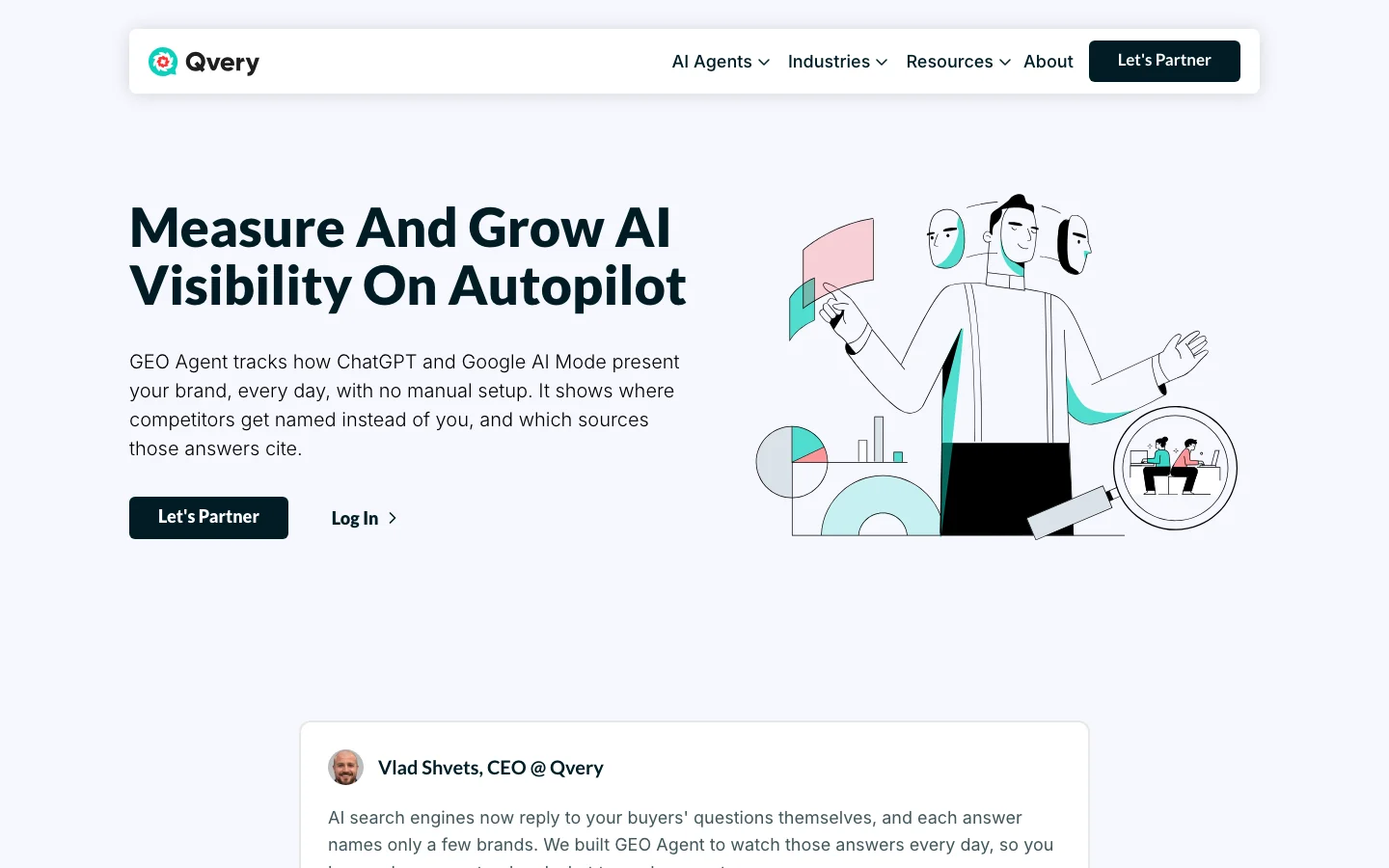
We make the GEO Agent, so this first entry is our own pick. It prepares buyer questions around your company and asks them daily on ChatGPT and Google AI Mode in your chosen countries.
You can see which competitors appear instead of you and open the sources behind the answers.
Qvery Assistant, a chat inside it, answers questions about that data and can add, change or delete topics and questions, start a run or export a report.
We also do the work those answers point to: correcting pages and sources, and making custom agents for recurring checks. That is our service, separate from the GEO Agent.
Price: not published. The GEO Agent runs daily on two engines; choose another entry if you need weekly runs or other assistants.
- Topics and questions written for you from your brand, industry and competitors
- Every question asked daily on ChatGPT and Google AI Mode, in the countries you choose
- Every answer and citation recorded
- Visibility, share of voice and sentiment beside competitors, by topic and by country
- The questions where a competitor is named instead, and the sources cited for your topics
- Qvery Assistant: ask about the data, change the questions, start a run, export a report
Pros
- The question list is written for you
- Daily on both engines, with every answer kept
- The optimization work and custom agents from the same team, as a service
Cons
- Two engines only
- Price: not published
- Daily runs only
Rankscale
One Plan, a Schedule for Every Question
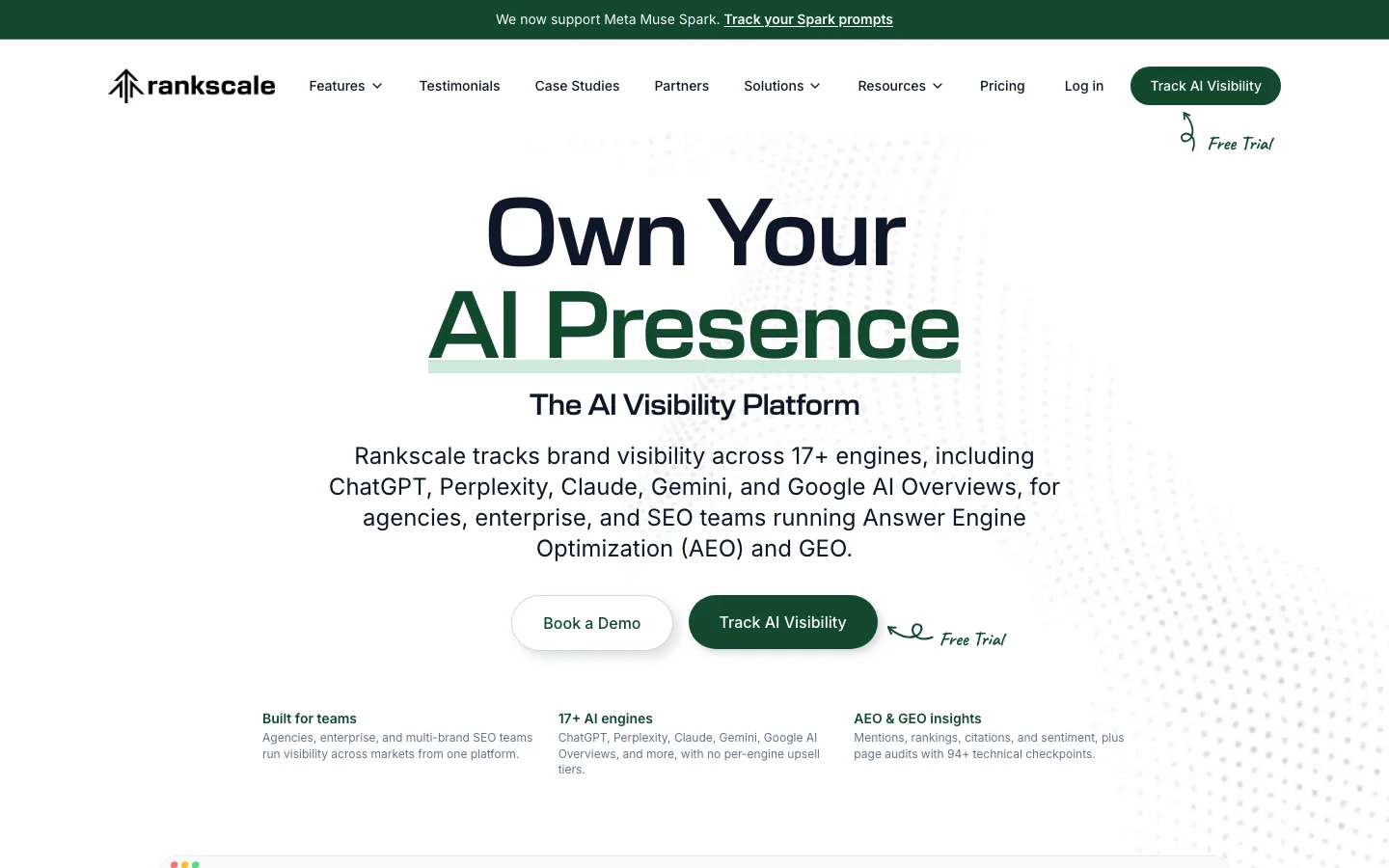
Rankscale lets you choose, question by question, between repetition and breadth. Pro costs $99 a month for 1,200 credits; a query to one engine uses about a quarter of a credit, which Rankscale turns into up to 4,800 answers a month across nine engines, ChatGPT and Google AI Mode among them.
Each question gets its own schedule, from hourly to monthly. Spent on ChatGPT and Google AI Mode alone, those 4,800 answers hold about 80 questions asked daily, about 560 asked weekly, or 2,400 asked monthly.
So the five questions the owner watches can run every day and the rest of the list once a week, on one bill.
- Nine engines on Pro, ChatGPT and Google AI Mode among them
- A schedule per question, from hourly to monthly
- Unlimited search terms and unlimited seats; the credits set how many run
- Scout recommendations, CSV and Sheets export, and an MCP connection
- Unused credits roll over, up to twice the monthly allowance on Pro
Independent discussion of Rankscale is thin, so test its coverage against your own question list before choosing it.
Pros
- A schedule you choose per question
- Nine engines on a $99 plan
- Credits that roll over
Cons
- Credits take arithmetic
- Two G2 reviews so far
- The API starts on Pro+
Peec AI
Fifty Questions a Day on Three Models You Pick
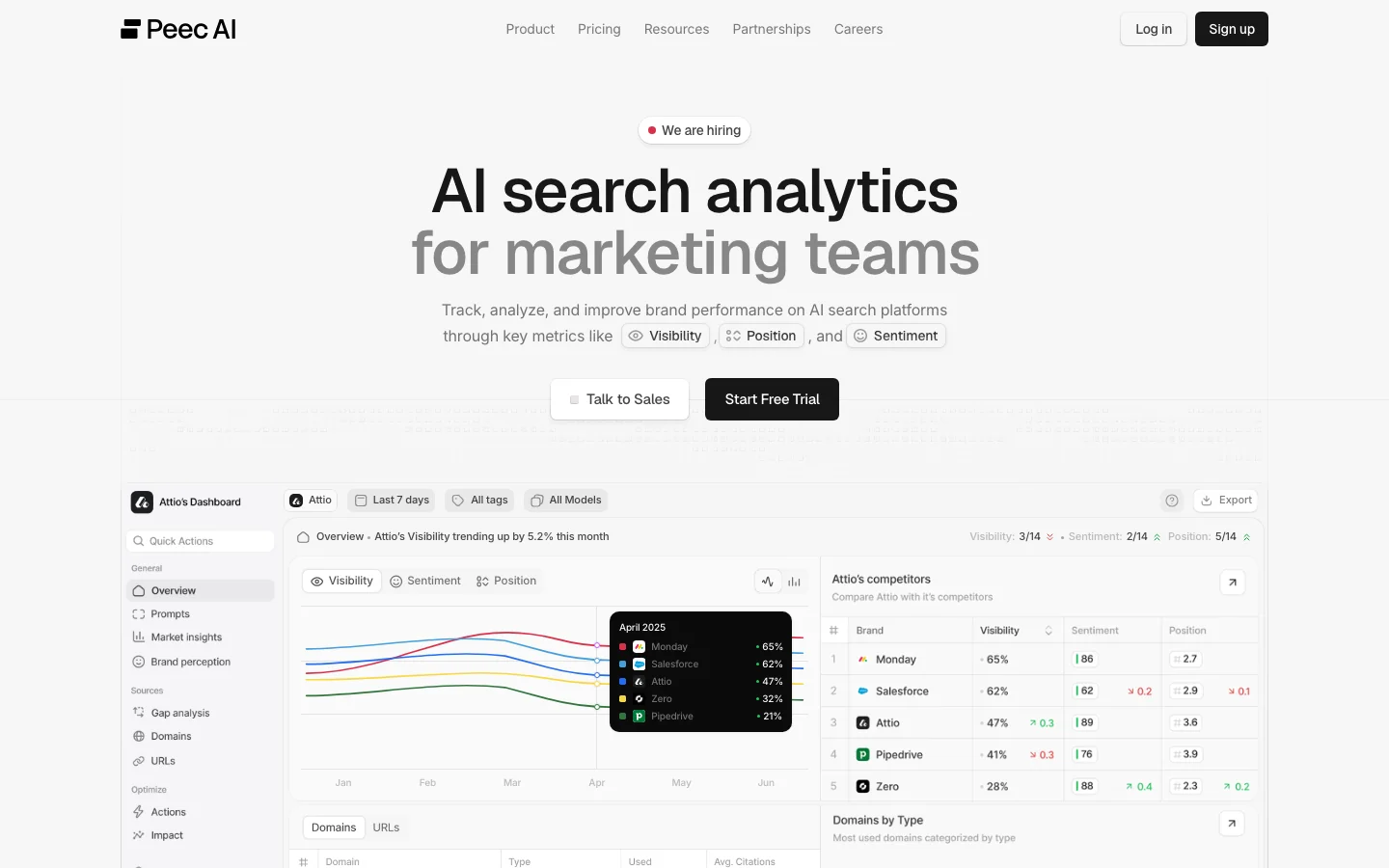
Peec AI's Starter asks 50 prompts every day on three of six models, ChatGPT and Google AI Mode among them, for $95 a month with unlimited users.
Peec's Starter asks twice as many questions as Mentions.so's Starter on the same number of models.
Peec suggests questions and checks answers against company facts you supply. Advanced adds several countries.
- 50 prompts a day on three of six models, ChatGPT and Google AI Mode among them
- Prompt suggestions from your brand context and coverage gaps, and prompts from your search terms
- Visibility, position, sentiment and share of voice against competitors
- Answers checked against facts you set, and ranked recommended actions
What Reddit says
I find Semrush gives you such random citation insights whereas Peec gives you real-time data from prompts you want to track. It's not cheap either (90€ per month) but I would make your clients pay for the subscription.
Peec's seven-day trial needs a card, and the EU checkout screen showed $296.45/mo on the $245 agency tier once VAT was added.
Pros
- Unlimited users on every plan
- Prompt suggestions from your own brand context
- Google AI Mode among the Starter models
Cons
- One country on Starter
- Three models unless you pay for more
- The next plan up is $245
LLMrefs
Five Hundred Prompts, Refreshed Every Week
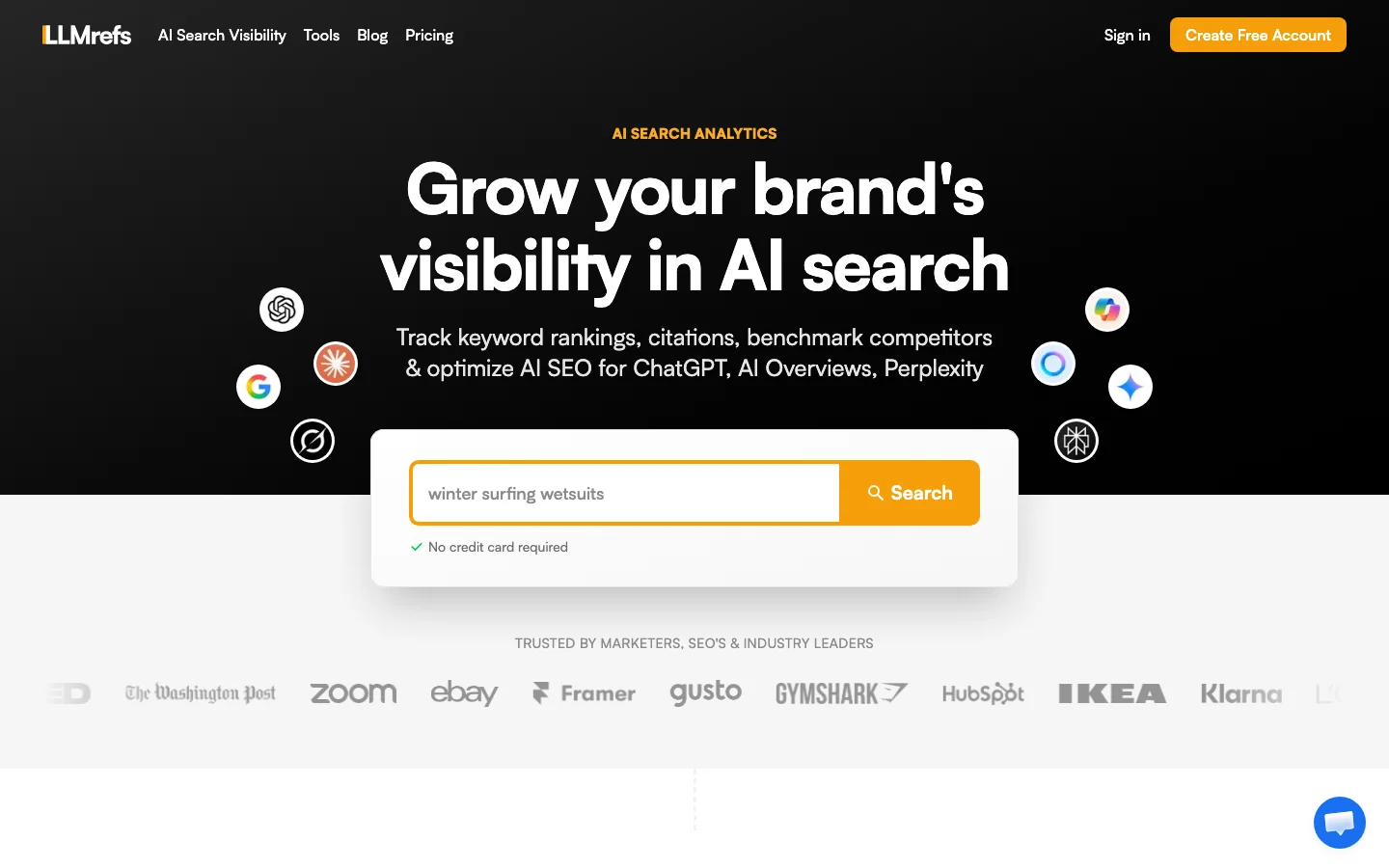
LLMrefs holds the longest list here for the money: one plan, $79 a month, 500 prompts, on every engine it covers with no extra fee, ChatGPT and Google AI Mode included. You give it search terms rather than full questions, and it writes the fan-out prompts from them.
LLMrefs refreshes each search term at least weekly. That suits a weekly review, but not someone who needs today’s answer today.
- 500 prompts on one plan, every engine it covers included
- Search terms in, fan-out prompts written for you
- Citation tracking and weekly reports
- 50+ countries, unlimited team members and projects, CSV export and an API
G2 lists no reviews of LLMrefs yet, and Reddit splits: people like the tracking and complain about reaching the company.
What Reddit says
I like the product. It has very nice AEO stuff ranking (not using it for SEO). My company has a pro subscription. However, it still blocks us at 25 keywords - should be allowed 50.
I am not able to cancel my subscription? dashboard has no billing options neither billing history? No replies last 2 days on their chat window neither email adress?
Llmrefs has the worst customer support I've seen in a long time
Pros
- The longest list for the money
- Every engine on one price
- Prompts written from your search terms
Cons
- Weekly, not daily
- Support complaints in 2026 threads
- No G2 reviews yet
Knowatoa
Questions Written for You, Drafts Waiting for Approval
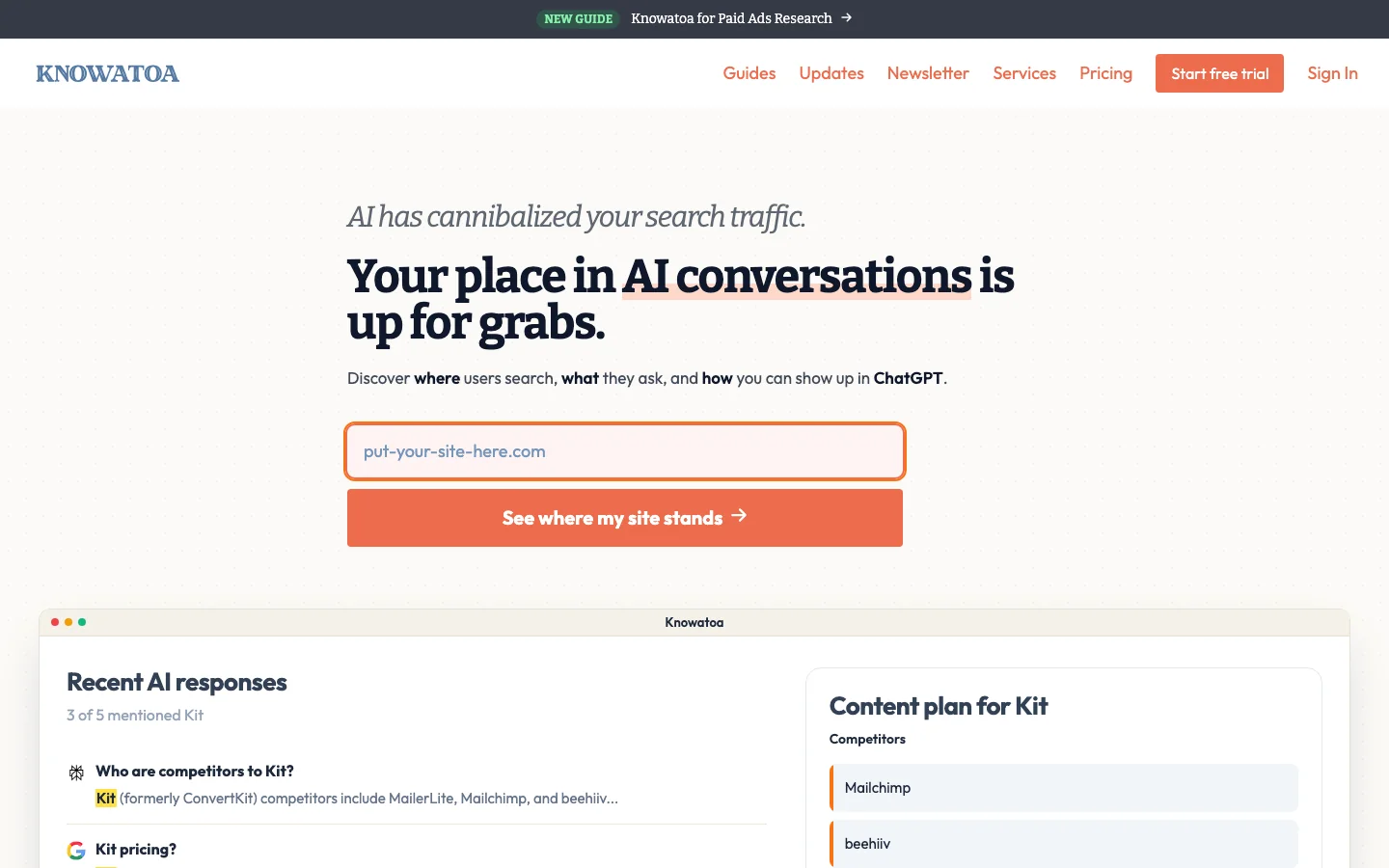
Knowatoa writes the list too: it generates the questions a buyer is most likely to ask, helps you pick the ones worth tracking, and pulls today's answers.
Starter costs $59 a month and asks ChatGPT, Google AI Overviews and Google AI Mode, with a weekly digest of what changed and alerts when sentiment turns. Its pricing FAQ says it analyzes the answers daily, because they change daily.
It also drafts the work. One agent researches gaps and another drafts articles; you approve each draft, or let them auto-approve at 10 AM. The pricing page does not print how many questions a plan holds: every site on the account shares one limit, and anyone who needs more is sent to a call.
- Likely buyer questions generated for you, and help picking which to track
- ChatGPT, Google AI Overviews and Google AI Mode on Starter; seven services on Growth
- A weekly digest of what changed, and sentiment alerts
- Agents that research gaps and draft articles for your approval
- Language and location set per account, site or question
Reddit barely discusses Knowatoa: the few mentions in the threads behind this list came from people selling something of their own, and G2 lists no reviews yet.
Pros
- Questions written for you
- Google AI Mode on the $59 plan
- Drafts you approve before they ship
Cons
- Question limit not published
- No API below Growth
- No independent reviews yet
OtterlyAI
Fifteen Questions a Day for the Smallest Bill
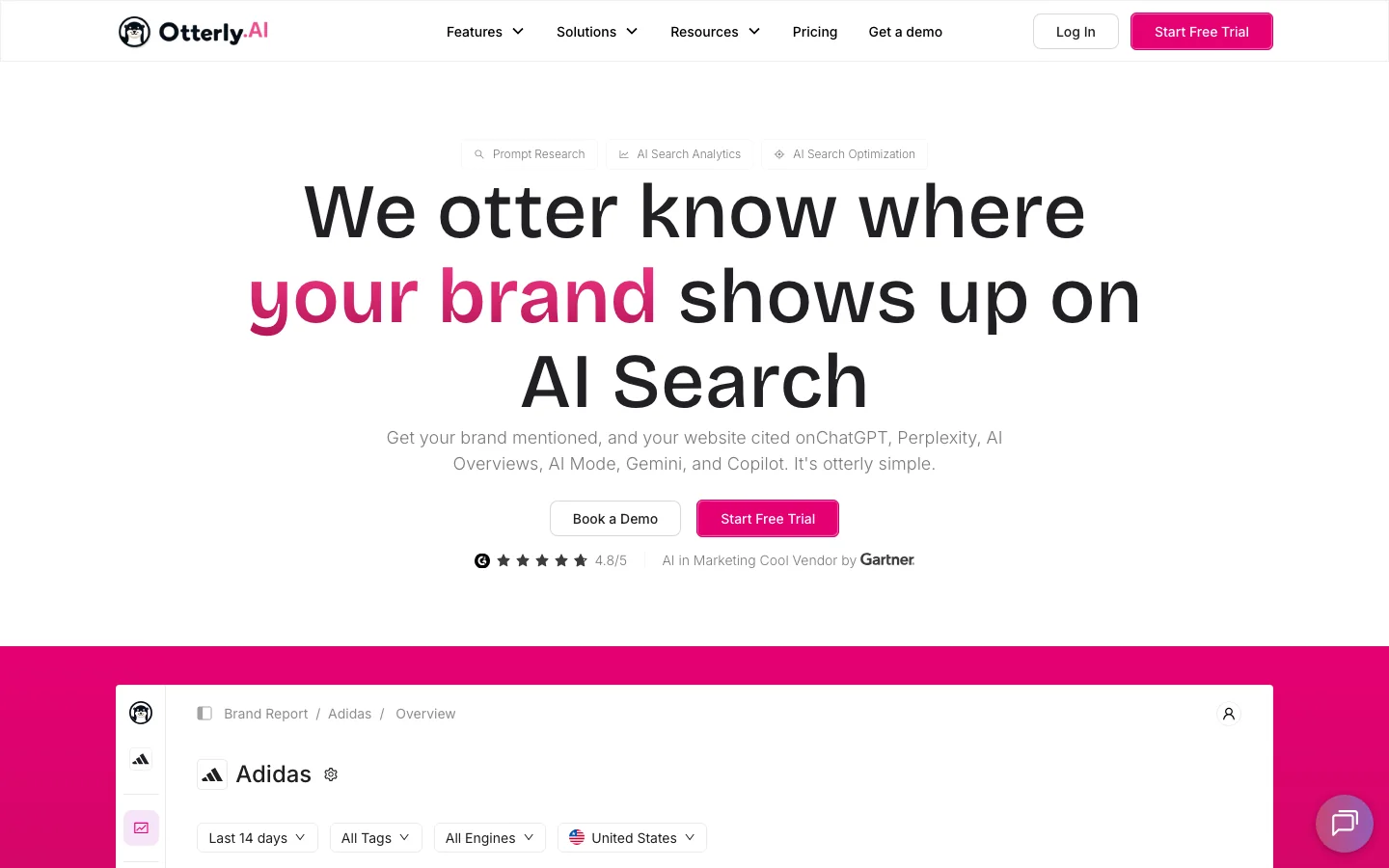
OtterlyAI is the cheapest way on this list to ask ChatGPT and Google AI Mode a short list every day. Lite costs $29 a month for 15 prompts on four engines, ChatGPT among them, and Google AI Mode is a $9 add-on, so the pair costs $38.
OtterlyAI says your markets, languages, and products determine the question count. Beyond Lite, Standard holds 100 prompts at $189, plus $59 for Google AI Mode.
- 15 prompts a day on four engines, ChatGPT among them; Google AI Mode as an add-on
- Unlimited team members on every plan
- Three recommendations a week on Lite, unlimited from Standard
- Monthly billing, stopped from your account settings
What Reddit says
Otterly gave me the full report with no card at all.
Otterly / Peec for prompt tracking. Both fine. Neither is magic.
Otterly — small team, need multi-client, want API access without enterprise pricing. Watch the engine add-ons.
Pros
- The smallest bill for both engines
- Unlimited team members
- A prompt calculator on its own pricing page
Cons
- 15 prompts on Lite
- Google AI Mode costs extra
- Add-ons grow with the plan
Twenty-Five a Day or Five Hundred a Week: What Each First Plan Holds
Here is the first plan of each that asks both ChatGPT and Google AI Mode, as each vendor's page showed it on October 18, 2026, with Mentions.so's Starter last for reference. Put your own count beside the middle column.
| Plan | Questions | How often |
|---|---|---|
| GEO Agent by Qvery, price not published | Written for you | Daily |
| Rankscale Pro, $99 | About 80 daily or 560 weekly | Set per question |
| Peec AI Starter, $95 | 50 | Daily |
| LLMrefs, $79 | 500 | At least weekly |
| Knowatoa Starter, $59 | Not printed | Daily, weekly digest |
| OtterlyAI Lite with Google AI Mode, $38 | 15 | Daily |
| Mentions.so Starter, $49, no Google AI Mode listed | 25 | Daily |
Asking every day buys repetition: about 30 answers a month for each question on each engine. That matters because the same question gets a different answer from one day to the next.
In the GEO Agent's daily records, two readings of the same question list with each question asked once put a company's visibility 8.00 points or more apart one time in ten on ChatGPT. A month of daily askings, split into two halves, narrowed that to 2.02 points.
Asking once a week buys breadth instead: about four answers a month per question, too few to read any one question with confidence, enough to read a topic of fifty.
A long list read weekly tells you which topics name you; a short list read daily tells you whether this week moved. Rankscale is the only plan here whose page lets you mix the two on one bill.
Pick by How Long Your List Is and How Often Someone Reads It
- If the list does not exist yet, start where it is written for you: the GEO Agent or Knowatoa.
- If five to fifteen questions matter and someone checks them daily, OtterlyAI asks them on both engines for the smallest bill, and Peec AI holds fifty.
- If the list runs to hundreds and gets read in a weekly meeting, LLMrefs holds 500 for $79, and Rankscale runs the few that matter daily and the rest weekly.
- If your buyers ask from several countries, LLMrefs, Rankscale and OtterlyAI include countries on their first plans, Knowatoa sets location per question, and Peec AI adds several countries on Advanced.
- If nobody in the company has the hours to read it, name that person before you pick a tool, because the plan bills the same whether anyone opens the report or not.
- If your list is under 25 questions on one site and someone reads it every day, Mentions.so's Starter already fits, and none of these buys you much.
Under 25 questions, read daily, with no need for Google AI Mode or generated questions or drafts: keep what you have. Otherwise, compare the allowances above against your list.
Whichever plan you choose measures only the list it holds, so start with a month of your own buyers' questions on both engines, every day, with every answer kept: that month shows which answers hold before anything moves to weekly.
Have an Agent Decide Which Questions Run Daily and Which Run Weekly
Revisit the schedule monthly as answers and services change. This is the brief I would give an agent that prepares those decisions.
What it reads
Last month's export from your tracking tool (each answer, the companies it named and the pages it cited, by question and day) and your question list, tagged with the service and the market each question serves.
What starts it
Once a month, when the month's export closes, a week before the review.
The rule it checks
A question whose answer named the same companies, cited the same pages and said the same things about you on, say, 25 of 30 days moves to weekly. A question whose answer kept changing, or that serves the service you most want to sell this quarter, stays daily. The total has to fit the plan's allowance with room to spare.
What it produces
Next month's schedule: each question marked daily or weekly, the answers it will use, and one line per change saying why.
Who approves it
The person who runs the review. Nothing changes in the tool until they accept the schedule.
Where the plan has one schedule
On every plan here except Rankscale's, the same rule decides which questions earn a place on the daily list and which move to a weekly plan or come off.
How it is counted
Answers used against the plan's allowance each month, and the share of weekly questions whose answer changed between two runs. If that share climbs toward the daily list's, the rule is moving questions that still need watching.
Keep one month of daily answers before anything moves to weekly. Without that month, the agent has no way to tell a question whose answer is steady from one that happened to repeat for a week.
How Qvery Puts Your Question List to Work
We help you decide what deserves attention after you choose a tracker. To prepare buyer questions and topics, our GEO Agent draws on your industry, brand, and competitors. It runs those questions daily using ChatGPT and Google AI Mode. The full responses stay on record, citations included.
You can read your visibility alongside competitors, compare share of voice, and examine sentiment by country and topic. We take those findings into the work of correcting the facts and pages behind the answers.
To handle the schedule review, we follow how your reviewer sorts an export today. We then make a custom agent that works in your existing systems and prepares schedules independently, leaving acceptance to that person.
Two weeks is enough for us to put the first working version in your reviewer’s hands and train them to challenge its recommendations. This is a separate agent built for your workflow, not a scheduling feature of the GEO Agent.
During each weekly review, we tally time saved sorting questions and scheduling errors avoided. Your export gives us the starting point for that work.
Choose an Owner Before Another Plan
Keep the person who reads the answers involved in the purchase. If the same team also retypes website inquiries into your CRM, that is another job to examine separately from tracking.
Frequently asked questions
Does Mentions.so track Google AI Mode?
Its homepage names eight models, from ChatGPT and Perplexity to Google AI Overviews and Llama, and Google AI Mode is not among them. Starter tracks three of those models and the higher plans track all of them. If your buyers use Google AI Mode, ask Mentions.so directly before you assume either way.
How many questions does a company like ours need?
Count one for each service, each kind of buyer and each country, then add the two or three ways buyers word the same thing; twelve becomes about thirty. OtterlyAI's own pricing page says the count depends on your markets, languages and products.
Is daily tracking worth it if we read the report once a month?
Daily tracking gives about 30 answers per question per engine in a month; weekly gives about four. A weekly run covers more questions for the same answer allowance, while daily runs give you more evidence about each question. Rankscale lets you mix both schedules.
Which of these let us ask some questions daily and others weekly?
Rankscale sets a schedule for each question, from hourly to monthly. Peec AI's custom plan runs daily or weekly, LLMrefs refreshes every search term at least weekly, and Qvery's GEO Agent, OtterlyAI and Mentions.so ask every question daily. Anywhere else, the way to mix the two is to split the list across two plans.
Who in the company should own this?
Whoever hears buyers' questions first: the head of sales, or the person who answers the website's inquiries. They know which questions are real, and they can tell a wrong answer about the company from a fair one.
Can we run two of these side by side before we decide?
Use the same questions, engines, and countries in both tools, then compare answers from the same day. Rankscale, Peec AI, LLMrefs, Knowatoa, and OtterlyAI list trials, but a month-long comparison requires monthly plans when the trials expire.
Will any of these show that AI answers bring us inquiries?
Mentions.so lists AI traffic analytics, and Peec AI counts AI referrals, but visits alone do not show which buyers became inquiries. Record the inquiry in your CRM and ask how the buyer found you; that adds their account to the dashboard data.
Which alternative holds hundreds of questions on one plan?
LLMrefs lists 500 prompts for $79 a month, with each search term refreshed at least weekly. Rankscale Pro can accommodate about 560 questions asked weekly on ChatGPT and Google AI Mode, but its credits also cover any daily questions you keep.
Does the lowest OtterlyAI price include Google AI Mode?
No. Lite costs $29 a month for 15 prompts, and Google AI Mode adds $9, bringing that combination to $38. The add-on increases with the plan, so compare the total for the question list you intend to run.
What should we confirm before buying Knowatoa?
Ask for the question allowance in writing because its pricing page does not publish the limit. All sites on the account share that allowance, so the number of sites alone does not tell you how much you can track.
Can an agent change our tracking schedule without approval?
In the workflow described here, the agent proposes a schedule and explains each change. The person responsible for reviewing answers accepts it before anything changes in the tracking tool.
What does Qvery do beyond providing a tracker?
We work on the pages and facts behind AI answers and build custom agents for repeated jobs such as sorting tracking exports. We have a first version working within two weeks, train its operator, and review the hours saved and errors avoided each week.
