
On this page
If your team pays for Ahrefs, another tracker means another bill and another set of answers to review. That leaves a buying decision: replace the search suite, or add a tool beside it?
Entry 1 is Qvery's own, first because we make it. The other seven are ordered with the ones that take over the most first, then by what their first plan covers, from their own pages on October 18, 2026.
GEO Agent by Qvery
Your Buyers' Questions and Every Page the Answers Cite
This first entry is our own product, Qvery's GEO Agent. It uses your brand, industry, and competitors to create buyer questions, then runs them daily on ChatGPT and Google AI Mode for your chosen countries. It keeps the full responses with all their citations.
You can see where rivals appear instead of you and compare their share of voice, sentiment, and visibility with yours, by country and topic. Qvery Assistant lets you ask about that data, change questions, run them again, or export a report.
It covers ChatGPT and Google AI Mode; backlinks (links from other sites), rankings, and audits stay in Ahrefs. Price: not published.
We do the page and source work with you as a separate service.
- It creates questions using your brand, industry, and competitors.
- It runs each question daily on ChatGPT and Google AI Mode in your chosen countries.
- It retains the complete answers with all their citations.
- You see which questions name a rival instead and which sources get cited.
- You can compare sentiment, share of voice, and visibility by topic and country.
- Qvery Assistant answers questions about your data, edits queries, starts runs, and exports reports.
Pros
- Questions written for you, asked every day
- Full responses kept with their citations
- The page work and custom agents from the same team
Cons
- Two engines only
- No published price
- None of Ahrefs' search work
SE Ranking
Backlinks, Rankings and AI Questions in One Plan
SE Ranking Core costs $129 a month for rank tracking, search-term, competitor, and backlink research, plus site audits and 25 AI questions a day on five platforms. Its tracker names Google AI Overviews, Google AI Mode, ChatGPT, and Gemini.
Its source view maps the domains and URLs that appear in AI answers and sorts them by type (media, blogs, forums): the third-party list in a form one person can work from.
Core has one manager seat; Growth adds two more. The trial runs 14 days with no card, and an annual plan comes with free migration of your projects.
- Rank tracking, search-term, competitor and backlink research, and a site audit on every plan
- 25 AI questions a day on Core and on Growth, on five AI platforms
- AI sources tracked without a cap and sorted by type
- GEO research on 5 domains with Core, 15 with Growth
The Reddit discussion is mostly about SE Ranking's rank tracking, with little evidence about its AI features.
Pros
- Backlinks, rankings and AI questions on one bill
- Cited sources sorted by type
- 14-day trial without a card
Cons
- One manager seat on Core
- More questions cost a plan step or an add-on
- Little Reddit discussion of its AI side
Semrush
The Bigger Suite, With a Sources Report for Your Questions
Semrush is the other whole swap and the bigger suite: search-term research, backlink analysis, position tracking and site audits sit beside AI visibility in one account. Starter costs $199 a month ($165.17 billed annually) for 500 tracked search terms and 50 questions a day.
It asks your questions on ChatGPT, Google AI Mode or Gemini, one engine per campaign, so covering ChatGPT and Google AI Mode takes two campaigns sharing the 50. Its Sources report lists every domain and URL the answers cite for those questions, your own pages included.
If your team wants only the AI side next to the Ahrefs it already has, the AI Visibility toolkit on its own costs $99 a month per domain, billed annually, for 25 questions.
- Search-term research, backlink analysis, position tracking and site audit
- Question tracking on ChatGPT, Google AI Mode or Gemini, one engine per campaign
- A Sources report of every cited domain and URL for your questions
- Brand Performance: share of voice and sentiment from questions Semrush writes for your business, updated weekly
What Reddit says
I remember Semrush One offering some interesting AI visibility info that I used to figure out what was ranking for queries we wanted to be mentioned for.
I agree re that whole percentage score. Semrush does that too and it always feels like a vanity metric.
Pros
- Every cited URL for your questions in one report
- The suite and the AI side on one login
- A toolkit on its own if you keep Ahrefs
Cons
- One engine per campaign
- Starter's 50 questions are shared across engines
- The toolkit is billed annually
Nightwatch
Rank Tracking and Six AI Platforms on One Screen
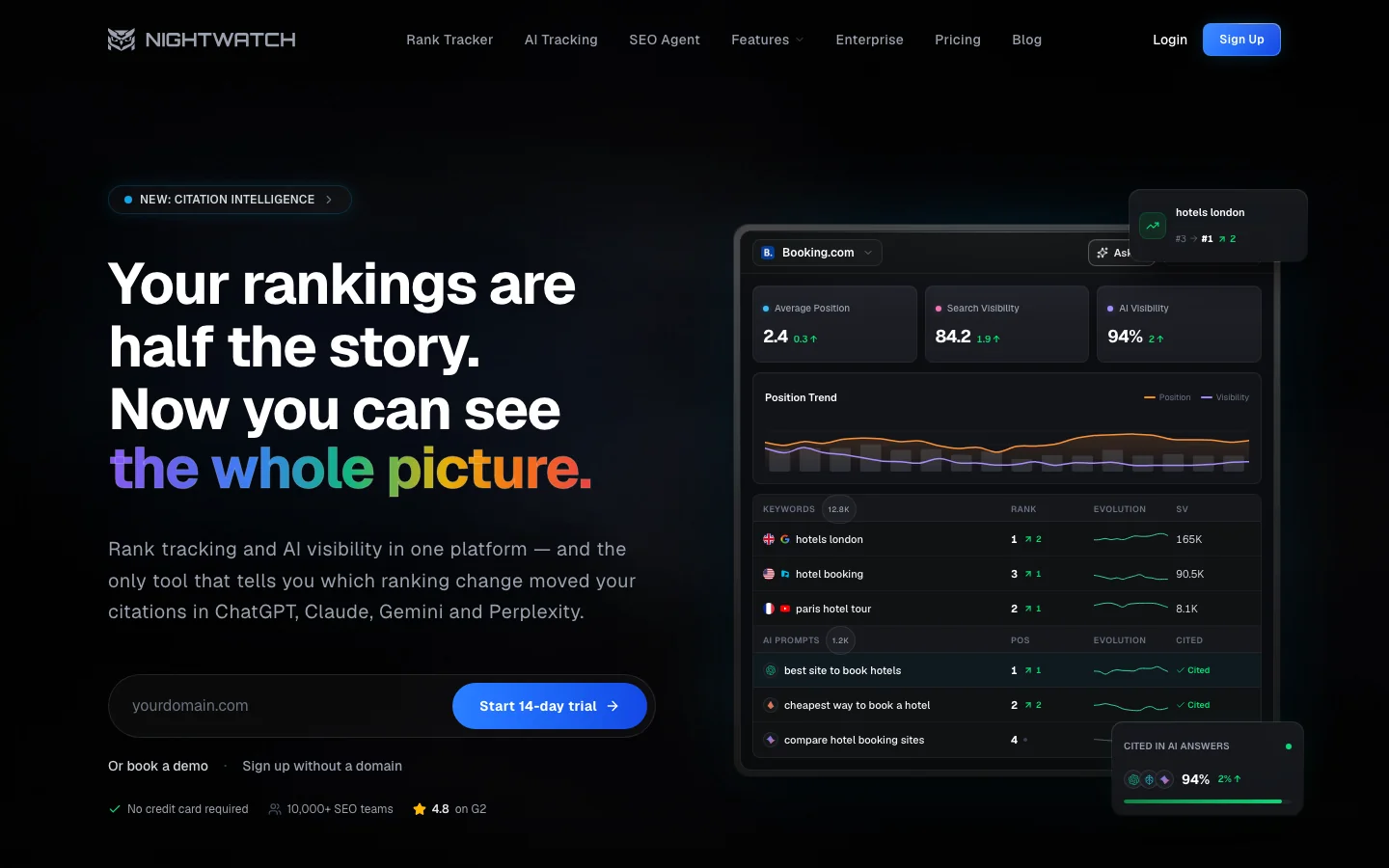
Nightwatch takes over part of Ahrefs' job: rank tracking on Google, YouTube and Bing, research on search terms and a site audit, with AI questions on every plan. Its pricing page lists no backlink tool, so the link side stays where it lives now.
Starter costs €79 a month for 500 tracked search terms and 50 AI questions tracked daily, and every plan reaches ChatGPT, Claude, Gemini, Perplexity, AI Mode and AI Overviews, with unlimited seats.
Starter's 1,500 AI answers a month work out to one engine per question per day, so asking two engines halves the questions.
Its Citation Intelligence page promises to show which answer named you and which page it cited, and to trace AI mentions to the search visits they bring.
- Rank tracking on Google, YouTube and Bing, with search-term research and site audits
- 50 AI questions a day on Starter, on six AI platforms
- The URLs cited in each answer
- Unlimited seats on every plan
Reddit has barely discussed Nightwatch's AI tracking.
Pros
- Rankings and AI questions on one screen
- Six AI platforms on every plan
- Unlimited seats
Cons
- No backlink index
- 1,500 answers a month on Starter, one engine per question
- Little independent discussion of its AI side
Peec AI
Every Cited Source Sorted by Kind
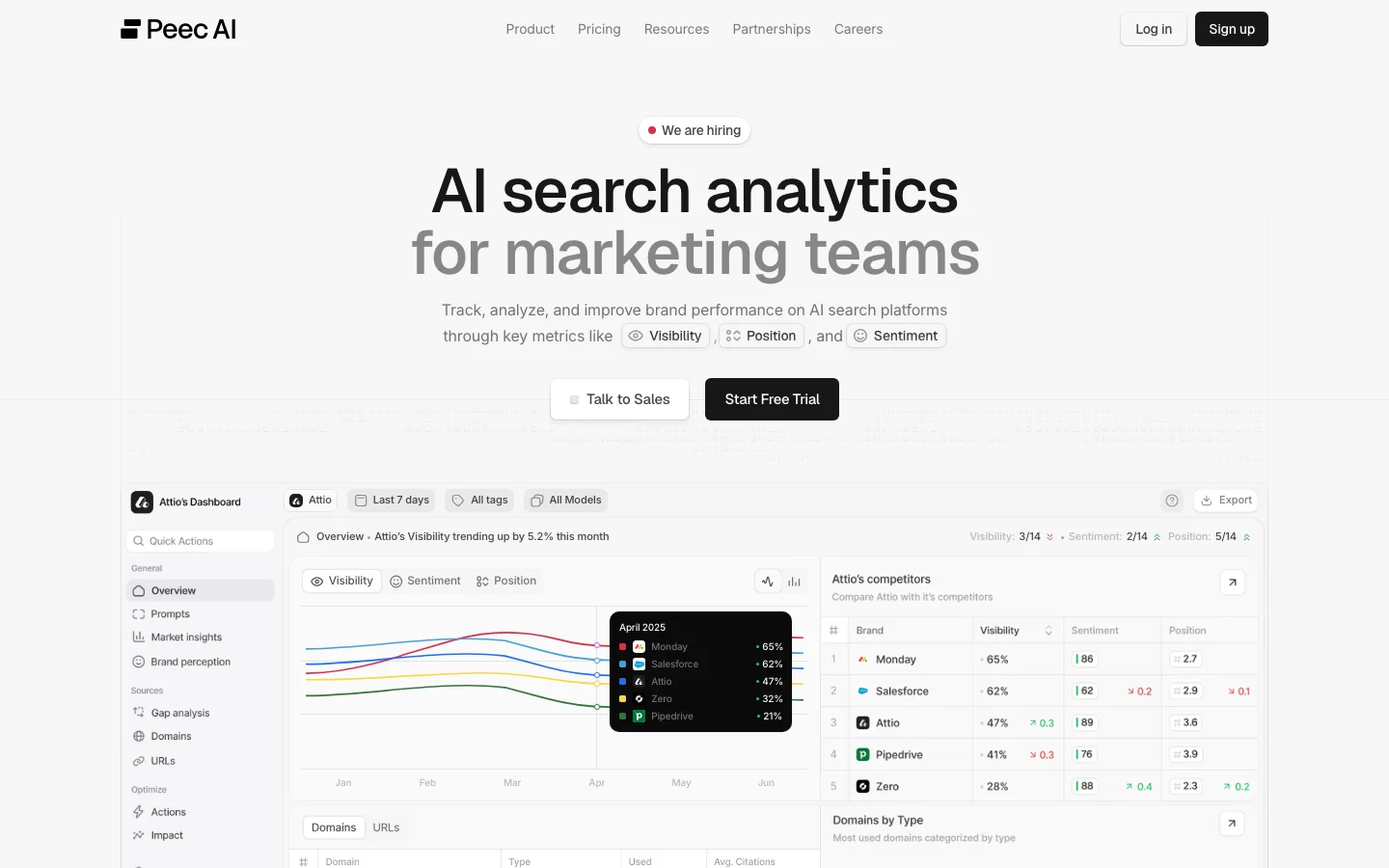
Peec AI does AI answers only and leaves the search work to Ahrefs. Starter costs $95 a month for 50 questions on three models you choose, and ChatGPT and Google AI Mode are both on the menu, so one plan asks both engines every day.
Each cited source is classified as a competitor, editorial, or reference page, and a gap view lists the sources that name your competitors but not you. Its pages also list a check of the answers against facts you set about your company.
Starter covers one country and one project, and every plan has unlimited users.
- 50 questions a day on Starter, on three models you pick, ChatGPT and Google AI Mode among them
- Every cited source classified by kind
- A gap view: the sources that name competitors and not you
- Answers checked against facts you set
- Unlimited users on every plan
Pros
- Both engines inside the Starter price
- Cited sources sorted by kind
- Unlimited users
Cons
- Three models at a time below the custom plan
- One country on Starter
- None of Ahrefs' search work
Rankscale
Credits Instead of Questions, Nine Engines on Pro
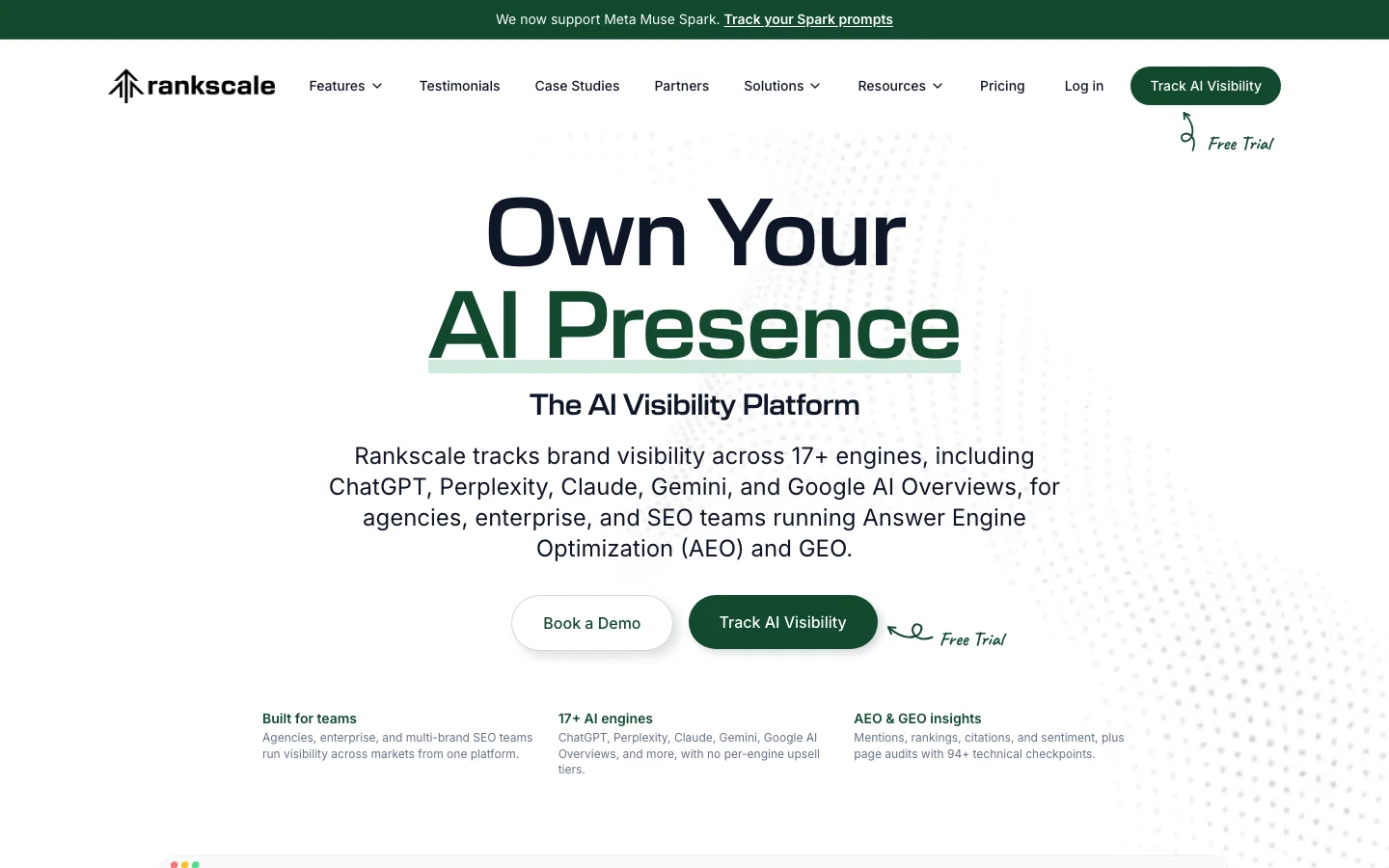
Rankscale meters answers rather than questions. Pro costs $99 a month for 1,200 credits, enough for up to 4,800 AI answers, and one query to one engine typically uses a quarter of a credit. Search terms are unlimited; the credits are what run out.
Pro reaches nine engines, ChatGPT and Google AI Mode among them, on any schedule from hourly to monthly. Its citations analysis shows which sources the engines cite when they mention you and your competitors. Pro has a seven-day trial, and a yearly-only Essentials plan starts lower.
- Credits instead of a question cap: up to 4,800 answers a month on Pro
- Nine engines, ChatGPT and Google AI Mode among them
- Citations analysis for you and your competitors
- Scheduling from hourly to monthly
- 10 brand dashboards on Pro
Rankscale has two G2 reviews, too few to support a rating. Its independent Reddit discussion is also thin.
Pros
- Pay for answers, not a question cap
- Nine engines on Pro
- Any schedule, hourly to monthly
Cons
- Credits take arithmetic before you know your volume
- None of Ahrefs' search work
- Little independent discussion
OtterlyAI
Fifteen Questions and Every Link Behind Them
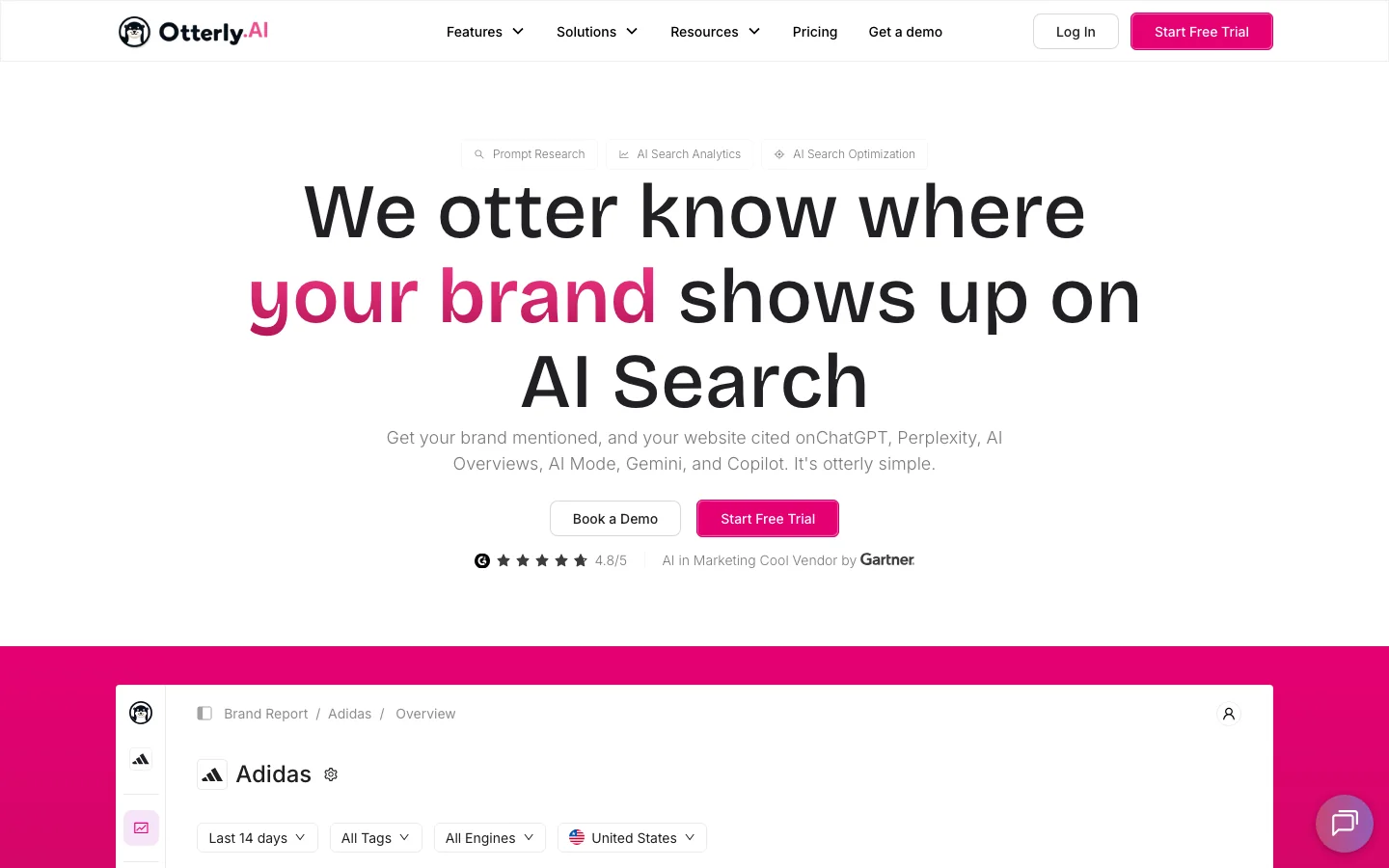
OtterlyAI has the lowest month-to-month price here for watching your own questions with their cited links. Lite costs $29 a month for 15 questions on ChatGPT, Google AI Overviews, Perplexity and Copilot.
Google AI Mode is a $9 add-on, so the two engines this list ranks on cost $38 a month.
Every plan tracks citation sources, analyzes the cited links and ranks the cited domains, with unlimited team members; Lite has one workspace and three recommendations a week. Standard, at $189 plus $59 for AI Mode, takes 100 questions and adds the API.
- Citation source tracking and link citations analysis on every plan
- The cited domains ranked
- Brand visibility and sentiment against competitors
- Unlimited team members
- Google AI Mode, Gemini and Claude as add-ons
Pros
- The lowest month-to-month price here
- Cited sources and links on every plan
- Unlimited team members
Cons
- Google AI Mode costs extra
- 15 questions on Lite
- Three recommendations a week on Lite
Profound
Measurement and Marketing Agents in One Contract
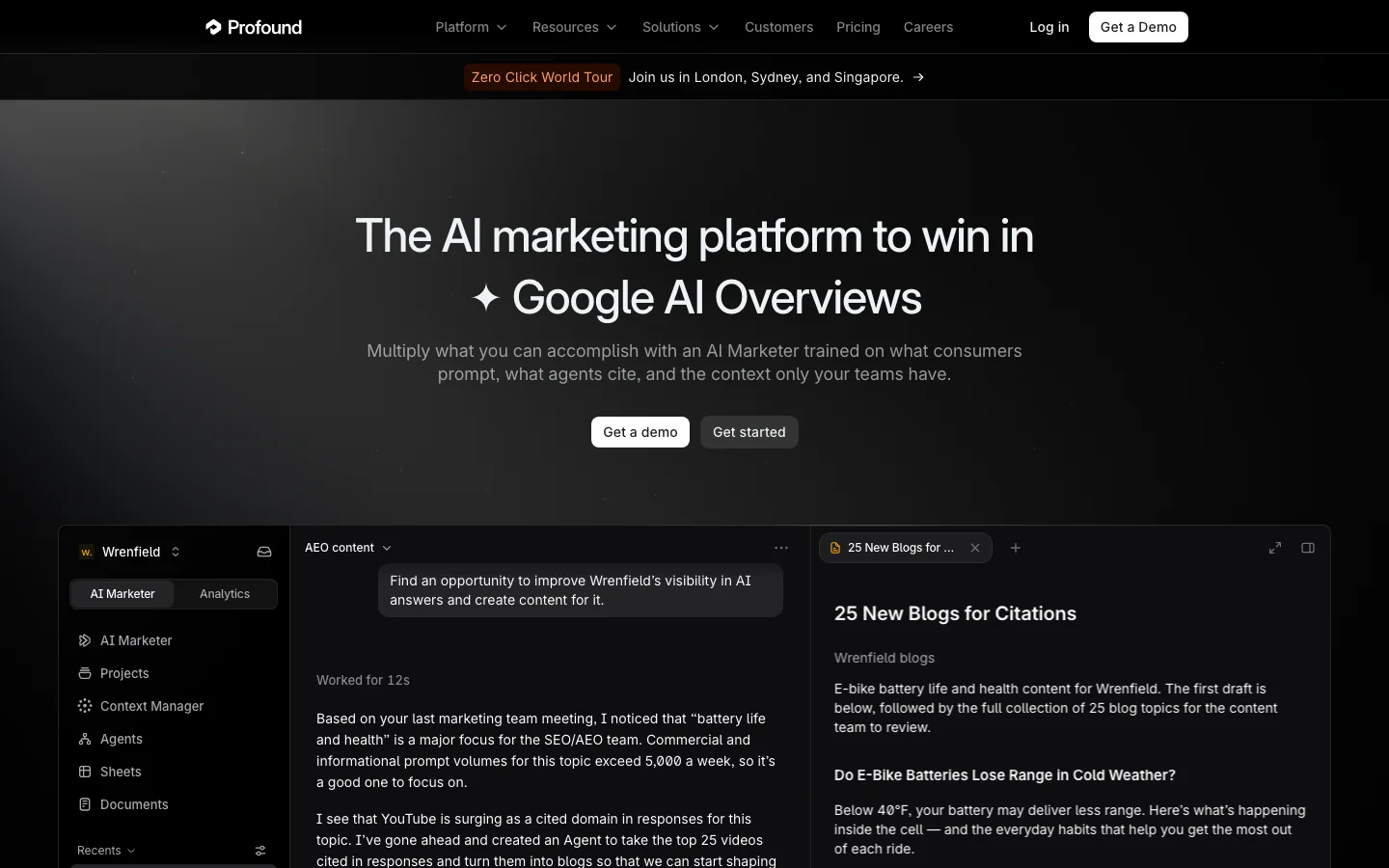
Profound sells measurement alongside agents that act on it. Its brand plans are a seven-day trial with 50 daily questions on ChatGPT, Gemini, and Google AI Overviews, and a custom plan. Google AI Mode requires the custom plan, which covers up to nine engines.
On that plan its citation analysis shows which websites influence the answers about your brand, exports come as CSV and JSON, and its AI Marketer's agents run on credits for research, writing and reports. Seats are unlimited on both options; the trial runs a recommended question set you can't edit.
- Up to nine engines on the top plan, Google AI Mode among them
- Citation analysis: the websites behind the answers about you
- AI Marketer agents for research, content and reporting, on credits
- CSV and JSON exports and an API on the top plan
- Unlimited seats
Pros
- Up to nine engines on the custom plan
- Agents that research and write
- CSV and JSON exports
Cons
- Google AI Mode only on the custom plan
- The trial runs a set question list
- No published price for brands
How Much of Ahrefs Each Tool Replaces
Ahrefs Brand Radar already tracks 5 to 20 custom questions daily on one engine with Lite, Standard, and Advanced, and lists the cited pages.
 Piotr BabelPartner @ Qvery
Ahrefs' referring domains and an AI tracker's cited pages are both lists of other people's sites, but the cited list exists only in the answers the tracker collected. It is as complete as the questions behind it and as fresh as the last run. Before you pick from the table, check that the tool keeps each URL beside the answer that cited it; without that, you know a page matters but not for which buyer question.
Read a row across: the second column is what you could stop doing in Ahrefs, and the third is the AI side.
| Tool | Takes over Ahrefs' search work | Questions on ChatGPT and Google AI Mode; cited pages | From | Start with it if |
|---|---|---|---|---|
| Ahrefs itself | It is the search suite | Yes, 5 to 20 a day on one engine; Cited pages report | Included, $50 for more | You want to use the questions your plan includes |
| GEO Agent by Qvery | No | Yes, daily; Every citation | Not published | You want your buyer questions written and run daily |
| SE Ranking | Yes | Yes, among 5 platforms; Sorted by type | $129 | You want search work and AI answers on one bill |
| Semrush | Yes | Yes, one engine per campaign; Every domain and URL | $199, or $99 for the toolkit | You want one larger suite or a separate AI toolkit |
| Nightwatch | Rankings and audits | Yes, one engine per question a day; URLs per answer | €79 | You mainly use Ahrefs for rankings and audits |
| Peec AI | No | Yes, 2 of 3 models; Sorted by kind | $95 | You keep Ahrefs for links and want sources sorted by kind |
| Rankscale | No | Yes, on Pro; Citations analysis | $99 | Your question count changes from month to month |
| OtterlyAI | No | With a $9 add-on; Links and domains | $38 | You keep Ahrefs and track a short list of questions |
| Profound | No | Custom plan; Websites behind answers | Quoted | Your team uses research and writing agents each week |
Five of the eight leave Ahrefs' search work where it is, so the choice starts with what your team uses Ahrefs for today.
 Vlad ShvetsPartner @ Qvery
Decide by what your team still opens Ahrefs for each week. If it is rankings and audits, Nightwatch takes that over and adds AI questions; if it is the whole suite, SE Ranking or Semrush can replace it on one bill. If backlink research feeds your outreach, keep Ahrefs and add a tracker beside it, priced on what it runs on ChatGPT and Google AI Mode rather than on its headline allowance.
Who Fixes the Pages the Answers Read
At Qvery, we help companies cut the hours lost keeping cited pages right, with custom AI agents that spot where a rival is named in your place and draft the fix.
Qvery's agents check the pages against your company facts and draft corrections, but nothing goes out until a person approves it.
The checking starts from knowing what your buyers were told.
How the First Page Checks Begin
Whoever checks the pages behind AI answers today walks us through it, and you decide which pages, listings and company facts the agents may open. By the second week with that access, they are checking your own pages and listings against those facts.
The cited-page list then arrives with its corrections attached: which page disagrees with your facts, what it says, and the change the agents drafted.
Frequently asked questions
Should we replace Ahrefs or add an AI visibility tool?
Add a tracker if you still need Ahrefs for search work. SE Ranking and Semrush also cover backlinks, rankings, and audits; Nightwatch covers rankings and audits, while the other entries focus on AI answers.
Does Ahrefs already track AI answers?
Ahrefs Brand Radar tracks custom questions daily, with 5, 10, or 20 included on Lite, Standard, and Advanced respectively, on one engine. Packages from $50 a month add checks.
Which plans include Google AI Mode?
SE Ranking Core, Semrush Starter, Nightwatch Starter, Peec AI Starter, and Rankscale Pro include it, subject to their campaign or model limits. OtterlyAI Lite charges $9 extra, and Profound includes it on its custom plan.
Who on our team should work through the cited-page list?
Give the cited-page list to whoever runs your outreach or PR. That person can judge whether a page fits your company, approve a correction request, and record what changed after the request.
What should we check before paying for another tracker?
Check how many of your own questions the plan runs, which engines it covers, and whether you can inspect the cited URLs. A headline question allowance can be shared across engines: Semrush Starter shares its 50 questions between campaigns, while Nightwatch Starter includes 1,500 answers a month.
Does tracking more often use more credits?
On a credit plan, each extra run spends part of your allowance even when your question list stays the same. Rankscale charges for queries to each engine, so a faster schedule leaves less capacity for other questions. An hourly setting is a spending choice, not evidence that you need an hourly report.
Will my engine add-ons cost more when I upgrade?
They can rise with the base plan. OtterlyAI lists Google AI Mode at $9 more on Lite and $59 more on Standard, so moving up changes both parts of that bill. Your budget needs room for the larger add-on as well as the larger question allowance.
Does a higher plan always give me more AI questions?
No. SE Ranking Core and Growth both list 25 questions a day here, although Growth expands projects, seats, and tracked search terms. If AI capacity is your reason to spend more, that plan change alone does not solve it.
Does a monthly price mean I can pay month to month?
No. Semrush's separate AI Visibility toolkit and Rankscale Essentials show monthly rates tied to annual billing. Treat those as annual commitments in your budget; a monthly rate is not the same thing as a monthly payment option.
Will adding colleagues force us onto a bigger plan?
Not on a plan with unlimited users, such as Peec AI Starter. That makes access a separate decision from how much tracking you buy: more colleagues do not mean you need more questions or countries. For a small team sharing the same reports, a seat allowance can matter more than unused tracking capacity.
Can one project cover several countries?
Not always. Peec AI counts projects and countries separately, so a plan with room for your brand can still cover too few of your markets. For an international team, the country limit matters as much as the number of questions.
Can I put the results into our own reporting system?
That depends on whether you need exported files or an automated connection. Profound's custom plan lists CSV and JSON exports as well as an API; OtterlyAI places API access on Standard. If another system needs to collect the results, API access belongs in the buying decision even when a smaller question allowance would suffice.
What if two tools show different visibility results?
Treat the results as separate views until their question sets and engine coverage match. Semrush distinguishes tracking your questions from Brand Performance, which uses questions it writes for your business. A disagreement between those views is not enough to call either result wrong or your visibility worse.
Does a brand mention mean the answer got our facts right?
A mention is not a factual check. Peec AI treats checking claims against company facts as a separate feature, which is a useful distinction when you read a visibility report. You can want more mentions and still need to correct what an answer says about you.
Does a high review score prove the AI tracker is good?
Not on its own. A G2 score rates the whole product, so for a suite like SE Ranking or Semrush it reflects the rank tracking and the audits as much as the AI side.