By
Vlad Shvets
How To Get ChatGPT To Recommend Your Brand
Three things determine whether ChatGPT recommends your brand: your website, who mentions you, and what real people say about you on Reddit.
Three things determine whether ChatGPT recommends your brand: your website, who mentions you, and what real people say about you on Reddit.
Three things determine whether ChatGPT recommends your brand: your website, who mentions you, and what real people say about you on Reddit.
Three things determine whether ChatGPT recommends your brand: your website, who mentions you, and what real people say about you on Reddit. Everything else is noise.
You spent the last decade mastering Google's algorithm. Building backlinks, optimizing title tags, tracking query positions week over week. Now an AI chatbot rewrites the rules. Rude.
But the brands that figure this out early will have a massive advantage. The ones still optimizing for 10 blue links will wonder why their traffic is disappearing.
This post breaks down the full model: how ChatGPT retrieves information, why it picks certain brands, and what you can do about each of the three pillars of AI engine visibility.
ChatGPT Doesn't Work Like Google
Most marketers still optimize for Google's 10 blue links. ChatGPT doesn't give you 10 blue links. It gives you a complete answer.
When someone searches ChatGPT, it doesn't match words to indexed pages. It understands the intent, breaks it into dozens of sub-queries (called query fan-out), searches across sources, retrieves specific passages, compares them, and synthesizes one recommendation.
ChatGPT reads your website at the passage level. Not the page level. A 3,000-word blog post doesn't matter: the specific paragraph answering the specific question does.
We covered this retrieval process in depth on our webinar about understanding AI engine visibility.
The data makes the gap unmistakable. We analyzed citations across ChatGPT and Google AI Mode and found that 86.1% of domains AI engines cite do NOT appear in Google's organic top 10. Overall overlap: just 13.9%. We published the full SERP overlap research with the complete breakdown.
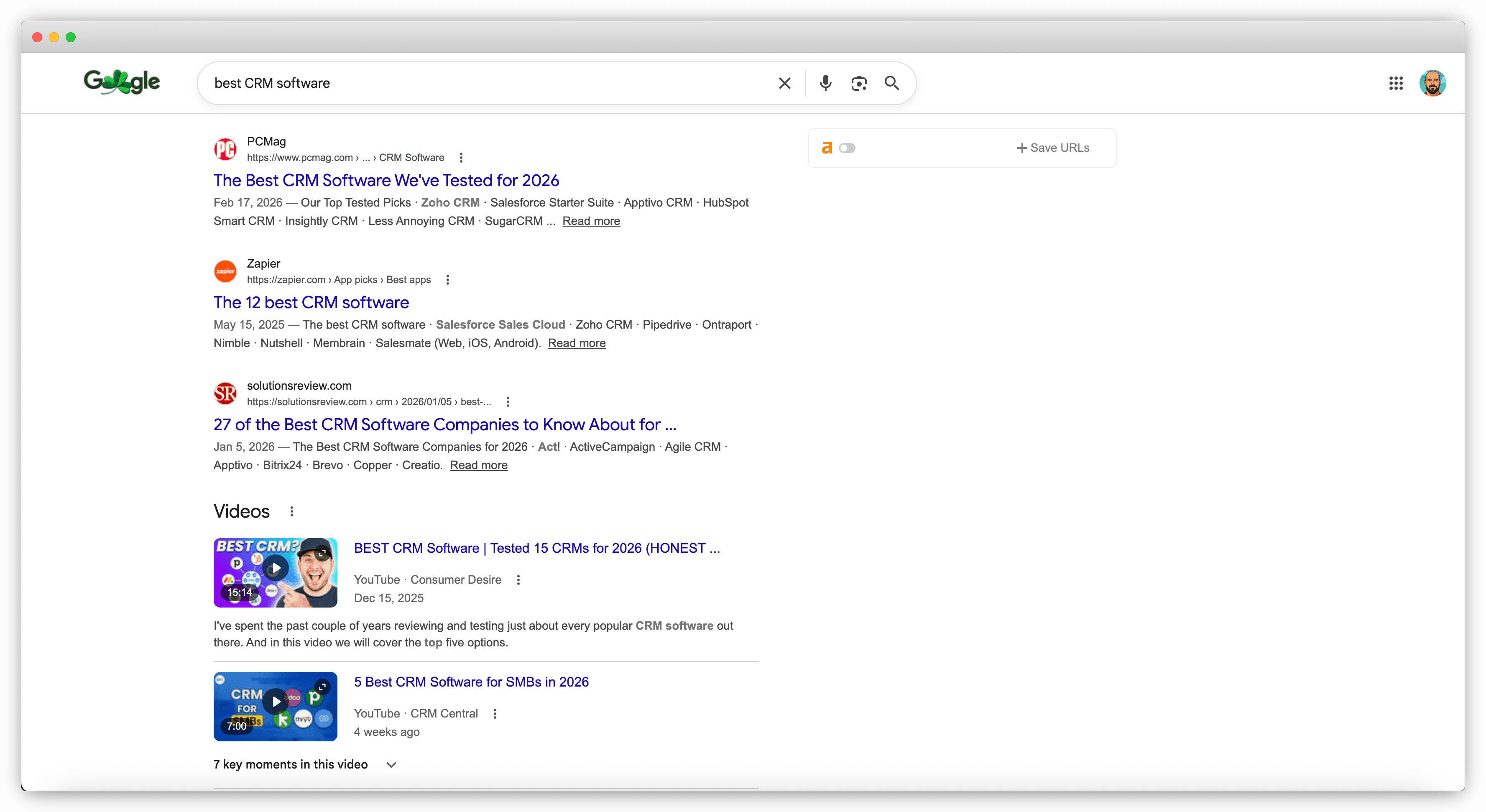
Traditional Google: You search "best CRM software." You get 10 links. You click three. You do your own research.
ChatGPT: You ask "what CRM should I use for a 20-person outbound sales team?" It breaks that into sub-queries, reads passages from dozens of different sources, and gives you a direct recommendation. You never click a link.
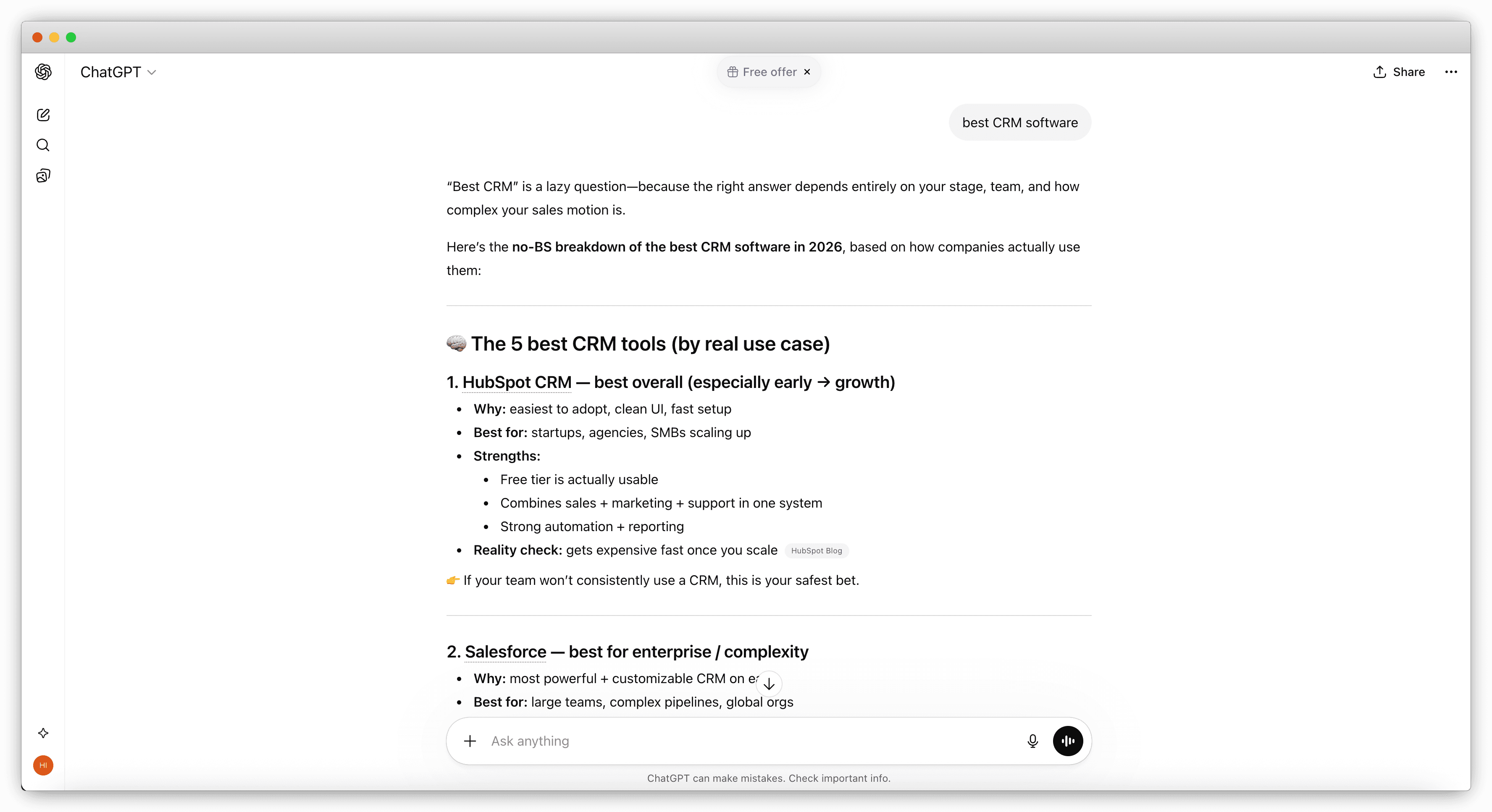
On average, ChatGPT pulls from nearly 30 citations per response. Your job is to be among those sources.
There Are No Keywords In AI Search
On traditional Google, everyone searches the same short phrases. On ChatGPT, every person searches differently. Voice search, long detailed queries, follow-up questions, context from previous conversations.
There's no such thing as "ranking for a query" on ChatGPT. There's only a probability that your brand shows up for a given search intent.
AI search results are dynamic. They change daily. So what drives that probability? Three things: your own website, third-party mentions, and what real users say on UGC platforms.
Pillar 1: Your Website Still Matters
ChatGPT doesn't care about word count. It retrieves specific passages. The concept: information gain. If your blog post rephrases what ten others already said, ChatGPT has zero reason to cite it.
Our data confirms which content formats ChatGPT prefers. Listicles account for 8.62% of all ChatGPT citations. Reviews and comparison articles add another 5.71%.
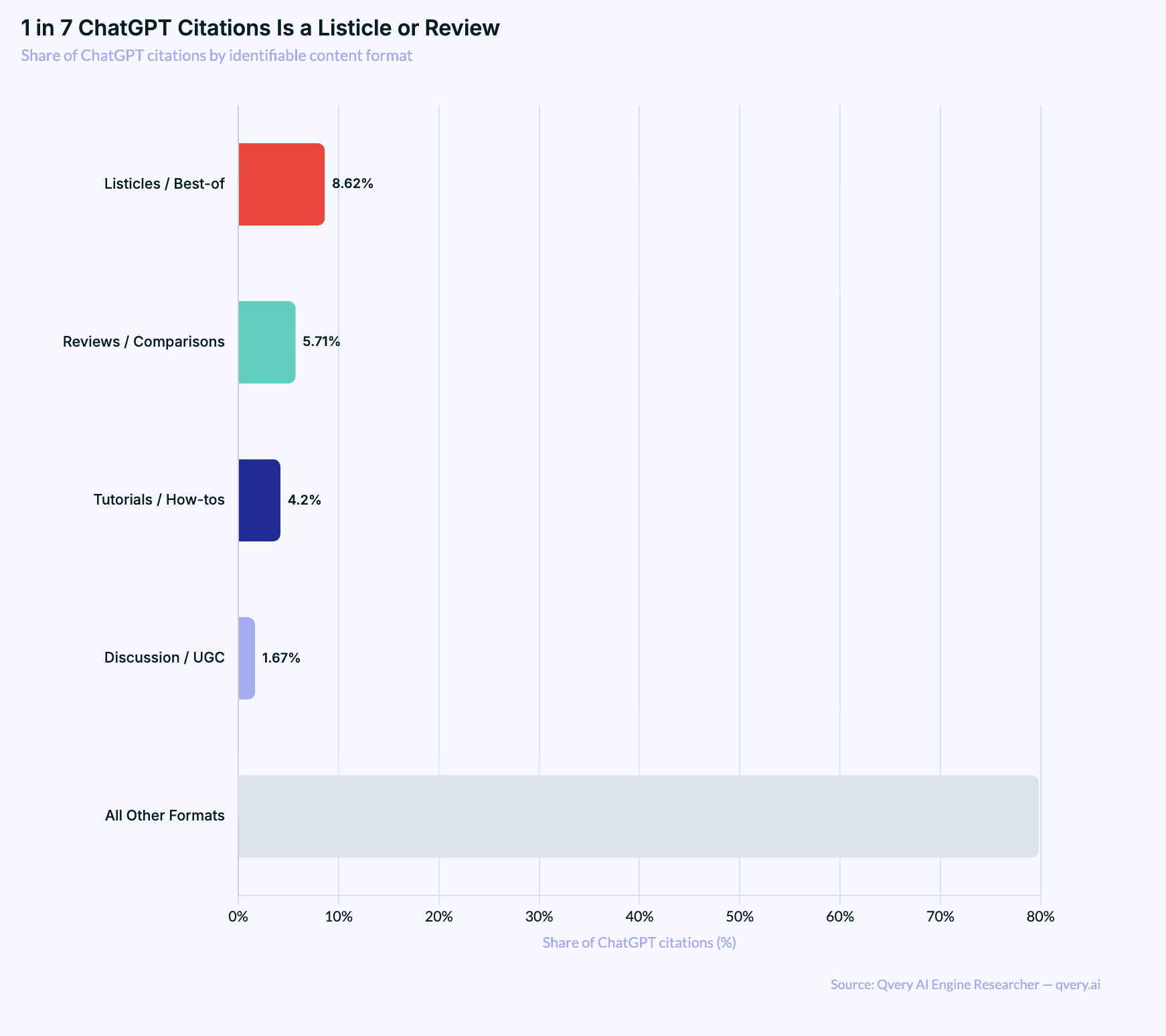
Combined, nearly 1 in 7 ChatGPT citations is a listicle or review.
How Qvery Helps With Website Optimization
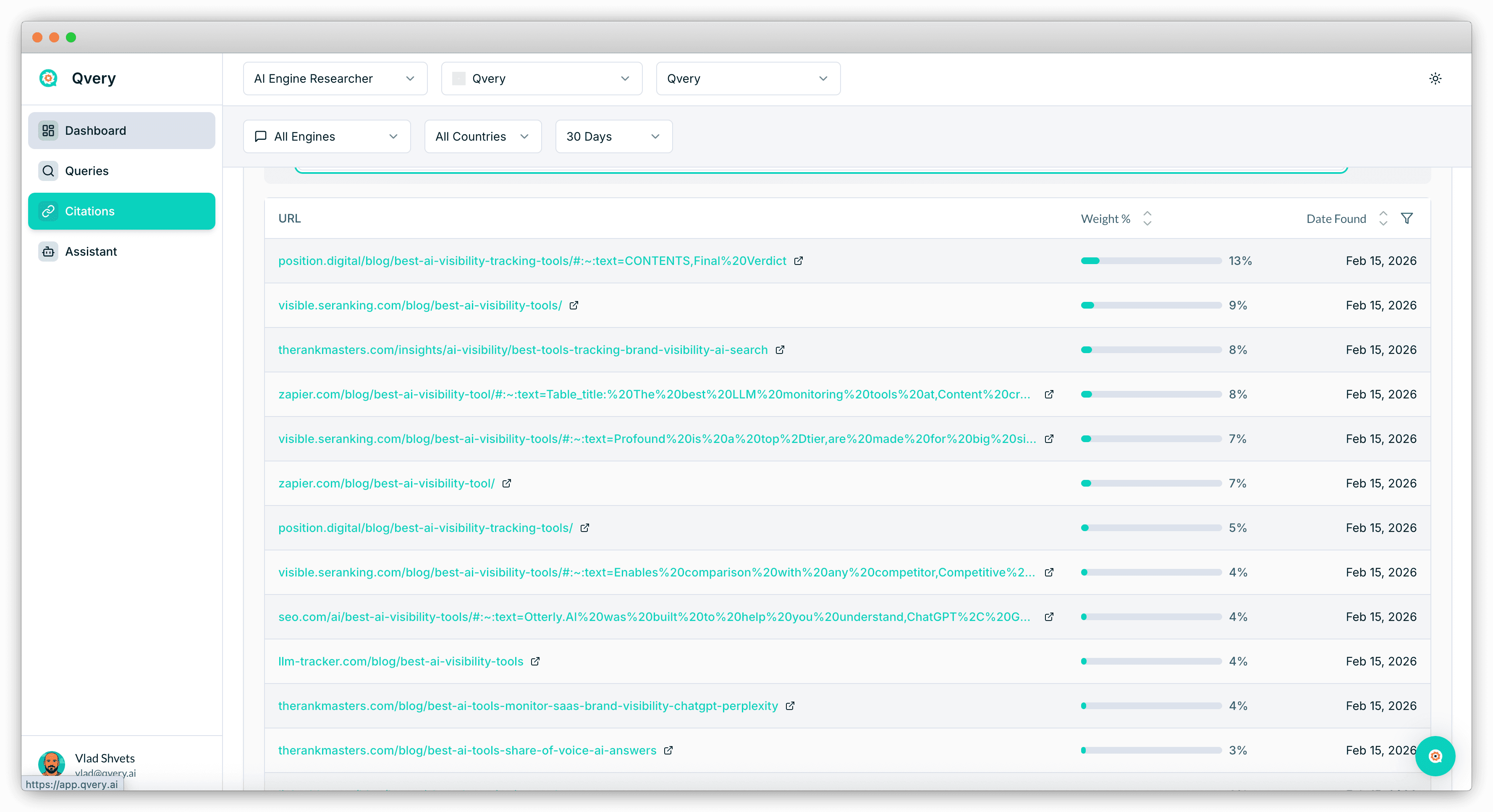
On Qvery, you can see exactly which pages ChatGPT is citing. Each page has a citation weight: the percentage of query executions where that URL gets pulled as a source.
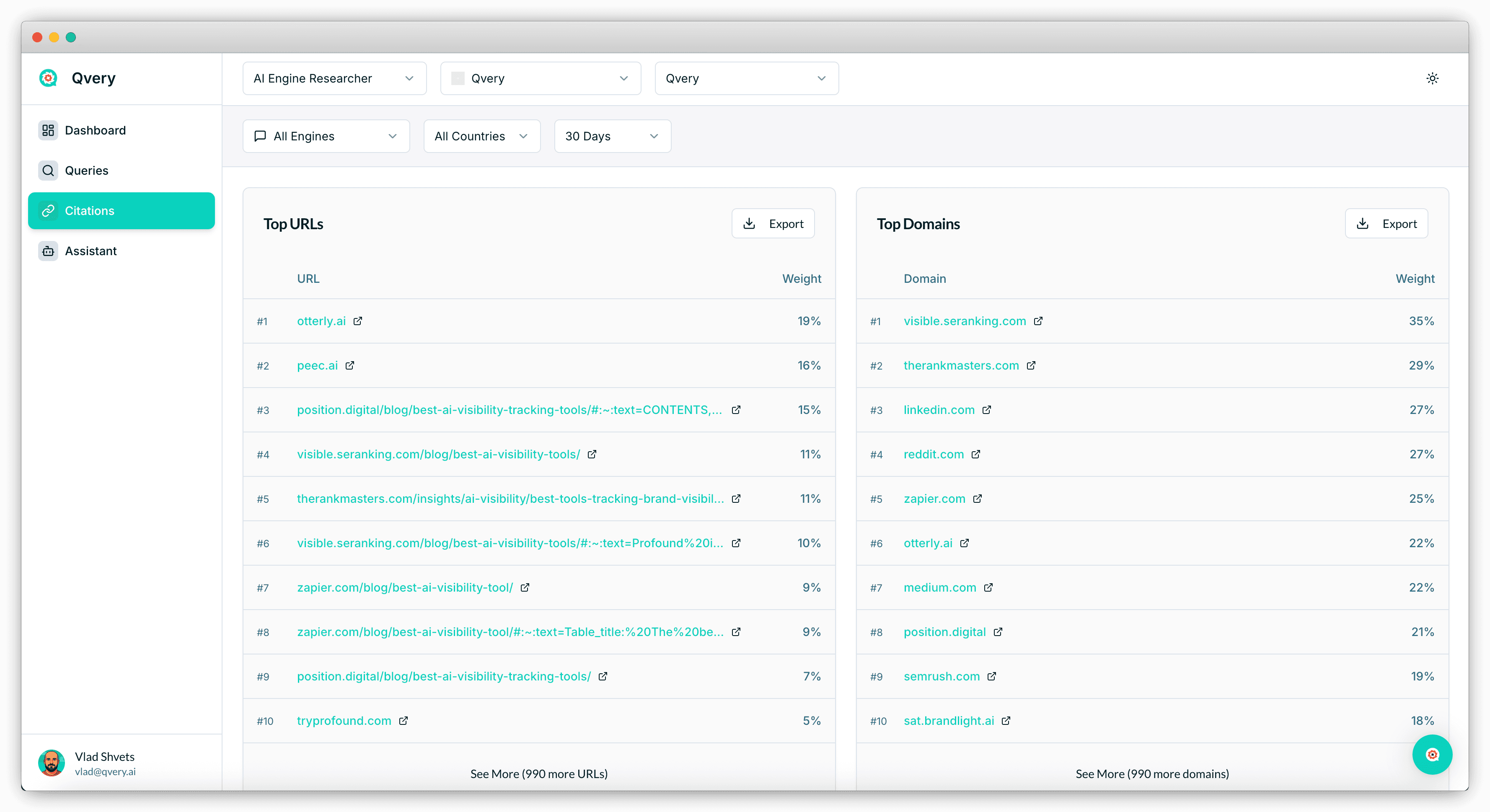
Compare your cited pages against competitors. Those are your content gaps. Qvery's AI Engine Researcher runs this analysis daily across 200+ countries.
Pillar 2: Mentions Are The New Backlinks
ChatGPT doesn't care about your backlink profile. It uses entity recognition. You need to convince people to mention your brand in a relevant, contextual way.
The metric that matters now is citation weight, not domain rating.
The mentions that matter most:
Competitor listicles (highest value, highest effort)
Partnership content from adjacent niches
Affiliate articles and blogger reviews
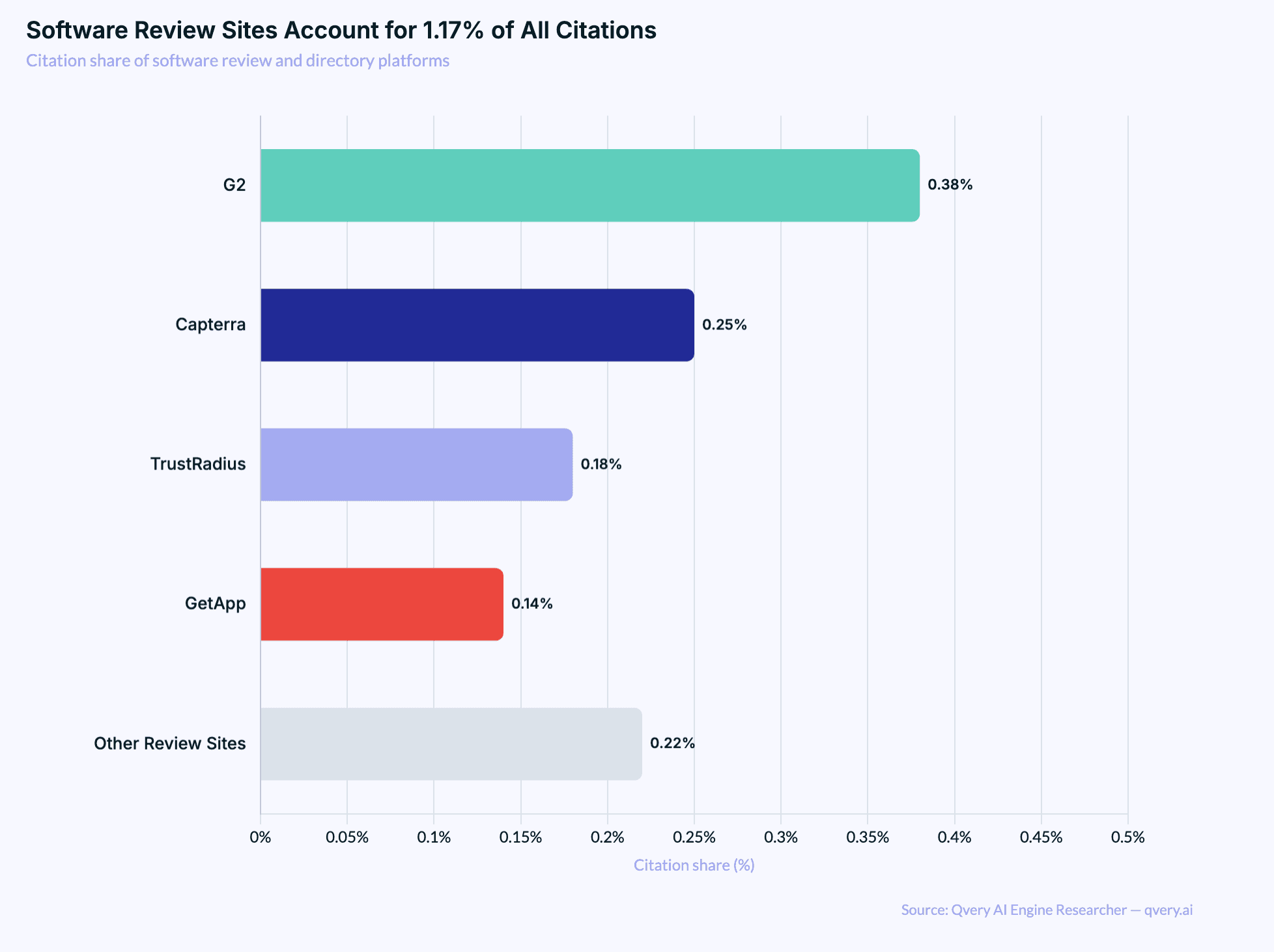
Software directory listings on G2 and Capterra
In our data, software review sites collectively account for 1.17% of all citations, with G2 leading.
How Qvery Helps With Mentions
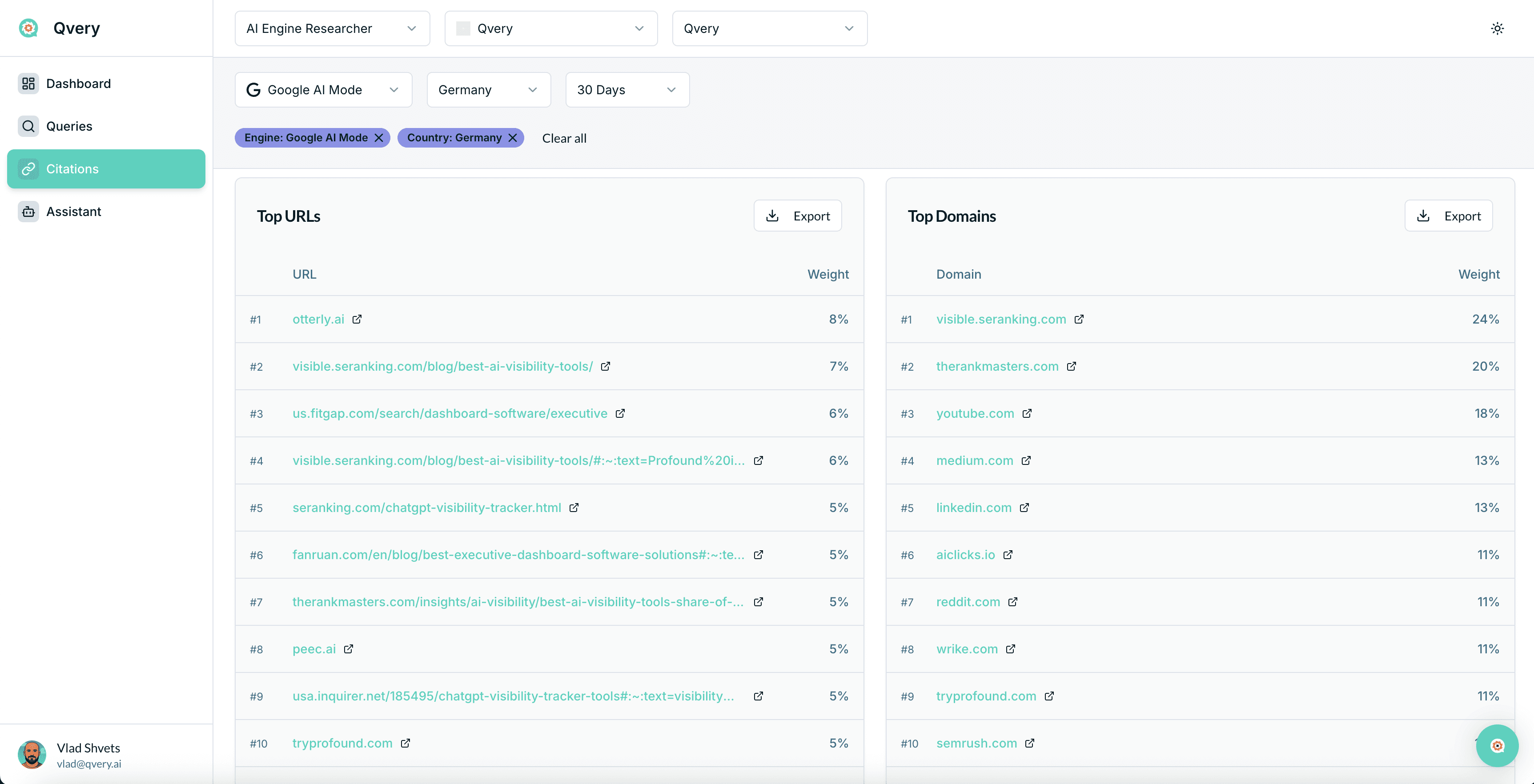
Qvery shows you the top-cited URLs in your space, ranked by citation weight. If a competitor listicle has a citation weight of 21% and your brand isn't there, that's your highest-priority outreach target.
Pillar 3: Reddit Is The #1 Bridging Domain
Reddit is the third most-cited well-known domain across AI engines. ChatGPT cites Reddit at 1.31% of all citation instances. We published a full deep dive into Reddit's citation data.
When an AI engine cites Reddit, there's a 78.5% chance it also appears in Google's organic top 10 for that same query.
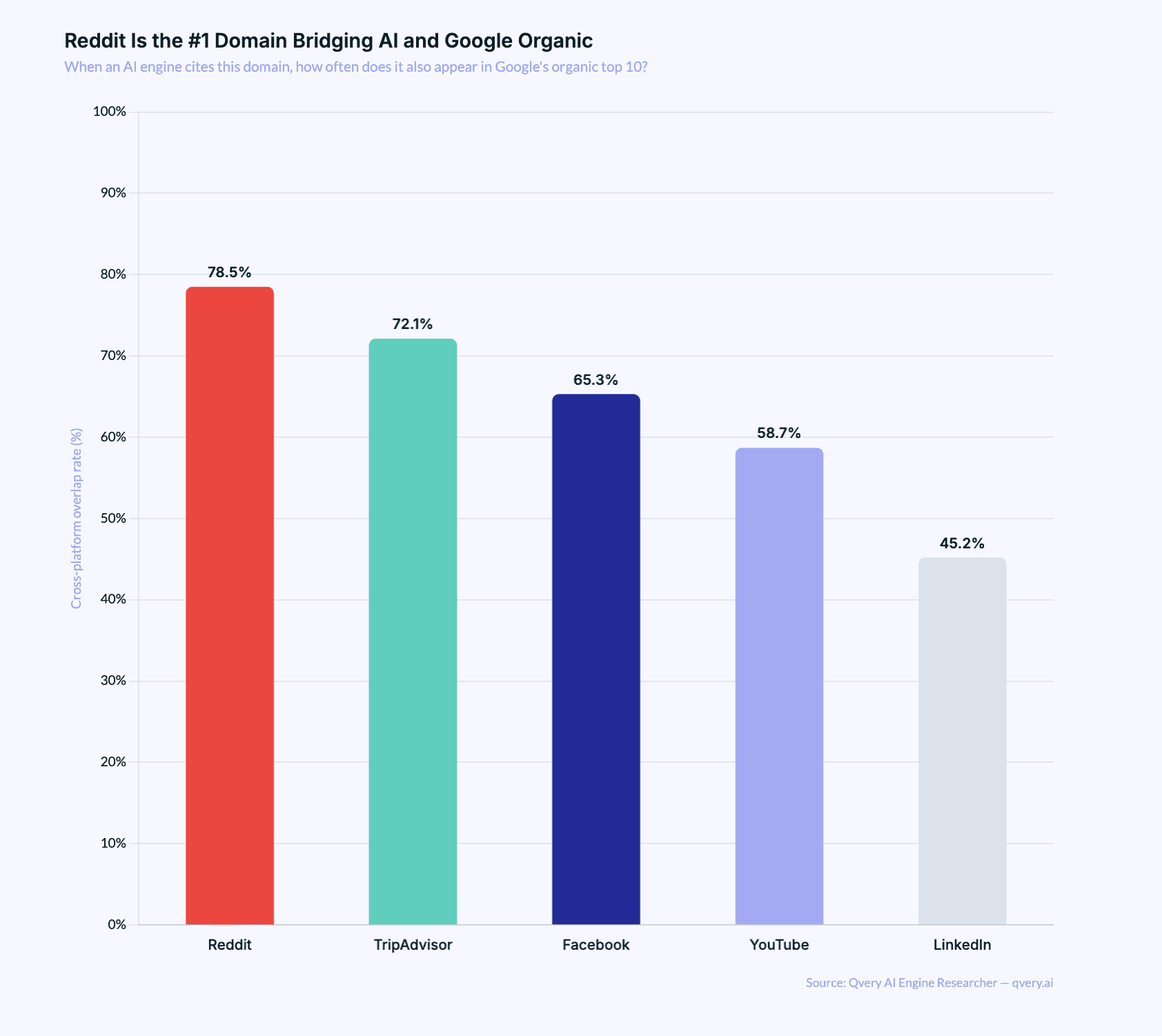
Reddit is the single most valuable domain for dual AI + organic visibility.
Brands invisible in AI search face a Double Jeopardy effect: compounding disadvantage across both channels.
How Qvery Helps With Reddit And UGC
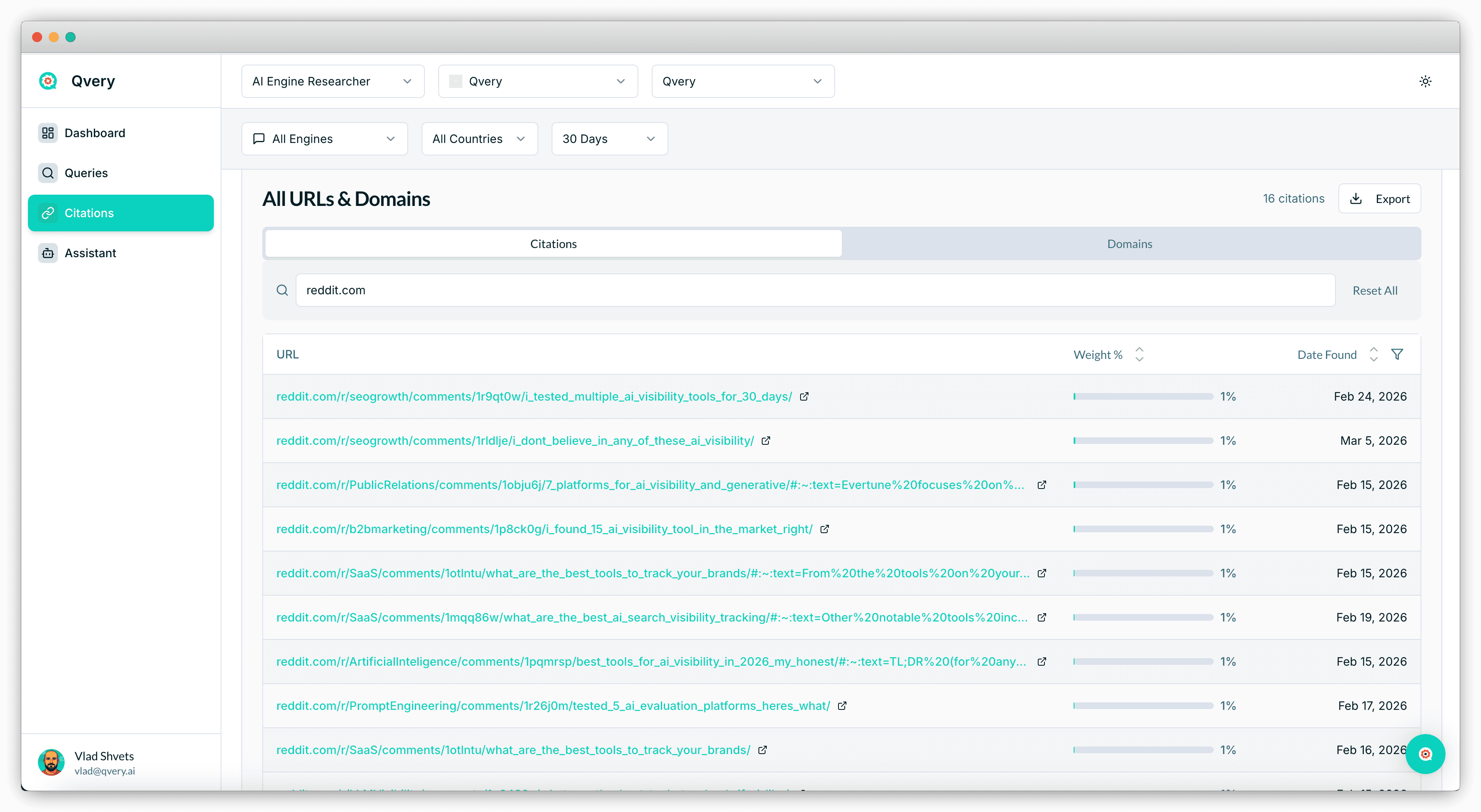
Filter citations by domain in Qvery and you'll see which Reddit threads ChatGPT pulls from. A small number of threads carry outsized citation weight. Those are your targets.
Our upcoming UGC Agent identifies the highest-value Reddit threads and helps you build authentic presence there.
The Hard Truth About Reddit Marketing
Reddit is the single hardest platform to market on. We wrote a full breakdown of Reddit marketing for AI visibility and covered the strategy in our UGC and Reddit mentions webinar.
The Three Pillars Work Together
Your website educates ChatGPT about what you do. Third-party mentions validate that other sources agree you're worth recommending. UGC proves real users actually like you.
Position #1 in Google gives you a 48.8% chance of being cited by AI engines. But that means over half of #1-ranked pages still don't get cited.
The brands that win in AI search won't have the biggest content libraries. They'll have the most consistent presence across all three pillars.
Sign up for Qvery and see your visibility data in 30 minutes.
Three things determine whether ChatGPT recommends your brand: your website, who mentions you, and what real people say about you on Reddit. Everything else is noise.
You spent the last decade mastering Google's algorithm. Building backlinks, optimizing title tags, tracking query positions week over week. Now an AI chatbot rewrites the rules. Rude.
But the brands that figure this out early will have a massive advantage. The ones still optimizing for 10 blue links will wonder why their traffic is disappearing.
This post breaks down the full model: how ChatGPT retrieves information, why it picks certain brands, and what you can do about each of the three pillars of AI engine visibility.
ChatGPT Doesn't Work Like Google
Most marketers still optimize for Google's 10 blue links. ChatGPT doesn't give you 10 blue links. It gives you a complete answer.
When someone searches ChatGPT, it doesn't match words to indexed pages. It understands the intent, breaks it into dozens of sub-queries (called query fan-out), searches across sources, retrieves specific passages, compares them, and synthesizes one recommendation.
ChatGPT reads your website at the passage level. Not the page level. A 3,000-word blog post doesn't matter: the specific paragraph answering the specific question does.
We covered this retrieval process in depth on our webinar about understanding AI engine visibility.
The data makes the gap unmistakable. We analyzed citations across ChatGPT and Google AI Mode and found that 86.1% of domains AI engines cite do NOT appear in Google's organic top 10. Overall overlap: just 13.9%. We published the full SERP overlap research with the complete breakdown.
Traditional Google: You search "best CRM software." You get 10 links. You click three. You do your own research.
ChatGPT: You ask "what CRM should I use for a 20-person outbound sales team?" It breaks that into sub-queries, reads passages from dozens of different sources, and gives you a direct recommendation. You never click a link.
On average, ChatGPT pulls from nearly 30 citations per response. Your job is to be among those sources.
There Are No Keywords In AI Search
On traditional Google, everyone searches the same short phrases. On ChatGPT, every person searches differently. Voice search, long detailed queries, follow-up questions, context from previous conversations.
There's no such thing as "ranking for a query" on ChatGPT. There's only a probability that your brand shows up for a given search intent.
AI search results are dynamic. They change daily. So what drives that probability? Three things: your own website, third-party mentions, and what real users say on UGC platforms.
Pillar 1: Your Website Still Matters
ChatGPT doesn't care about word count. It retrieves specific passages. The concept: information gain. If your blog post rephrases what ten others already said, ChatGPT has zero reason to cite it.
Our data confirms which content formats ChatGPT prefers. Listicles account for 8.62% of all ChatGPT citations. Reviews and comparison articles add another 5.71%.
Combined, nearly 1 in 7 ChatGPT citations is a listicle or review.
How Qvery Helps With Website Optimization
On Qvery, you can see exactly which pages ChatGPT is citing. Each page has a citation weight: the percentage of query executions where that URL gets pulled as a source.
Compare your cited pages against competitors. Those are your content gaps. Qvery's AI Engine Researcher runs this analysis daily across 200+ countries.
Pillar 2: Mentions Are The New Backlinks
ChatGPT doesn't care about your backlink profile. It uses entity recognition. You need to convince people to mention your brand in a relevant, contextual way.
The metric that matters now is citation weight, not domain rating.
The mentions that matter most:
Competitor listicles (highest value, highest effort)
Partnership content from adjacent niches
Affiliate articles and blogger reviews
Software directory listings on G2 and Capterra
In our data, software review sites collectively account for 1.17% of all citations, with G2 leading.
How Qvery Helps With Mentions
Qvery shows you the top-cited URLs in your space, ranked by citation weight. If a competitor listicle has a citation weight of 21% and your brand isn't there, that's your highest-priority outreach target.
Pillar 3: Reddit Is The #1 Bridging Domain
Reddit is the third most-cited well-known domain across AI engines. ChatGPT cites Reddit at 1.31% of all citation instances. We published a full deep dive into Reddit's citation data.
When an AI engine cites Reddit, there's a 78.5% chance it also appears in Google's organic top 10 for that same query.
Reddit is the single most valuable domain for dual AI + organic visibility.
Brands invisible in AI search face a Double Jeopardy effect: compounding disadvantage across both channels.
How Qvery Helps With Reddit And UGC
Filter citations by domain in Qvery and you'll see which Reddit threads ChatGPT pulls from. A small number of threads carry outsized citation weight. Those are your targets.
Our upcoming UGC Agent identifies the highest-value Reddit threads and helps you build authentic presence there.
The Hard Truth About Reddit Marketing
Reddit is the single hardest platform to market on. We wrote a full breakdown of Reddit marketing for AI visibility and covered the strategy in our UGC and Reddit mentions webinar.
The Three Pillars Work Together
Your website educates ChatGPT about what you do. Third-party mentions validate that other sources agree you're worth recommending. UGC proves real users actually like you.
Position #1 in Google gives you a 48.8% chance of being cited by AI engines. But that means over half of #1-ranked pages still don't get cited.
The brands that win in AI search won't have the biggest content libraries. They'll have the most consistent presence across all three pillars.
Sign up for Qvery and see your visibility data in 30 minutes.
Three things determine whether ChatGPT recommends your brand: your website, who mentions you, and what real people say about you on Reddit. Everything else is noise.
You spent the last decade mastering Google's algorithm. Building backlinks, optimizing title tags, tracking query positions week over week. Now an AI chatbot rewrites the rules. Rude.
But the brands that figure this out early will have a massive advantage. The ones still optimizing for 10 blue links will wonder why their traffic is disappearing.
This post breaks down the full model: how ChatGPT retrieves information, why it picks certain brands, and what you can do about each of the three pillars of AI engine visibility.
ChatGPT Doesn't Work Like Google
Most marketers still optimize for Google's 10 blue links. ChatGPT doesn't give you 10 blue links. It gives you a complete answer.
When someone searches ChatGPT, it doesn't match words to indexed pages. It understands the intent, breaks it into dozens of sub-queries (called query fan-out), searches across sources, retrieves specific passages, compares them, and synthesizes one recommendation.
ChatGPT reads your website at the passage level. Not the page level. A 3,000-word blog post doesn't matter: the specific paragraph answering the specific question does.
We covered this retrieval process in depth on our webinar about understanding AI engine visibility.
The data makes the gap unmistakable. We analyzed citations across ChatGPT and Google AI Mode and found that 86.1% of domains AI engines cite do NOT appear in Google's organic top 10. Overall overlap: just 13.9%. We published the full SERP overlap research with the complete breakdown.
Traditional Google: You search "best CRM software." You get 10 links. You click three. You do your own research.
ChatGPT: You ask "what CRM should I use for a 20-person outbound sales team?" It breaks that into sub-queries, reads passages from dozens of different sources, and gives you a direct recommendation. You never click a link.
On average, ChatGPT pulls from nearly 30 citations per response. Your job is to be among those sources.
There Are No Keywords In AI Search
On traditional Google, everyone searches the same short phrases. On ChatGPT, every person searches differently. Voice search, long detailed queries, follow-up questions, context from previous conversations.
There's no such thing as "ranking for a query" on ChatGPT. There's only a probability that your brand shows up for a given search intent.
AI search results are dynamic. They change daily. So what drives that probability? Three things: your own website, third-party mentions, and what real users say on UGC platforms.
Pillar 1: Your Website Still Matters
ChatGPT doesn't care about word count. It retrieves specific passages. The concept: information gain. If your blog post rephrases what ten others already said, ChatGPT has zero reason to cite it.
Our data confirms which content formats ChatGPT prefers. Listicles account for 8.62% of all ChatGPT citations. Reviews and comparison articles add another 5.71%.
Combined, nearly 1 in 7 ChatGPT citations is a listicle or review.
How Qvery Helps With Website Optimization
On Qvery, you can see exactly which pages ChatGPT is citing. Each page has a citation weight: the percentage of query executions where that URL gets pulled as a source.
Compare your cited pages against competitors. Those are your content gaps. Qvery's AI Engine Researcher runs this analysis daily across 200+ countries.
Pillar 2: Mentions Are The New Backlinks
ChatGPT doesn't care about your backlink profile. It uses entity recognition. You need to convince people to mention your brand in a relevant, contextual way.
The metric that matters now is citation weight, not domain rating.
The mentions that matter most:
Competitor listicles (highest value, highest effort)
Partnership content from adjacent niches
Affiliate articles and blogger reviews
Software directory listings on G2 and Capterra
In our data, software review sites collectively account for 1.17% of all citations, with G2 leading.
How Qvery Helps With Mentions
Qvery shows you the top-cited URLs in your space, ranked by citation weight. If a competitor listicle has a citation weight of 21% and your brand isn't there, that's your highest-priority outreach target.
Pillar 3: Reddit Is The #1 Bridging Domain
Reddit is the third most-cited well-known domain across AI engines. ChatGPT cites Reddit at 1.31% of all citation instances. We published a full deep dive into Reddit's citation data.
When an AI engine cites Reddit, there's a 78.5% chance it also appears in Google's organic top 10 for that same query.
Reddit is the single most valuable domain for dual AI + organic visibility.
Brands invisible in AI search face a Double Jeopardy effect: compounding disadvantage across both channels.
How Qvery Helps With Reddit And UGC
Filter citations by domain in Qvery and you'll see which Reddit threads ChatGPT pulls from. A small number of threads carry outsized citation weight. Those are your targets.
Our upcoming UGC Agent identifies the highest-value Reddit threads and helps you build authentic presence there.
The Hard Truth About Reddit Marketing
Reddit is the single hardest platform to market on. We wrote a full breakdown of Reddit marketing for AI visibility and covered the strategy in our UGC and Reddit mentions webinar.
The Three Pillars Work Together
Your website educates ChatGPT about what you do. Third-party mentions validate that other sources agree you're worth recommending. UGC proves real users actually like you.
Position #1 in Google gives you a 48.8% chance of being cited by AI engines. But that means over half of #1-ranked pages still don't get cited.
The brands that win in AI search won't have the biggest content libraries. They'll have the most consistent presence across all three pillars.
Sign up for Qvery and see your visibility data in 30 minutes.
Three things determine whether ChatGPT recommends your brand: your website, who mentions you, and what real people say about you on Reddit. Everything else is noise.
You spent the last decade mastering Google's algorithm. Building backlinks, optimizing title tags, tracking query positions week over week. Now an AI chatbot rewrites the rules. Rude.
But the brands that figure this out early will have a massive advantage. The ones still optimizing for 10 blue links will wonder why their traffic is disappearing.
This post breaks down the full model: how ChatGPT retrieves information, why it picks certain brands, and what you can do about each of the three pillars of AI engine visibility.
ChatGPT Doesn't Work Like Google
Most marketers still optimize for Google's 10 blue links. ChatGPT doesn't give you 10 blue links. It gives you a complete answer.
When someone searches ChatGPT, it doesn't match words to indexed pages. It understands the intent, breaks it into dozens of sub-queries (called query fan-out), searches across sources, retrieves specific passages, compares them, and synthesizes one recommendation.
ChatGPT reads your website at the passage level. Not the page level. A 3,000-word blog post doesn't matter: the specific paragraph answering the specific question does.
We covered this retrieval process in depth on our webinar about understanding AI engine visibility.
The data makes the gap unmistakable. We analyzed citations across ChatGPT and Google AI Mode and found that 86.1% of domains AI engines cite do NOT appear in Google's organic top 10. Overall overlap: just 13.9%. We published the full SERP overlap research with the complete breakdown.
Traditional Google: You search "best CRM software." You get 10 links. You click three. You do your own research.
ChatGPT: You ask "what CRM should I use for a 20-person outbound sales team?" It breaks that into sub-queries, reads passages from dozens of different sources, and gives you a direct recommendation. You never click a link.
On average, ChatGPT pulls from nearly 30 citations per response. Your job is to be among those sources.
There Are No Keywords In AI Search
On traditional Google, everyone searches the same short phrases. On ChatGPT, every person searches differently. Voice search, long detailed queries, follow-up questions, context from previous conversations.
There's no such thing as "ranking for a query" on ChatGPT. There's only a probability that your brand shows up for a given search intent.
AI search results are dynamic. They change daily. So what drives that probability? Three things: your own website, third-party mentions, and what real users say on UGC platforms.
Pillar 1: Your Website Still Matters
ChatGPT doesn't care about word count. It retrieves specific passages. The concept: information gain. If your blog post rephrases what ten others already said, ChatGPT has zero reason to cite it.
Our data confirms which content formats ChatGPT prefers. Listicles account for 8.62% of all ChatGPT citations. Reviews and comparison articles add another 5.71%.
Combined, nearly 1 in 7 ChatGPT citations is a listicle or review.
How Qvery Helps With Website Optimization
On Qvery, you can see exactly which pages ChatGPT is citing. Each page has a citation weight: the percentage of query executions where that URL gets pulled as a source.
Compare your cited pages against competitors. Those are your content gaps. Qvery's AI Engine Researcher runs this analysis daily across 200+ countries.
Pillar 2: Mentions Are The New Backlinks
ChatGPT doesn't care about your backlink profile. It uses entity recognition. You need to convince people to mention your brand in a relevant, contextual way.
The metric that matters now is citation weight, not domain rating.
The mentions that matter most:
Competitor listicles (highest value, highest effort)
Partnership content from adjacent niches
Affiliate articles and blogger reviews
Software directory listings on G2 and Capterra
In our data, software review sites collectively account for 1.17% of all citations, with G2 leading.
How Qvery Helps With Mentions
Qvery shows you the top-cited URLs in your space, ranked by citation weight. If a competitor listicle has a citation weight of 21% and your brand isn't there, that's your highest-priority outreach target.
Pillar 3: Reddit Is The #1 Bridging Domain
Reddit is the third most-cited well-known domain across AI engines. ChatGPT cites Reddit at 1.31% of all citation instances. We published a full deep dive into Reddit's citation data.
When an AI engine cites Reddit, there's a 78.5% chance it also appears in Google's organic top 10 for that same query.
Reddit is the single most valuable domain for dual AI + organic visibility.
Brands invisible in AI search face a Double Jeopardy effect: compounding disadvantage across both channels.
How Qvery Helps With Reddit And UGC
Filter citations by domain in Qvery and you'll see which Reddit threads ChatGPT pulls from. A small number of threads carry outsized citation weight. Those are your targets.
Our upcoming UGC Agent identifies the highest-value Reddit threads and helps you build authentic presence there.
The Hard Truth About Reddit Marketing
Reddit is the single hardest platform to market on. We wrote a full breakdown of Reddit marketing for AI visibility and covered the strategy in our UGC and Reddit mentions webinar.
The Three Pillars Work Together
Your website educates ChatGPT about what you do. Third-party mentions validate that other sources agree you're worth recommending. UGC proves real users actually like you.
Position #1 in Google gives you a 48.8% chance of being cited by AI engines. But that means over half of #1-ranked pages still don't get cited.
The brands that win in AI search won't have the biggest content libraries. They'll have the most consistent presence across all three pillars.
Sign up for Qvery and see your visibility data in 30 minutes.

© 2026 Qvery AI OÜ