By
Vlad Shvets
8 Best AI Visibility Tools for Healthcare Brands (Compared)
Eight AI visibility tools read against what a healthcare team needs in writing: answer text, cited sources, per-market results, several brands, and telehealth, therapy and pharmacy prompts.
Eight AI visibility tools read against what a healthcare team needs in writing: answer text, cited sources, per-market results, several brands, and telehealth, therapy and pharmacy prompts.
Eight AI visibility tools read against what a healthcare team needs in writing: answer text, cited sources, per-market results, several brands, and telehealth, therapy and pharmacy prompts.
Somewhere tonight a patient asks ChatGPT for an online therapist who takes their insurance, reads one answer, and books. In our September healthcare study, brand-owned domains appeared alongside 70.14% of recommendation answers (505 of 720 valid answers, both engines, runs pooled), so what those answers draw on can be measured.
Whether a tool can measure it for your service lines is a different question, and none of the eight below documents everything a healthcare team needs. Each was read on its own pages this September, with prices from the live pricing pages, and each entry ends on the questions its pages leave for the demo.
Five Things a Healthcare Team Should See in Writing
Healthcare is sold service line by service line, and every sentence about a clinical service gets read twice before it ships. That turns one visibility number into five questions, with a sixth running under all of them.
Answer text. A clinical or compliance reviewer can read what the engine said about each service, in its own words.
Cited sources. Which pages and domains each answer drew on, your own service pages among them.
Per-market results. The same questions kept apart by the markets where each service is offered, since a telehealth license stops at a border.
Several brands in one account. Health systems, pharmacy groups, and portfolios run more than one name.
Service-line prompts. Telehealth, therapy, and pharmacy questions tracked and read as separate groups, which is healthcare's own criterion.
Every tool here clears one bar first: its own page names both ChatGPT and Google AI Mode as tracked, and its prices can be checked on its pricing page.
Past that bar, each criterion sits in one of three states: documented (a line on the vendor's page says so), documented as not offered (the vendor says no, which happens nowhere on this list), or not documented, which means the pages are silent and never means the tool cannot do it.
The sixth question is whether a tool separates being recommended from being mentioned. None of the eight documents it, so the decision at the end puts it to every one of them. For how to set the measurement up yourself, our guide to measuring healthcare AI engine visibility covers the method.
Appearing in an answer and being the answer are different outcomes, and a tool that counts appearances cannot tell a referral from a warning.
1. Qvery: Daily Answers on Both Engines, Market by Market
Key Features:
Daily tracking of visibility, share of voice, and average rank across ChatGPT and Google AI Mode, in 200+ countries.
Every citation captured daily, tied to the query and the engine that produced it.
Topics and queries generated at onboarding, plus the queries you add and edit, so telehealth, therapy, and pharmacy questions can all sit in your tracked set.
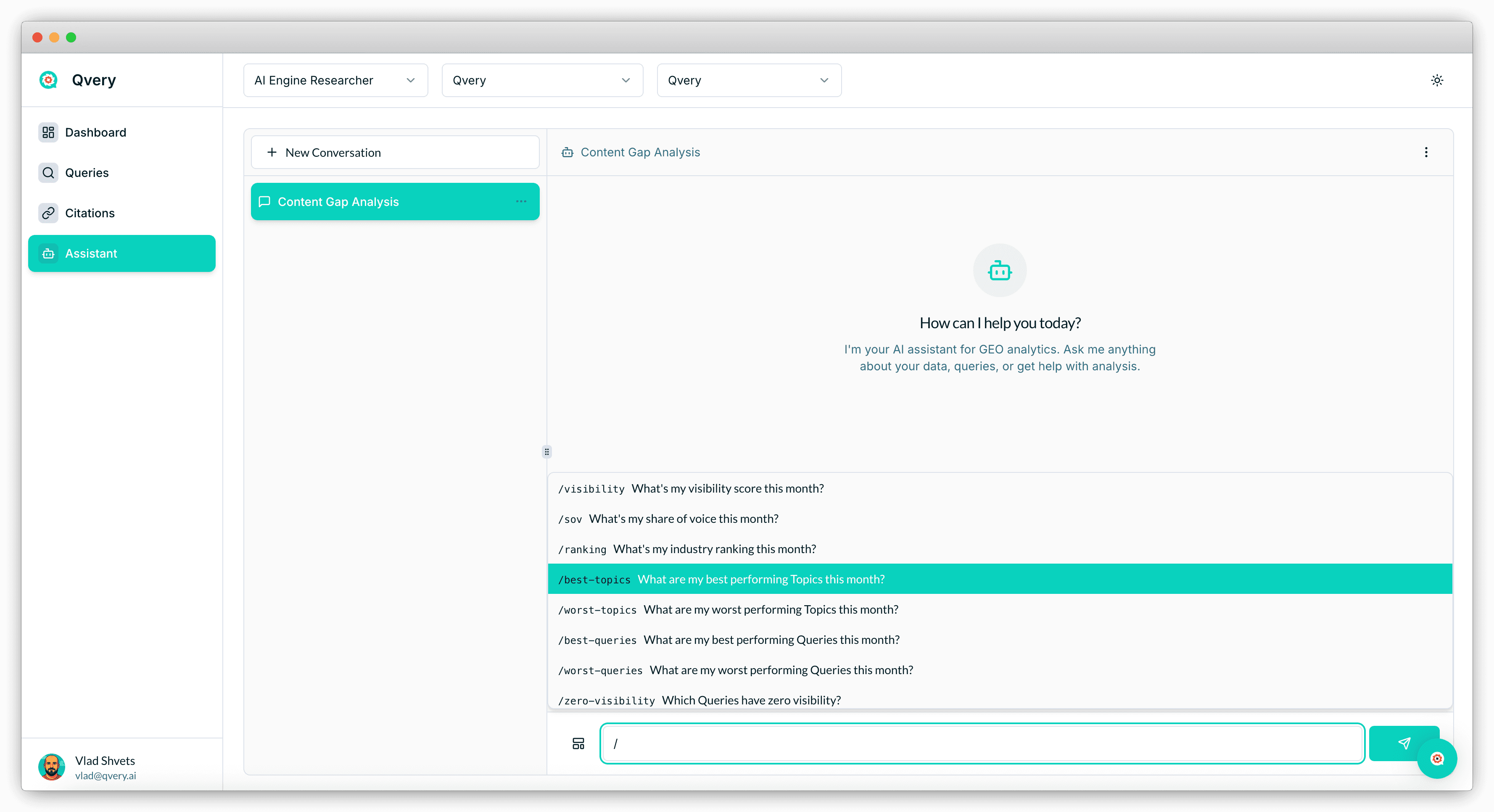
Qvery Assistant in the app: ask about your own visibility, share of voice, citation, topic, and query data in plain language, and have it add queries, trigger a data run, or export a report.
Pricing:
Starter: €49 per month for 1 brand and 25 tracked queries.
Growth: €99 per month for 1 brand and 50 tracked queries.
Business: €199 for unlimited brands and 100 tracked queries (the page prints no billing period on this tier).
Every tier includes ChatGPT and Google AI Mode, daily query runs, unlimited countries, and unlimited seats.
Reddit Score: 85.0% Positive. What redditors say:
"tracking mentions in local publications and external sites is key for AI visibility, like Qvery AI does." (r/smallbusiness)
It comes up in threads where a clinic or a practice owner has just found out the assistant sends people to a competitor.
Mostly positive, a few neutral, and no negative mentions on record.
This is our product, and a healthcare buyer should discount the entry by exactly that much, then hold it to the same five criteria. Cited sources and per-market results are documented, and several brands in one account is documented on the Business tier, which the pricing page lists as "Unlimited Brands".
Answer text, service-line grouping, and recommendation status are not documented. You can add the service queries; whether the three services come back as separate groups is a demo question. Qvery tracks whether you appear, your share of voice, and your average rank, which is not the same as knowing you were the recommendation.
The documented fit covers both engines daily, every market, and every citation. Run your own telehealth, therapy, and pharmacy questions in the trial, and look for the three things above. Start your free trial: 7 days free on the paid plans, and no credit card required.
2. AthenaHQ: The Only Healthcare Line on Anyone's Page
Key Features:
Healthcare prompts, in writing: "helping brands earn consistent inclusion in evaluation and symptom-based queries where trust drives conversion." It is the vendor's description of its work, not a measured result.
Source Intelligence, which it says reveals the sources shaping AI answers.
Global scale: operating "across brands, markets, and models."
Several brands and units tracked together, with competitor share of voice.
AthenaHQ API for putting visibility data into your own dashboards.
Pricing:
Essential: free, with $25 of credit and 300 credits, covering ChatGPT, Perplexity, AI Overviews, Gemini, and Copilot. Google AI Mode is not on this tier.
Starter: $295 per month with 3,600 credits, the first tier that lists AI Mode, with API access and extra credits as paid add-ons.
Enterprise: custom, adding multi-region and multi-language support.
Reddit Score: 57.1% Positive. What redditors say:
A 10-tool roundup in r/DigitalMarketing tested it for commercial discovery and placed it closest to ecommerce use. (r/DigitalMarketing)
Agency posters describe using it to show clients where they appear and where they do not.
Seven mentions is a thin base, so read the percentage as a direction.
AthenaHQ documents three of the five (cited sources, markets, several brands) plus the only healthcare-specific prompt line on this list. That line names evaluation and symptom-based questions, not telehealth, therapy, or pharmacy, so the three service groups are still a demo item.
Answer text is the one open criterion. Its free tier lists "Prompt and response analysis", and whether a reviewer can read the full answer per service is the question to ask. Market separation is on the Enterprise plan list rather than Starter's, so confirm it on the plan you are quoted.
3. Dageno AI: The Answer and the Pages Behind It
Key Features:
Answers traced to sources: "Trace insights back to cited domains, URLs, and original AI answers", which covers answer text and cited sources in one line.
A region view with per-market rank and visibility.
Brand comparison "within the same market, model, region, and time range."
A competitor leaderboard for visibility against named rivals.
Pricing:
Starter: $49 per month (listed as originally $89), 1 brand, 50 custom tracked prompts, 2 market segments, with a 7-day free trial.
Growth: $199 per month, 2 brands, 250 prompts, 5 market segments.
Scale: $410 per month, 5 brands, 600 prompts, 12 market segments, plus API, batch configuration, and data exports.
Custom: quoted. Annual billing saves about 15%, and the same prompt run on different models and regions counts separately toward usage.
Reddit Score: Too few mentions to score. Two mentions of Dageno AI turned up in the threads we read, and a percentage needs at least five.
Dageno AI documents four of the five, and the pair it documents together is the one a clinical reviewer reads: the answer and the pages behind it. That is the difference between knowing you appeared in a telehealth answer and knowing the engine described your service as out of network.
Service-line grouping is not documented, and neither are scheduled runs. The pricing FAQ is the part to read twice: a prompt run on two engines in three markets counts six times, so three services across a handful of markets outgrow Starter's 50 prompts quickly.
4. OtterlyAI: Every Cited URL, With Google AI Mode as an Add-On
Key Features:
Every domain and URL cited in AI answers, checked daily, "with link-position changes over time."
Market-by-market results rather than one global number.
Workspaces for several brands or clients inside one subscription.
Public API for brand reports, prompts, citations, and workspace data.
Pricing:
Lite: $29 per month for 15 search prompts, or $25 per month on annual billing.
Standard: $189 per month for 100 prompts, or $160 per month on annual billing.
Premium: $489 per month for 400 prompts, or $422 per month on annual billing.
Enterprise: custom, from 1,000 prompts.
Every self-serve tier tracks ChatGPT, Google AI Overviews, Perplexity, and MS Copilot, with Google AI Mode as an add-on: $9 on Lite, $59 on Standard, $149 on Premium, per month.
Reddit Score: 69.2% Positive. What redditors say:
"tools like Semrush AI Overview and OtterlyAI help monitor AI citations but full SEO integration lags." (r/digital_marketing)
A 2026 buyer's guide in r/SaaS calls it a good entry-level option for prompts, citations, and competitor visibility. (r/SaaS)
The highest competitor score on this list, mostly on setup and price.
OtterlyAI documents three of the five: cited sources at URL level, per-market results, and several brands. For a pharmacy group with locations in more than one country, that combination covers the reporting side well.
Answer text and service-line grouping are not documented. Price both engines, not the sticker: Lite plus the Google AI Mode add-on is $38 a month, and Lite's 15 prompts will not hold three service lines for long.
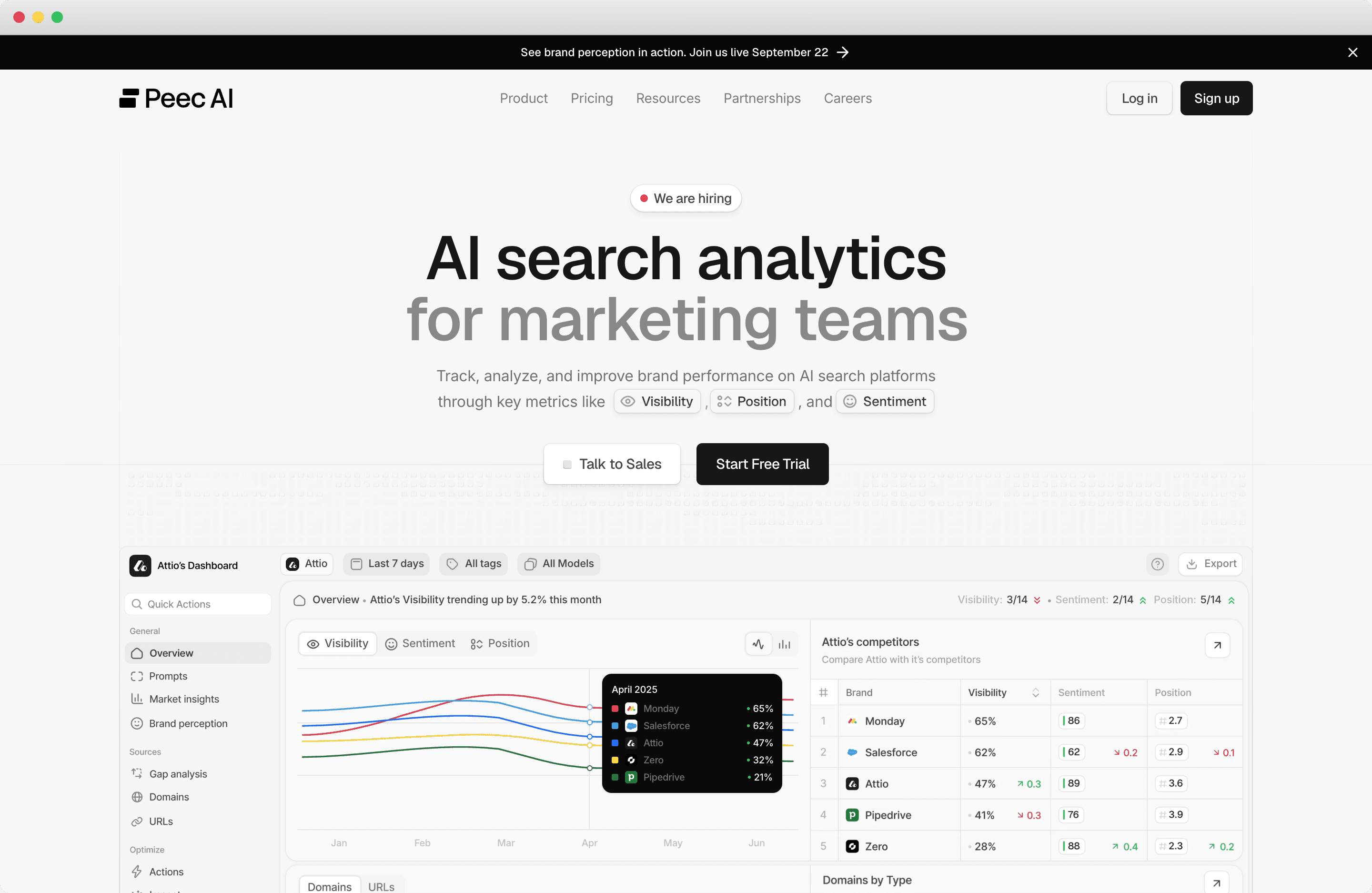
5. Peec AI: Citations per Engine, Countries Included
Key Features:
Cited URLs and domains, with ChatGPT sources and Google AI Mode citations named separately.
Tracking across all countries, and the pricing FAQ says countries and languages cost nothing extra.
Multi-brand tracking with separate reporting for each client.
Share of voice against every tracked brand, and continuous tracking.
Pricing:
Starter: $95 per month for 50 prompts, choose 3 models.
Pro: $245 per month for 150 prompts, choose 3 models.
Advanced: $495 per month for 350 prompts, choose 3 models, with multi-country listed as a plan row.
Enterprise: custom, billed annually, choose from all models, with API access.
Reddit Score: 68.6% Positive. What redditors say:
"I track AI Overviews with SE Ranking's thing and Peec for SoV" (r/SaaS)
The 2026 buyer's guide in r/SaaS calls it one of the nicest interfaces for tracking prompts, competitors, visibility, and citations. (r/SaaS)
51 mentions, the deepest sample among the dedicated trackers here, with most complaints about cost at scale.
Peec AI documents three of the five, and its citation line is the most specific here about what it reads on each engine. For a healthcare brand whose answers may lean on different sources in ChatGPT and in Google AI Mode, that separation matters.
Two lines on its pages need settling in the demo. One page says ChatGPT and Google AI Mode are included by default in every plan; each self-serve tier says "Choose 3 models". Answer text and service-line grouping are not documented either.
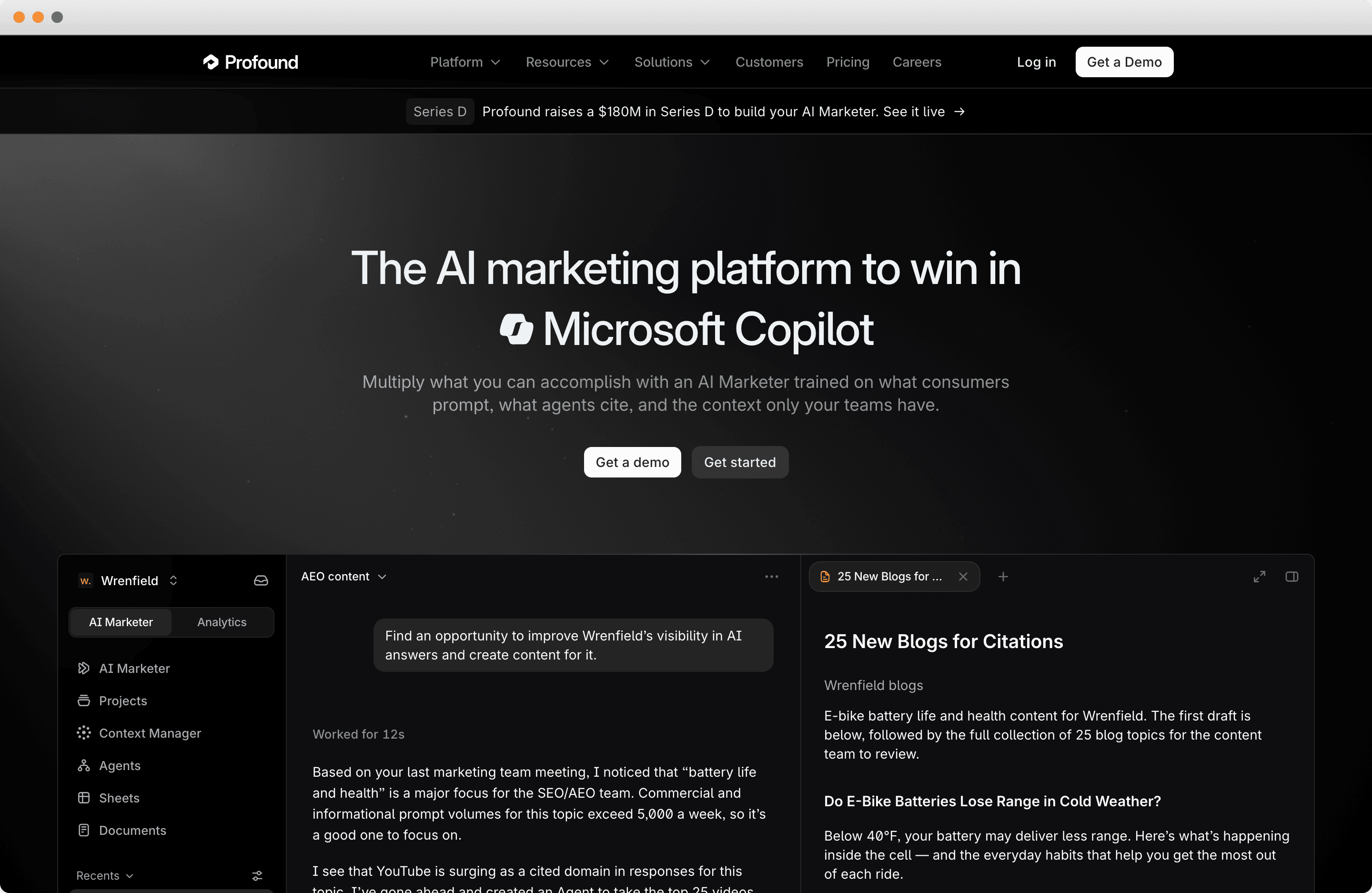
6. Profound: How Engines Describe a Brand, Behind a Demo
Key Features:
Answer Engine Insights, tracking how engines "mention, rank, and describe a brand."
Citation Analysis of the websites that influence answers about your brand.
Agency Mode, for several brand environments in one account.
Up to nine answer engines on Enterprise, Google AI Mode among them.
Pricing:
Trial: free, 50 prompts run daily for seven days, on ChatGPT, Gemini, and Google AI Overviews, with a recommended prompt set that Trial users cannot change.
Enterprise: custom, with a tailored prompt tracking plan, exports, and API access.
Reddit Score: Too few mentions to score. One mention about Profound came up in the sample, below the five-mention floor.
Outside that sample, a 2026 buyer's guide describes it as "Very comprehensive, particularly around citations, visibility and understanding how AI systems talk about a brand" (r/SaaS). For a healthcare brand, that description is the part a reviewer reads first.
Its pages document cited sources and several brands, and its pricing table lists Regions as one on Trial and custom on Enterprise. Describing a brand is not the same as letting a reviewer read the answer, so answer text stays open, as do service lines.
The trial runs without Google AI Mode and without your own prompts, so the healthcare half of the test happens in an Enterprise demo.
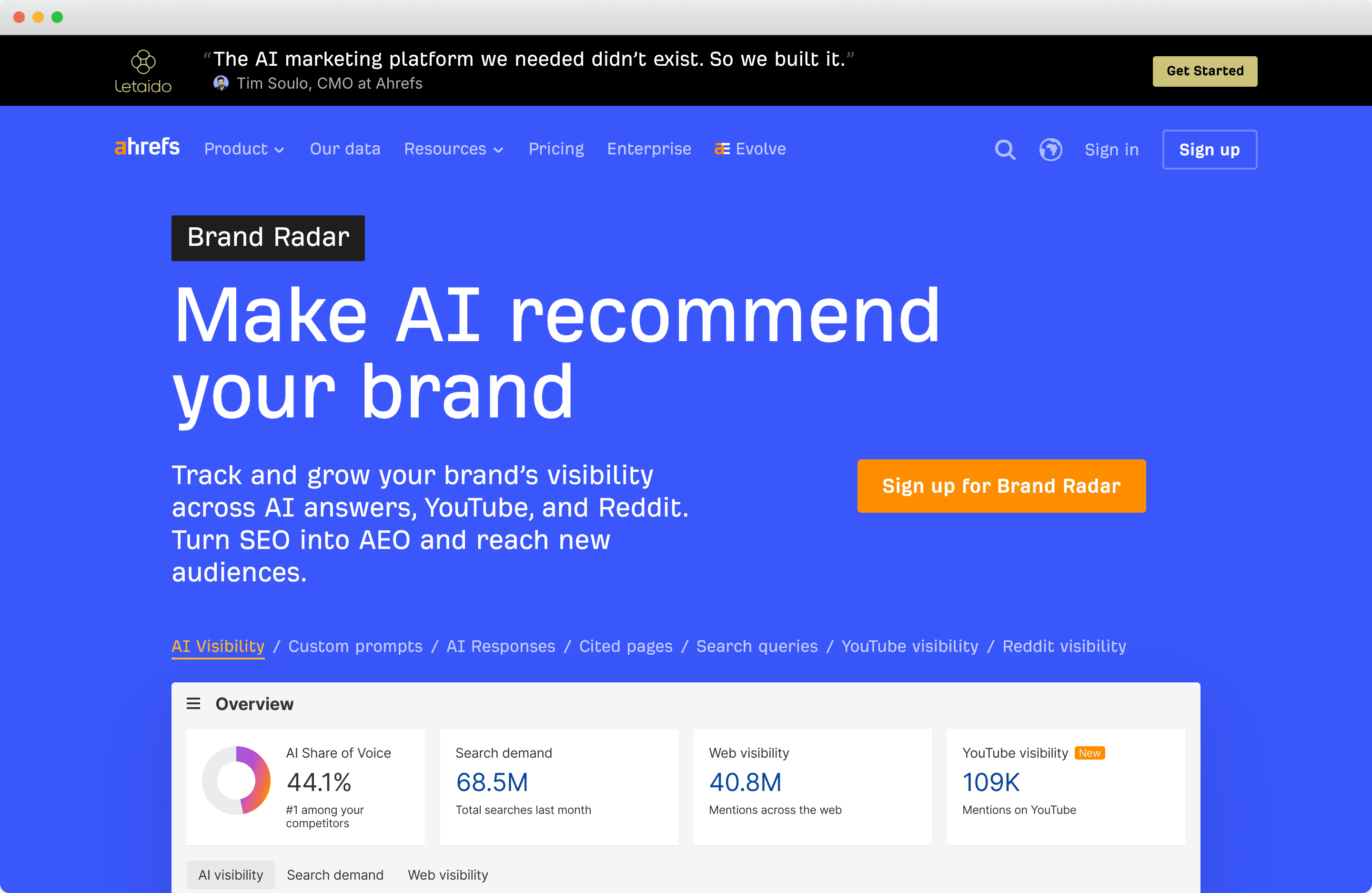
7. Ahrefs: Stored Answers a Reviewer Can Search
Key Features:
Stored raw responses: "We store the raw responses so you can search them for brand mentions (string matches) and citations (linked URLs)."
Top 5 cited pages alongside your brand.
Daily AI Mode monitoring of mentions and citations, and AI Mode share of voice against a competitor you choose.
Charts and exports for reporting.
Pricing:
Brand Radar AI: from $199 per month, to track your own AI prompts, and sold standalone.
Core plans: Lite $129, Standard $249, Advanced $449 per month, listing 5, 10 and 20 tracked AI prompts.
Enterprise: $1,499 per month, with an annual commitment required.
Reddit Score: 48.3% Positive. What redditors say:
"While Ahrefs scale can be off, the trends are very accurate" (r/SEO)
The score covers Ahrefs as a whole across 378 mentions, most of them about search work rather than its AI tracker.
The negative mentions are mostly about pricing and traffic estimates.
Ahrefs documents answer text and cited sources, the two things a clinical reviewer reads, and it is one of only two entries here that document the answer itself. Its tracker page names ChatGPT among the platforms it covers, and its daily-monitoring line is written about AI Mode.
Per-market results, several brands, and service-line grouping are not documented, so a health system across several regions has three demo questions. Ask too whether ChatGPT is checked as often as AI Mode, and what a prompt package for three service lines costs.
8. Scrunch: The Healthcare Record Lives in the Plan Table
Key Features:
Filtering results by AI platform, ChatGPT and Google AI Mode among them.
Cross-platform comparison of brand presence, competitive presence, position, sentiment, or citations.
Citations and sources listed as a plan row on both tiers.
Competitors: five on Core, custom on Enterprise.
Pricing:
Core: $250 per month for 125 unique prompts, 1 brand workspace, and four engines (ChatGPT, Perplexity, Google AI Overviews, Copilot), with a seven-day free trial.
Enterprise: custom, adding a custom number of brand workspaces, API access, and nine engines including Google AI Mode.
Reddit Score: 50.0% Positive. What redditors say:
The 10-tool roundup found it leaning into how AI systems discover and interpret a site. (r/DigitalMarketing)
The 2026 buyer's guide files it in enterprise territory. (r/SaaS)
Five mentions is exactly the floor for a score.
Scrunch is here because the roster takes the five highest-ranked tools on our competitor leaderboard that clear the admission bar, and it is the fifth of them.
Tools that document as much of this lens or more, such as Rankscale, PromptRush, Omnia and Superlines, were cut at the eight-tool cap, while AthenaHQ and Dageno AI took the two places kept for lens fit.
Against the five criteria, its plan table documents cited sources, countries (one on Core, unlimited on Enterprise), and brand workspaces (one on Core, custom on Enterprise). Answer text and service lines are not documented. Google AI Mode sits on the Enterprise engine list and not on Core's, so both engines here start with a sales conversation.
Of the eight, only two document the pair a clinical reviewer needs together, the answer and the pages behind it: Dageno AI and Ahrefs.
What This Review Cannot Tell You
This is a reading of vendor documentation, with no trials, no query reruns, and no measured outcomes. Every capability is a line on the vendor's own page and every price was checked live on September 22, 2026.
None of the eight documents all five criteria, and none documents separating a recommendation from a mention. A Reddit score says how people talk about a tool, mostly marketers rather than health systems, and nothing about whether it fits healthcare. The intro figure is the healthcare study's measurement, not this review's.
Pick by the Criterion You Cannot Do Without
Service-line alignment: AthenaHQ is the only record that documents healthcare prompts, and its line names evaluation and symptom-based questions, so telehealth, therapy, and pharmacy groups are still a demo item.
Readable answer text: Dageno AI and Ahrefs.
Cited sources: every entry documents them in some form.
Separate markets: Qvery, AthenaHQ, Dageno AI, OtterlyAI, and Peec AI, plus Profound and Scrunch on their Enterprise plans.
Several brands: AthenaHQ, Dageno AI, OtterlyAI, Peec AI, and Profound, plus Qvery on Business ("Unlimited Brands") and Scrunch on Enterprise (custom brand workspaces).
Then give every tool on your shortlist the same demo: your own telehealth, therapy, and pharmacy questions, ChatGPT and Google AI Mode shown separately on the plan you would buy, the answer text a clinical reviewer can read, the sources behind each answer, results kept apart by market, and the three services kept apart as groups.
Ask each vendor to show whether you were recommended or only mentioned. For the telehealth side specifically, what shows up when patients ask about telehealth is the next read.
Somewhere tonight a patient asks ChatGPT for an online therapist who takes their insurance, reads one answer, and books. In our September healthcare study, brand-owned domains appeared alongside 70.14% of recommendation answers (505 of 720 valid answers, both engines, runs pooled), so what those answers draw on can be measured.
Whether a tool can measure it for your service lines is a different question, and none of the eight below documents everything a healthcare team needs. Each was read on its own pages this September, with prices from the live pricing pages, and each entry ends on the questions its pages leave for the demo.
Five Things a Healthcare Team Should See in Writing
Healthcare is sold service line by service line, and every sentence about a clinical service gets read twice before it ships. That turns one visibility number into five questions, with a sixth running under all of them.
Answer text. A clinical or compliance reviewer can read what the engine said about each service, in its own words.
Cited sources. Which pages and domains each answer drew on, your own service pages among them.
Per-market results. The same questions kept apart by the markets where each service is offered, since a telehealth license stops at a border.
Several brands in one account. Health systems, pharmacy groups, and portfolios run more than one name.
Service-line prompts. Telehealth, therapy, and pharmacy questions tracked and read as separate groups, which is healthcare's own criterion.
Every tool here clears one bar first: its own page names both ChatGPT and Google AI Mode as tracked, and its prices can be checked on its pricing page.
Past that bar, each criterion sits in one of three states: documented (a line on the vendor's page says so), documented as not offered (the vendor says no, which happens nowhere on this list), or not documented, which means the pages are silent and never means the tool cannot do it.
The sixth question is whether a tool separates being recommended from being mentioned. None of the eight documents it, so the decision at the end puts it to every one of them. For how to set the measurement up yourself, our guide to measuring healthcare AI engine visibility covers the method.
Appearing in an answer and being the answer are different outcomes, and a tool that counts appearances cannot tell a referral from a warning.
1. Qvery: Daily Answers on Both Engines, Market by Market
Key Features:
Daily tracking of visibility, share of voice, and average rank across ChatGPT and Google AI Mode, in 200+ countries.
Every citation captured daily, tied to the query and the engine that produced it.
Topics and queries generated at onboarding, plus the queries you add and edit, so telehealth, therapy, and pharmacy questions can all sit in your tracked set.
Qvery Assistant in the app: ask about your own visibility, share of voice, citation, topic, and query data in plain language, and have it add queries, trigger a data run, or export a report.
Pricing:
Starter: €49 per month for 1 brand and 25 tracked queries.
Growth: €99 per month for 1 brand and 50 tracked queries.
Business: €199 for unlimited brands and 100 tracked queries (the page prints no billing period on this tier).
Every tier includes ChatGPT and Google AI Mode, daily query runs, unlimited countries, and unlimited seats.
Reddit Score: 85.0% Positive. What redditors say:
"tracking mentions in local publications and external sites is key for AI visibility, like Qvery AI does." (r/smallbusiness)
It comes up in threads where a clinic or a practice owner has just found out the assistant sends people to a competitor.
Mostly positive, a few neutral, and no negative mentions on record.
This is our product, and a healthcare buyer should discount the entry by exactly that much, then hold it to the same five criteria. Cited sources and per-market results are documented, and several brands in one account is documented on the Business tier, which the pricing page lists as "Unlimited Brands".
Answer text, service-line grouping, and recommendation status are not documented. You can add the service queries; whether the three services come back as separate groups is a demo question. Qvery tracks whether you appear, your share of voice, and your average rank, which is not the same as knowing you were the recommendation.
The documented fit covers both engines daily, every market, and every citation. Run your own telehealth, therapy, and pharmacy questions in the trial, and look for the three things above. Start your free trial: 7 days free on the paid plans, and no credit card required.
2. AthenaHQ: The Only Healthcare Line on Anyone's Page
Key Features:
Healthcare prompts, in writing: "helping brands earn consistent inclusion in evaluation and symptom-based queries where trust drives conversion." It is the vendor's description of its work, not a measured result.
Source Intelligence, which it says reveals the sources shaping AI answers.
Global scale: operating "across brands, markets, and models."
Several brands and units tracked together, with competitor share of voice.
AthenaHQ API for putting visibility data into your own dashboards.
Pricing:
Essential: free, with $25 of credit and 300 credits, covering ChatGPT, Perplexity, AI Overviews, Gemini, and Copilot. Google AI Mode is not on this tier.
Starter: $295 per month with 3,600 credits, the first tier that lists AI Mode, with API access and extra credits as paid add-ons.
Enterprise: custom, adding multi-region and multi-language support.
Reddit Score: 57.1% Positive. What redditors say:
A 10-tool roundup in r/DigitalMarketing tested it for commercial discovery and placed it closest to ecommerce use. (r/DigitalMarketing)
Agency posters describe using it to show clients where they appear and where they do not.
Seven mentions is a thin base, so read the percentage as a direction.
AthenaHQ documents three of the five (cited sources, markets, several brands) plus the only healthcare-specific prompt line on this list. That line names evaluation and symptom-based questions, not telehealth, therapy, or pharmacy, so the three service groups are still a demo item.
Answer text is the one open criterion. Its free tier lists "Prompt and response analysis", and whether a reviewer can read the full answer per service is the question to ask. Market separation is on the Enterprise plan list rather than Starter's, so confirm it on the plan you are quoted.
3. Dageno AI: The Answer and the Pages Behind It
Key Features:
Answers traced to sources: "Trace insights back to cited domains, URLs, and original AI answers", which covers answer text and cited sources in one line.
A region view with per-market rank and visibility.
Brand comparison "within the same market, model, region, and time range."
A competitor leaderboard for visibility against named rivals.
Pricing:
Starter: $49 per month (listed as originally $89), 1 brand, 50 custom tracked prompts, 2 market segments, with a 7-day free trial.
Growth: $199 per month, 2 brands, 250 prompts, 5 market segments.
Scale: $410 per month, 5 brands, 600 prompts, 12 market segments, plus API, batch configuration, and data exports.
Custom: quoted. Annual billing saves about 15%, and the same prompt run on different models and regions counts separately toward usage.
Reddit Score: Too few mentions to score. Two mentions of Dageno AI turned up in the threads we read, and a percentage needs at least five.
Dageno AI documents four of the five, and the pair it documents together is the one a clinical reviewer reads: the answer and the pages behind it. That is the difference between knowing you appeared in a telehealth answer and knowing the engine described your service as out of network.
Service-line grouping is not documented, and neither are scheduled runs. The pricing FAQ is the part to read twice: a prompt run on two engines in three markets counts six times, so three services across a handful of markets outgrow Starter's 50 prompts quickly.
4. OtterlyAI: Every Cited URL, With Google AI Mode as an Add-On
Key Features:
Every domain and URL cited in AI answers, checked daily, "with link-position changes over time."
Market-by-market results rather than one global number.
Workspaces for several brands or clients inside one subscription.
Public API for brand reports, prompts, citations, and workspace data.
Pricing:
Lite: $29 per month for 15 search prompts, or $25 per month on annual billing.
Standard: $189 per month for 100 prompts, or $160 per month on annual billing.
Premium: $489 per month for 400 prompts, or $422 per month on annual billing.
Enterprise: custom, from 1,000 prompts.
Every self-serve tier tracks ChatGPT, Google AI Overviews, Perplexity, and MS Copilot, with Google AI Mode as an add-on: $9 on Lite, $59 on Standard, $149 on Premium, per month.
Reddit Score: 69.2% Positive. What redditors say:
"tools like Semrush AI Overview and OtterlyAI help monitor AI citations but full SEO integration lags." (r/digital_marketing)
A 2026 buyer's guide in r/SaaS calls it a good entry-level option for prompts, citations, and competitor visibility. (r/SaaS)
The highest competitor score on this list, mostly on setup and price.
OtterlyAI documents three of the five: cited sources at URL level, per-market results, and several brands. For a pharmacy group with locations in more than one country, that combination covers the reporting side well.
Answer text and service-line grouping are not documented. Price both engines, not the sticker: Lite plus the Google AI Mode add-on is $38 a month, and Lite's 15 prompts will not hold three service lines for long.
5. Peec AI: Citations per Engine, Countries Included
Key Features:
Cited URLs and domains, with ChatGPT sources and Google AI Mode citations named separately.
Tracking across all countries, and the pricing FAQ says countries and languages cost nothing extra.
Multi-brand tracking with separate reporting for each client.
Share of voice against every tracked brand, and continuous tracking.
Pricing:
Starter: $95 per month for 50 prompts, choose 3 models.
Pro: $245 per month for 150 prompts, choose 3 models.
Advanced: $495 per month for 350 prompts, choose 3 models, with multi-country listed as a plan row.
Enterprise: custom, billed annually, choose from all models, with API access.
Reddit Score: 68.6% Positive. What redditors say:
"I track AI Overviews with SE Ranking's thing and Peec for SoV" (r/SaaS)
The 2026 buyer's guide in r/SaaS calls it one of the nicest interfaces for tracking prompts, competitors, visibility, and citations. (r/SaaS)
51 mentions, the deepest sample among the dedicated trackers here, with most complaints about cost at scale.
Peec AI documents three of the five, and its citation line is the most specific here about what it reads on each engine. For a healthcare brand whose answers may lean on different sources in ChatGPT and in Google AI Mode, that separation matters.
Two lines on its pages need settling in the demo. One page says ChatGPT and Google AI Mode are included by default in every plan; each self-serve tier says "Choose 3 models". Answer text and service-line grouping are not documented either.
6. Profound: How Engines Describe a Brand, Behind a Demo
Key Features:
Answer Engine Insights, tracking how engines "mention, rank, and describe a brand."
Citation Analysis of the websites that influence answers about your brand.
Agency Mode, for several brand environments in one account.
Up to nine answer engines on Enterprise, Google AI Mode among them.
Pricing:
Trial: free, 50 prompts run daily for seven days, on ChatGPT, Gemini, and Google AI Overviews, with a recommended prompt set that Trial users cannot change.
Enterprise: custom, with a tailored prompt tracking plan, exports, and API access.
Reddit Score: Too few mentions to score. One mention about Profound came up in the sample, below the five-mention floor.
Outside that sample, a 2026 buyer's guide describes it as "Very comprehensive, particularly around citations, visibility and understanding how AI systems talk about a brand" (r/SaaS). For a healthcare brand, that description is the part a reviewer reads first.
Its pages document cited sources and several brands, and its pricing table lists Regions as one on Trial and custom on Enterprise. Describing a brand is not the same as letting a reviewer read the answer, so answer text stays open, as do service lines.
The trial runs without Google AI Mode and without your own prompts, so the healthcare half of the test happens in an Enterprise demo.
7. Ahrefs: Stored Answers a Reviewer Can Search
Key Features:
Stored raw responses: "We store the raw responses so you can search them for brand mentions (string matches) and citations (linked URLs)."
Top 5 cited pages alongside your brand.
Daily AI Mode monitoring of mentions and citations, and AI Mode share of voice against a competitor you choose.
Charts and exports for reporting.
Pricing:
Brand Radar AI: from $199 per month, to track your own AI prompts, and sold standalone.
Core plans: Lite $129, Standard $249, Advanced $449 per month, listing 5, 10 and 20 tracked AI prompts.
Enterprise: $1,499 per month, with an annual commitment required.
Reddit Score: 48.3% Positive. What redditors say:
"While Ahrefs scale can be off, the trends are very accurate" (r/SEO)
The score covers Ahrefs as a whole across 378 mentions, most of them about search work rather than its AI tracker.
The negative mentions are mostly about pricing and traffic estimates.
Ahrefs documents answer text and cited sources, the two things a clinical reviewer reads, and it is one of only two entries here that document the answer itself. Its tracker page names ChatGPT among the platforms it covers, and its daily-monitoring line is written about AI Mode.
Per-market results, several brands, and service-line grouping are not documented, so a health system across several regions has three demo questions. Ask too whether ChatGPT is checked as often as AI Mode, and what a prompt package for three service lines costs.
8. Scrunch: The Healthcare Record Lives in the Plan Table
Key Features:
Filtering results by AI platform, ChatGPT and Google AI Mode among them.
Cross-platform comparison of brand presence, competitive presence, position, sentiment, or citations.
Citations and sources listed as a plan row on both tiers.
Competitors: five on Core, custom on Enterprise.
Pricing:
Core: $250 per month for 125 unique prompts, 1 brand workspace, and four engines (ChatGPT, Perplexity, Google AI Overviews, Copilot), with a seven-day free trial.
Enterprise: custom, adding a custom number of brand workspaces, API access, and nine engines including Google AI Mode.
Reddit Score: 50.0% Positive. What redditors say:
The 10-tool roundup found it leaning into how AI systems discover and interpret a site. (r/DigitalMarketing)
The 2026 buyer's guide files it in enterprise territory. (r/SaaS)
Five mentions is exactly the floor for a score.
Scrunch is here because the roster takes the five highest-ranked tools on our competitor leaderboard that clear the admission bar, and it is the fifth of them.
Tools that document as much of this lens or more, such as Rankscale, PromptRush, Omnia and Superlines, were cut at the eight-tool cap, while AthenaHQ and Dageno AI took the two places kept for lens fit.
Against the five criteria, its plan table documents cited sources, countries (one on Core, unlimited on Enterprise), and brand workspaces (one on Core, custom on Enterprise). Answer text and service lines are not documented. Google AI Mode sits on the Enterprise engine list and not on Core's, so both engines here start with a sales conversation.
Of the eight, only two document the pair a clinical reviewer needs together, the answer and the pages behind it: Dageno AI and Ahrefs.
What This Review Cannot Tell You
This is a reading of vendor documentation, with no trials, no query reruns, and no measured outcomes. Every capability is a line on the vendor's own page and every price was checked live on September 22, 2026.
None of the eight documents all five criteria, and none documents separating a recommendation from a mention. A Reddit score says how people talk about a tool, mostly marketers rather than health systems, and nothing about whether it fits healthcare. The intro figure is the healthcare study's measurement, not this review's.
Pick by the Criterion You Cannot Do Without
Service-line alignment: AthenaHQ is the only record that documents healthcare prompts, and its line names evaluation and symptom-based questions, so telehealth, therapy, and pharmacy groups are still a demo item.
Readable answer text: Dageno AI and Ahrefs.
Cited sources: every entry documents them in some form.
Separate markets: Qvery, AthenaHQ, Dageno AI, OtterlyAI, and Peec AI, plus Profound and Scrunch on their Enterprise plans.
Several brands: AthenaHQ, Dageno AI, OtterlyAI, Peec AI, and Profound, plus Qvery on Business ("Unlimited Brands") and Scrunch on Enterprise (custom brand workspaces).
Then give every tool on your shortlist the same demo: your own telehealth, therapy, and pharmacy questions, ChatGPT and Google AI Mode shown separately on the plan you would buy, the answer text a clinical reviewer can read, the sources behind each answer, results kept apart by market, and the three services kept apart as groups.
Ask each vendor to show whether you were recommended or only mentioned. For the telehealth side specifically, what shows up when patients ask about telehealth is the next read.
Somewhere tonight a patient asks ChatGPT for an online therapist who takes their insurance, reads one answer, and books. In our September healthcare study, brand-owned domains appeared alongside 70.14% of recommendation answers (505 of 720 valid answers, both engines, runs pooled), so what those answers draw on can be measured.
Whether a tool can measure it for your service lines is a different question, and none of the eight below documents everything a healthcare team needs. Each was read on its own pages this September, with prices from the live pricing pages, and each entry ends on the questions its pages leave for the demo.
Five Things a Healthcare Team Should See in Writing
Healthcare is sold service line by service line, and every sentence about a clinical service gets read twice before it ships. That turns one visibility number into five questions, with a sixth running under all of them.
Answer text. A clinical or compliance reviewer can read what the engine said about each service, in its own words.
Cited sources. Which pages and domains each answer drew on, your own service pages among them.
Per-market results. The same questions kept apart by the markets where each service is offered, since a telehealth license stops at a border.
Several brands in one account. Health systems, pharmacy groups, and portfolios run more than one name.
Service-line prompts. Telehealth, therapy, and pharmacy questions tracked and read as separate groups, which is healthcare's own criterion.
Every tool here clears one bar first: its own page names both ChatGPT and Google AI Mode as tracked, and its prices can be checked on its pricing page.
Past that bar, each criterion sits in one of three states: documented (a line on the vendor's page says so), documented as not offered (the vendor says no, which happens nowhere on this list), or not documented, which means the pages are silent and never means the tool cannot do it.
The sixth question is whether a tool separates being recommended from being mentioned. None of the eight documents it, so the decision at the end puts it to every one of them. For how to set the measurement up yourself, our guide to measuring healthcare AI engine visibility covers the method.
Appearing in an answer and being the answer are different outcomes, and a tool that counts appearances cannot tell a referral from a warning.
1. Qvery: Daily Answers on Both Engines, Market by Market
Key Features:
Daily tracking of visibility, share of voice, and average rank across ChatGPT and Google AI Mode, in 200+ countries.
Every citation captured daily, tied to the query and the engine that produced it.
Topics and queries generated at onboarding, plus the queries you add and edit, so telehealth, therapy, and pharmacy questions can all sit in your tracked set.
Qvery Assistant in the app: ask about your own visibility, share of voice, citation, topic, and query data in plain language, and have it add queries, trigger a data run, or export a report.
Pricing:
Starter: €49 per month for 1 brand and 25 tracked queries.
Growth: €99 per month for 1 brand and 50 tracked queries.
Business: €199 for unlimited brands and 100 tracked queries (the page prints no billing period on this tier).
Every tier includes ChatGPT and Google AI Mode, daily query runs, unlimited countries, and unlimited seats.
Reddit Score: 85.0% Positive. What redditors say:
"tracking mentions in local publications and external sites is key for AI visibility, like Qvery AI does." (r/smallbusiness)
It comes up in threads where a clinic or a practice owner has just found out the assistant sends people to a competitor.
Mostly positive, a few neutral, and no negative mentions on record.
This is our product, and a healthcare buyer should discount the entry by exactly that much, then hold it to the same five criteria. Cited sources and per-market results are documented, and several brands in one account is documented on the Business tier, which the pricing page lists as "Unlimited Brands".
Answer text, service-line grouping, and recommendation status are not documented. You can add the service queries; whether the three services come back as separate groups is a demo question. Qvery tracks whether you appear, your share of voice, and your average rank, which is not the same as knowing you were the recommendation.
The documented fit covers both engines daily, every market, and every citation. Run your own telehealth, therapy, and pharmacy questions in the trial, and look for the three things above. Start your free trial: 7 days free on the paid plans, and no credit card required.
2. AthenaHQ: The Only Healthcare Line on Anyone's Page
Key Features:
Healthcare prompts, in writing: "helping brands earn consistent inclusion in evaluation and symptom-based queries where trust drives conversion." It is the vendor's description of its work, not a measured result.
Source Intelligence, which it says reveals the sources shaping AI answers.
Global scale: operating "across brands, markets, and models."
Several brands and units tracked together, with competitor share of voice.
AthenaHQ API for putting visibility data into your own dashboards.
Pricing:
Essential: free, with $25 of credit and 300 credits, covering ChatGPT, Perplexity, AI Overviews, Gemini, and Copilot. Google AI Mode is not on this tier.
Starter: $295 per month with 3,600 credits, the first tier that lists AI Mode, with API access and extra credits as paid add-ons.
Enterprise: custom, adding multi-region and multi-language support.
Reddit Score: 57.1% Positive. What redditors say:
A 10-tool roundup in r/DigitalMarketing tested it for commercial discovery and placed it closest to ecommerce use. (r/DigitalMarketing)
Agency posters describe using it to show clients where they appear and where they do not.
Seven mentions is a thin base, so read the percentage as a direction.
AthenaHQ documents three of the five (cited sources, markets, several brands) plus the only healthcare-specific prompt line on this list. That line names evaluation and symptom-based questions, not telehealth, therapy, or pharmacy, so the three service groups are still a demo item.
Answer text is the one open criterion. Its free tier lists "Prompt and response analysis", and whether a reviewer can read the full answer per service is the question to ask. Market separation is on the Enterprise plan list rather than Starter's, so confirm it on the plan you are quoted.
3. Dageno AI: The Answer and the Pages Behind It
Key Features:
Answers traced to sources: "Trace insights back to cited domains, URLs, and original AI answers", which covers answer text and cited sources in one line.
A region view with per-market rank and visibility.
Brand comparison "within the same market, model, region, and time range."
A competitor leaderboard for visibility against named rivals.
Pricing:
Starter: $49 per month (listed as originally $89), 1 brand, 50 custom tracked prompts, 2 market segments, with a 7-day free trial.
Growth: $199 per month, 2 brands, 250 prompts, 5 market segments.
Scale: $410 per month, 5 brands, 600 prompts, 12 market segments, plus API, batch configuration, and data exports.
Custom: quoted. Annual billing saves about 15%, and the same prompt run on different models and regions counts separately toward usage.
Reddit Score: Too few mentions to score. Two mentions of Dageno AI turned up in the threads we read, and a percentage needs at least five.
Dageno AI documents four of the five, and the pair it documents together is the one a clinical reviewer reads: the answer and the pages behind it. That is the difference between knowing you appeared in a telehealth answer and knowing the engine described your service as out of network.
Service-line grouping is not documented, and neither are scheduled runs. The pricing FAQ is the part to read twice: a prompt run on two engines in three markets counts six times, so three services across a handful of markets outgrow Starter's 50 prompts quickly.
4. OtterlyAI: Every Cited URL, With Google AI Mode as an Add-On
Key Features:
Every domain and URL cited in AI answers, checked daily, "with link-position changes over time."
Market-by-market results rather than one global number.
Workspaces for several brands or clients inside one subscription.
Public API for brand reports, prompts, citations, and workspace data.
Pricing:
Lite: $29 per month for 15 search prompts, or $25 per month on annual billing.
Standard: $189 per month for 100 prompts, or $160 per month on annual billing.
Premium: $489 per month for 400 prompts, or $422 per month on annual billing.
Enterprise: custom, from 1,000 prompts.
Every self-serve tier tracks ChatGPT, Google AI Overviews, Perplexity, and MS Copilot, with Google AI Mode as an add-on: $9 on Lite, $59 on Standard, $149 on Premium, per month.
Reddit Score: 69.2% Positive. What redditors say:
"tools like Semrush AI Overview and OtterlyAI help monitor AI citations but full SEO integration lags." (r/digital_marketing)
A 2026 buyer's guide in r/SaaS calls it a good entry-level option for prompts, citations, and competitor visibility. (r/SaaS)
The highest competitor score on this list, mostly on setup and price.
OtterlyAI documents three of the five: cited sources at URL level, per-market results, and several brands. For a pharmacy group with locations in more than one country, that combination covers the reporting side well.
Answer text and service-line grouping are not documented. Price both engines, not the sticker: Lite plus the Google AI Mode add-on is $38 a month, and Lite's 15 prompts will not hold three service lines for long.
5. Peec AI: Citations per Engine, Countries Included
Key Features:
Cited URLs and domains, with ChatGPT sources and Google AI Mode citations named separately.
Tracking across all countries, and the pricing FAQ says countries and languages cost nothing extra.
Multi-brand tracking with separate reporting for each client.
Share of voice against every tracked brand, and continuous tracking.
Pricing:
Starter: $95 per month for 50 prompts, choose 3 models.
Pro: $245 per month for 150 prompts, choose 3 models.
Advanced: $495 per month for 350 prompts, choose 3 models, with multi-country listed as a plan row.
Enterprise: custom, billed annually, choose from all models, with API access.
Reddit Score: 68.6% Positive. What redditors say:
"I track AI Overviews with SE Ranking's thing and Peec for SoV" (r/SaaS)
The 2026 buyer's guide in r/SaaS calls it one of the nicest interfaces for tracking prompts, competitors, visibility, and citations. (r/SaaS)
51 mentions, the deepest sample among the dedicated trackers here, with most complaints about cost at scale.
Peec AI documents three of the five, and its citation line is the most specific here about what it reads on each engine. For a healthcare brand whose answers may lean on different sources in ChatGPT and in Google AI Mode, that separation matters.
Two lines on its pages need settling in the demo. One page says ChatGPT and Google AI Mode are included by default in every plan; each self-serve tier says "Choose 3 models". Answer text and service-line grouping are not documented either.
6. Profound: How Engines Describe a Brand, Behind a Demo
Key Features:
Answer Engine Insights, tracking how engines "mention, rank, and describe a brand."
Citation Analysis of the websites that influence answers about your brand.
Agency Mode, for several brand environments in one account.
Up to nine answer engines on Enterprise, Google AI Mode among them.
Pricing:
Trial: free, 50 prompts run daily for seven days, on ChatGPT, Gemini, and Google AI Overviews, with a recommended prompt set that Trial users cannot change.
Enterprise: custom, with a tailored prompt tracking plan, exports, and API access.
Reddit Score: Too few mentions to score. One mention about Profound came up in the sample, below the five-mention floor.
Outside that sample, a 2026 buyer's guide describes it as "Very comprehensive, particularly around citations, visibility and understanding how AI systems talk about a brand" (r/SaaS). For a healthcare brand, that description is the part a reviewer reads first.
Its pages document cited sources and several brands, and its pricing table lists Regions as one on Trial and custom on Enterprise. Describing a brand is not the same as letting a reviewer read the answer, so answer text stays open, as do service lines.
The trial runs without Google AI Mode and without your own prompts, so the healthcare half of the test happens in an Enterprise demo.
7. Ahrefs: Stored Answers a Reviewer Can Search
Key Features:
Stored raw responses: "We store the raw responses so you can search them for brand mentions (string matches) and citations (linked URLs)."
Top 5 cited pages alongside your brand.
Daily AI Mode monitoring of mentions and citations, and AI Mode share of voice against a competitor you choose.
Charts and exports for reporting.
Pricing:
Brand Radar AI: from $199 per month, to track your own AI prompts, and sold standalone.
Core plans: Lite $129, Standard $249, Advanced $449 per month, listing 5, 10 and 20 tracked AI prompts.
Enterprise: $1,499 per month, with an annual commitment required.
Reddit Score: 48.3% Positive. What redditors say:
"While Ahrefs scale can be off, the trends are very accurate" (r/SEO)
The score covers Ahrefs as a whole across 378 mentions, most of them about search work rather than its AI tracker.
The negative mentions are mostly about pricing and traffic estimates.
Ahrefs documents answer text and cited sources, the two things a clinical reviewer reads, and it is one of only two entries here that document the answer itself. Its tracker page names ChatGPT among the platforms it covers, and its daily-monitoring line is written about AI Mode.
Per-market results, several brands, and service-line grouping are not documented, so a health system across several regions has three demo questions. Ask too whether ChatGPT is checked as often as AI Mode, and what a prompt package for three service lines costs.
8. Scrunch: The Healthcare Record Lives in the Plan Table
Key Features:
Filtering results by AI platform, ChatGPT and Google AI Mode among them.
Cross-platform comparison of brand presence, competitive presence, position, sentiment, or citations.
Citations and sources listed as a plan row on both tiers.
Competitors: five on Core, custom on Enterprise.
Pricing:
Core: $250 per month for 125 unique prompts, 1 brand workspace, and four engines (ChatGPT, Perplexity, Google AI Overviews, Copilot), with a seven-day free trial.
Enterprise: custom, adding a custom number of brand workspaces, API access, and nine engines including Google AI Mode.
Reddit Score: 50.0% Positive. What redditors say:
The 10-tool roundup found it leaning into how AI systems discover and interpret a site. (r/DigitalMarketing)
The 2026 buyer's guide files it in enterprise territory. (r/SaaS)
Five mentions is exactly the floor for a score.
Scrunch is here because the roster takes the five highest-ranked tools on our competitor leaderboard that clear the admission bar, and it is the fifth of them.
Tools that document as much of this lens or more, such as Rankscale, PromptRush, Omnia and Superlines, were cut at the eight-tool cap, while AthenaHQ and Dageno AI took the two places kept for lens fit.
Against the five criteria, its plan table documents cited sources, countries (one on Core, unlimited on Enterprise), and brand workspaces (one on Core, custom on Enterprise). Answer text and service lines are not documented. Google AI Mode sits on the Enterprise engine list and not on Core's, so both engines here start with a sales conversation.
Of the eight, only two document the pair a clinical reviewer needs together, the answer and the pages behind it: Dageno AI and Ahrefs.
What This Review Cannot Tell You
This is a reading of vendor documentation, with no trials, no query reruns, and no measured outcomes. Every capability is a line on the vendor's own page and every price was checked live on September 22, 2026.
None of the eight documents all five criteria, and none documents separating a recommendation from a mention. A Reddit score says how people talk about a tool, mostly marketers rather than health systems, and nothing about whether it fits healthcare. The intro figure is the healthcare study's measurement, not this review's.
Pick by the Criterion You Cannot Do Without
Service-line alignment: AthenaHQ is the only record that documents healthcare prompts, and its line names evaluation and symptom-based questions, so telehealth, therapy, and pharmacy groups are still a demo item.
Readable answer text: Dageno AI and Ahrefs.
Cited sources: every entry documents them in some form.
Separate markets: Qvery, AthenaHQ, Dageno AI, OtterlyAI, and Peec AI, plus Profound and Scrunch on their Enterprise plans.
Several brands: AthenaHQ, Dageno AI, OtterlyAI, Peec AI, and Profound, plus Qvery on Business ("Unlimited Brands") and Scrunch on Enterprise (custom brand workspaces).
Then give every tool on your shortlist the same demo: your own telehealth, therapy, and pharmacy questions, ChatGPT and Google AI Mode shown separately on the plan you would buy, the answer text a clinical reviewer can read, the sources behind each answer, results kept apart by market, and the three services kept apart as groups.
Ask each vendor to show whether you were recommended or only mentioned. For the telehealth side specifically, what shows up when patients ask about telehealth is the next read.
Somewhere tonight a patient asks ChatGPT for an online therapist who takes their insurance, reads one answer, and books. In our September healthcare study, brand-owned domains appeared alongside 70.14% of recommendation answers (505 of 720 valid answers, both engines, runs pooled), so what those answers draw on can be measured.
Whether a tool can measure it for your service lines is a different question, and none of the eight below documents everything a healthcare team needs. Each was read on its own pages this September, with prices from the live pricing pages, and each entry ends on the questions its pages leave for the demo.
Five Things a Healthcare Team Should See in Writing
Healthcare is sold service line by service line, and every sentence about a clinical service gets read twice before it ships. That turns one visibility number into five questions, with a sixth running under all of them.
Answer text. A clinical or compliance reviewer can read what the engine said about each service, in its own words.
Cited sources. Which pages and domains each answer drew on, your own service pages among them.
Per-market results. The same questions kept apart by the markets where each service is offered, since a telehealth license stops at a border.
Several brands in one account. Health systems, pharmacy groups, and portfolios run more than one name.
Service-line prompts. Telehealth, therapy, and pharmacy questions tracked and read as separate groups, which is healthcare's own criterion.
Every tool here clears one bar first: its own page names both ChatGPT and Google AI Mode as tracked, and its prices can be checked on its pricing page.
Past that bar, each criterion sits in one of three states: documented (a line on the vendor's page says so), documented as not offered (the vendor says no, which happens nowhere on this list), or not documented, which means the pages are silent and never means the tool cannot do it.
The sixth question is whether a tool separates being recommended from being mentioned. None of the eight documents it, so the decision at the end puts it to every one of them. For how to set the measurement up yourself, our guide to measuring healthcare AI engine visibility covers the method.
Appearing in an answer and being the answer are different outcomes, and a tool that counts appearances cannot tell a referral from a warning.
1. Qvery: Daily Answers on Both Engines, Market by Market
Key Features:
Daily tracking of visibility, share of voice, and average rank across ChatGPT and Google AI Mode, in 200+ countries.
Every citation captured daily, tied to the query and the engine that produced it.
Topics and queries generated at onboarding, plus the queries you add and edit, so telehealth, therapy, and pharmacy questions can all sit in your tracked set.
Qvery Assistant in the app: ask about your own visibility, share of voice, citation, topic, and query data in plain language, and have it add queries, trigger a data run, or export a report.
Pricing:
Starter: €49 per month for 1 brand and 25 tracked queries.
Growth: €99 per month for 1 brand and 50 tracked queries.
Business: €199 for unlimited brands and 100 tracked queries (the page prints no billing period on this tier).
Every tier includes ChatGPT and Google AI Mode, daily query runs, unlimited countries, and unlimited seats.
Reddit Score: 85.0% Positive. What redditors say:
"tracking mentions in local publications and external sites is key for AI visibility, like Qvery AI does." (r/smallbusiness)
It comes up in threads where a clinic or a practice owner has just found out the assistant sends people to a competitor.
Mostly positive, a few neutral, and no negative mentions on record.
This is our product, and a healthcare buyer should discount the entry by exactly that much, then hold it to the same five criteria. Cited sources and per-market results are documented, and several brands in one account is documented on the Business tier, which the pricing page lists as "Unlimited Brands".
Answer text, service-line grouping, and recommendation status are not documented. You can add the service queries; whether the three services come back as separate groups is a demo question. Qvery tracks whether you appear, your share of voice, and your average rank, which is not the same as knowing you were the recommendation.
The documented fit covers both engines daily, every market, and every citation. Run your own telehealth, therapy, and pharmacy questions in the trial, and look for the three things above. Start your free trial: 7 days free on the paid plans, and no credit card required.
2. AthenaHQ: The Only Healthcare Line on Anyone's Page
Key Features:
Healthcare prompts, in writing: "helping brands earn consistent inclusion in evaluation and symptom-based queries where trust drives conversion." It is the vendor's description of its work, not a measured result.
Source Intelligence, which it says reveals the sources shaping AI answers.
Global scale: operating "across brands, markets, and models."
Several brands and units tracked together, with competitor share of voice.
AthenaHQ API for putting visibility data into your own dashboards.
Pricing:
Essential: free, with $25 of credit and 300 credits, covering ChatGPT, Perplexity, AI Overviews, Gemini, and Copilot. Google AI Mode is not on this tier.
Starter: $295 per month with 3,600 credits, the first tier that lists AI Mode, with API access and extra credits as paid add-ons.
Enterprise: custom, adding multi-region and multi-language support.
Reddit Score: 57.1% Positive. What redditors say:
A 10-tool roundup in r/DigitalMarketing tested it for commercial discovery and placed it closest to ecommerce use. (r/DigitalMarketing)
Agency posters describe using it to show clients where they appear and where they do not.
Seven mentions is a thin base, so read the percentage as a direction.
AthenaHQ documents three of the five (cited sources, markets, several brands) plus the only healthcare-specific prompt line on this list. That line names evaluation and symptom-based questions, not telehealth, therapy, or pharmacy, so the three service groups are still a demo item.
Answer text is the one open criterion. Its free tier lists "Prompt and response analysis", and whether a reviewer can read the full answer per service is the question to ask. Market separation is on the Enterprise plan list rather than Starter's, so confirm it on the plan you are quoted.
3. Dageno AI: The Answer and the Pages Behind It
Key Features:
Answers traced to sources: "Trace insights back to cited domains, URLs, and original AI answers", which covers answer text and cited sources in one line.
A region view with per-market rank and visibility.
Brand comparison "within the same market, model, region, and time range."
A competitor leaderboard for visibility against named rivals.
Pricing:
Starter: $49 per month (listed as originally $89), 1 brand, 50 custom tracked prompts, 2 market segments, with a 7-day free trial.
Growth: $199 per month, 2 brands, 250 prompts, 5 market segments.
Scale: $410 per month, 5 brands, 600 prompts, 12 market segments, plus API, batch configuration, and data exports.
Custom: quoted. Annual billing saves about 15%, and the same prompt run on different models and regions counts separately toward usage.
Reddit Score: Too few mentions to score. Two mentions of Dageno AI turned up in the threads we read, and a percentage needs at least five.
Dageno AI documents four of the five, and the pair it documents together is the one a clinical reviewer reads: the answer and the pages behind it. That is the difference between knowing you appeared in a telehealth answer and knowing the engine described your service as out of network.
Service-line grouping is not documented, and neither are scheduled runs. The pricing FAQ is the part to read twice: a prompt run on two engines in three markets counts six times, so three services across a handful of markets outgrow Starter's 50 prompts quickly.
4. OtterlyAI: Every Cited URL, With Google AI Mode as an Add-On
Key Features:
Every domain and URL cited in AI answers, checked daily, "with link-position changes over time."
Market-by-market results rather than one global number.
Workspaces for several brands or clients inside one subscription.
Public API for brand reports, prompts, citations, and workspace data.
Pricing:
Lite: $29 per month for 15 search prompts, or $25 per month on annual billing.
Standard: $189 per month for 100 prompts, or $160 per month on annual billing.
Premium: $489 per month for 400 prompts, or $422 per month on annual billing.
Enterprise: custom, from 1,000 prompts.
Every self-serve tier tracks ChatGPT, Google AI Overviews, Perplexity, and MS Copilot, with Google AI Mode as an add-on: $9 on Lite, $59 on Standard, $149 on Premium, per month.
Reddit Score: 69.2% Positive. What redditors say:
"tools like Semrush AI Overview and OtterlyAI help monitor AI citations but full SEO integration lags." (r/digital_marketing)
A 2026 buyer's guide in r/SaaS calls it a good entry-level option for prompts, citations, and competitor visibility. (r/SaaS)
The highest competitor score on this list, mostly on setup and price.
OtterlyAI documents three of the five: cited sources at URL level, per-market results, and several brands. For a pharmacy group with locations in more than one country, that combination covers the reporting side well.
Answer text and service-line grouping are not documented. Price both engines, not the sticker: Lite plus the Google AI Mode add-on is $38 a month, and Lite's 15 prompts will not hold three service lines for long.
5. Peec AI: Citations per Engine, Countries Included
Key Features:
Cited URLs and domains, with ChatGPT sources and Google AI Mode citations named separately.
Tracking across all countries, and the pricing FAQ says countries and languages cost nothing extra.
Multi-brand tracking with separate reporting for each client.
Share of voice against every tracked brand, and continuous tracking.
Pricing:
Starter: $95 per month for 50 prompts, choose 3 models.
Pro: $245 per month for 150 prompts, choose 3 models.
Advanced: $495 per month for 350 prompts, choose 3 models, with multi-country listed as a plan row.
Enterprise: custom, billed annually, choose from all models, with API access.
Reddit Score: 68.6% Positive. What redditors say:
"I track AI Overviews with SE Ranking's thing and Peec for SoV" (r/SaaS)
The 2026 buyer's guide in r/SaaS calls it one of the nicest interfaces for tracking prompts, competitors, visibility, and citations. (r/SaaS)
51 mentions, the deepest sample among the dedicated trackers here, with most complaints about cost at scale.
Peec AI documents three of the five, and its citation line is the most specific here about what it reads on each engine. For a healthcare brand whose answers may lean on different sources in ChatGPT and in Google AI Mode, that separation matters.
Two lines on its pages need settling in the demo. One page says ChatGPT and Google AI Mode are included by default in every plan; each self-serve tier says "Choose 3 models". Answer text and service-line grouping are not documented either.
6. Profound: How Engines Describe a Brand, Behind a Demo
Key Features:
Answer Engine Insights, tracking how engines "mention, rank, and describe a brand."
Citation Analysis of the websites that influence answers about your brand.
Agency Mode, for several brand environments in one account.
Up to nine answer engines on Enterprise, Google AI Mode among them.
Pricing:
Trial: free, 50 prompts run daily for seven days, on ChatGPT, Gemini, and Google AI Overviews, with a recommended prompt set that Trial users cannot change.
Enterprise: custom, with a tailored prompt tracking plan, exports, and API access.
Reddit Score: Too few mentions to score. One mention about Profound came up in the sample, below the five-mention floor.
Outside that sample, a 2026 buyer's guide describes it as "Very comprehensive, particularly around citations, visibility and understanding how AI systems talk about a brand" (r/SaaS). For a healthcare brand, that description is the part a reviewer reads first.
Its pages document cited sources and several brands, and its pricing table lists Regions as one on Trial and custom on Enterprise. Describing a brand is not the same as letting a reviewer read the answer, so answer text stays open, as do service lines.
The trial runs without Google AI Mode and without your own prompts, so the healthcare half of the test happens in an Enterprise demo.
7. Ahrefs: Stored Answers a Reviewer Can Search
Key Features:
Stored raw responses: "We store the raw responses so you can search them for brand mentions (string matches) and citations (linked URLs)."
Top 5 cited pages alongside your brand.
Daily AI Mode monitoring of mentions and citations, and AI Mode share of voice against a competitor you choose.
Charts and exports for reporting.
Pricing:
Brand Radar AI: from $199 per month, to track your own AI prompts, and sold standalone.
Core plans: Lite $129, Standard $249, Advanced $449 per month, listing 5, 10 and 20 tracked AI prompts.
Enterprise: $1,499 per month, with an annual commitment required.
Reddit Score: 48.3% Positive. What redditors say:
"While Ahrefs scale can be off, the trends are very accurate" (r/SEO)
The score covers Ahrefs as a whole across 378 mentions, most of them about search work rather than its AI tracker.
The negative mentions are mostly about pricing and traffic estimates.
Ahrefs documents answer text and cited sources, the two things a clinical reviewer reads, and it is one of only two entries here that document the answer itself. Its tracker page names ChatGPT among the platforms it covers, and its daily-monitoring line is written about AI Mode.
Per-market results, several brands, and service-line grouping are not documented, so a health system across several regions has three demo questions. Ask too whether ChatGPT is checked as often as AI Mode, and what a prompt package for three service lines costs.
8. Scrunch: The Healthcare Record Lives in the Plan Table
Key Features:
Filtering results by AI platform, ChatGPT and Google AI Mode among them.
Cross-platform comparison of brand presence, competitive presence, position, sentiment, or citations.
Citations and sources listed as a plan row on both tiers.
Competitors: five on Core, custom on Enterprise.
Pricing:
Core: $250 per month for 125 unique prompts, 1 brand workspace, and four engines (ChatGPT, Perplexity, Google AI Overviews, Copilot), with a seven-day free trial.
Enterprise: custom, adding a custom number of brand workspaces, API access, and nine engines including Google AI Mode.
Reddit Score: 50.0% Positive. What redditors say:
The 10-tool roundup found it leaning into how AI systems discover and interpret a site. (r/DigitalMarketing)
The 2026 buyer's guide files it in enterprise territory. (r/SaaS)
Five mentions is exactly the floor for a score.
Scrunch is here because the roster takes the five highest-ranked tools on our competitor leaderboard that clear the admission bar, and it is the fifth of them.
Tools that document as much of this lens or more, such as Rankscale, PromptRush, Omnia and Superlines, were cut at the eight-tool cap, while AthenaHQ and Dageno AI took the two places kept for lens fit.
Against the five criteria, its plan table documents cited sources, countries (one on Core, unlimited on Enterprise), and brand workspaces (one on Core, custom on Enterprise). Answer text and service lines are not documented. Google AI Mode sits on the Enterprise engine list and not on Core's, so both engines here start with a sales conversation.
Of the eight, only two document the pair a clinical reviewer needs together, the answer and the pages behind it: Dageno AI and Ahrefs.
What This Review Cannot Tell You
This is a reading of vendor documentation, with no trials, no query reruns, and no measured outcomes. Every capability is a line on the vendor's own page and every price was checked live on September 22, 2026.
None of the eight documents all five criteria, and none documents separating a recommendation from a mention. A Reddit score says how people talk about a tool, mostly marketers rather than health systems, and nothing about whether it fits healthcare. The intro figure is the healthcare study's measurement, not this review's.
Pick by the Criterion You Cannot Do Without
Service-line alignment: AthenaHQ is the only record that documents healthcare prompts, and its line names evaluation and symptom-based questions, so telehealth, therapy, and pharmacy groups are still a demo item.
Readable answer text: Dageno AI and Ahrefs.
Cited sources: every entry documents them in some form.
Separate markets: Qvery, AthenaHQ, Dageno AI, OtterlyAI, and Peec AI, plus Profound and Scrunch on their Enterprise plans.
Several brands: AthenaHQ, Dageno AI, OtterlyAI, Peec AI, and Profound, plus Qvery on Business ("Unlimited Brands") and Scrunch on Enterprise (custom brand workspaces).
Then give every tool on your shortlist the same demo: your own telehealth, therapy, and pharmacy questions, ChatGPT and Google AI Mode shown separately on the plan you would buy, the answer text a clinical reviewer can read, the sources behind each answer, results kept apart by market, and the three services kept apart as groups.
Ask each vendor to show whether you were recommended or only mentioned. For the telehealth side specifically, what shows up when patients ask about telehealth is the next read.

© 2026 Qvery AI OÜ