By
Vlad Shvets
AI Visibility For Education Institutions: Where Degree And Course Answers Come From
An institution sells degrees and courses under one brand and reports one visibility figure. The two are answered from almost entirely different sources, and a university's own pages are cited on one side and not the other.
An institution sells degrees and courses under one brand and reports one visibility figure. The two are answered from almost entirely different sources, and a university's own pages are cited on one side and not the other.
An institution sells degrees and courses under one brand and reports one visibility figure. The two are answered from almost entirely different sources, and a university's own pages are cited on one side and not the other.
Most marketing teams at an institution carry two products under one brand. There are the degrees, sold over months to people choosing where to spend three years of their life, and there is the continuing-education division selling courses to people who want a skill by Christmas.
One team, one website, one set of reporting. When the question is how visible the institution is in AI search, it gets answered with a single figure covering both.
A question about a degree and a question about an online course get answered from almost completely different places. Out of the ten leading cited sources on each side, two appear on both, and one of those is the search engine's own link wrapper.
The short version: you have been reporting one visibility figure for two markets that share almost no sources.
What this records is which sources sat alongside the answers. It does not establish that appearing on one of them causes a programme to be recommended, and nothing here was built to test that.
Two Sets, Two Rosters, Two Sources In Common
These figures come from a targeted set of degree and course questions we ran on ChatGPT and Google AI Mode in August 2026. It is a reading of where answers come from, not a ranking of institutions.
Two properties sit in both top tens. One is the search engine's own domain, an artifact of how one of the engines cites rather than a fact about education. The other is Forbes.
Everything else is disjoint. Degree questions are answered from a ranking-and-press layer plus institutions' own sites. Course questions are answered from the platforms that host the courses.
Forbes is the one property that spans both, at 4.07% of cited degree answers and 9.17% of cited course answers. A general business publisher reaches into education from both directions, which makes it the only placement that pays twice.
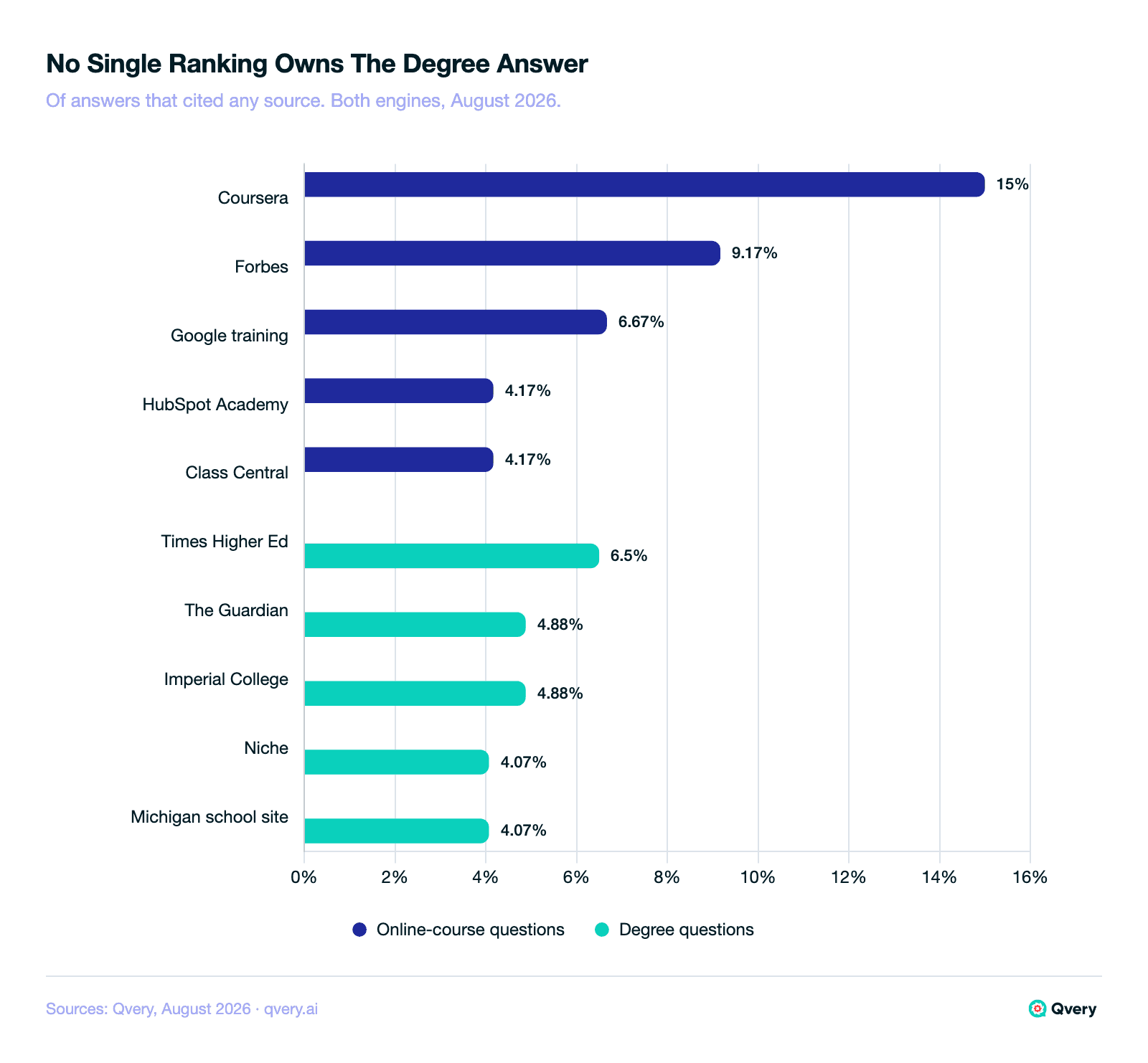
Every share below is of answers that cited any source, and both sides are measured the same way, so the columns compare.
The first thing to do with this is administrative rather than strategic. Split your tracking. A degree question and a course question belong in separate reports, with separate competitor sets, because the properties that decide them do not overlap.
The Ranking Layer Leads, And No Single Ranking Owns It
Here are the degree questions, as shares of answers that cited any source:
Times Higher Education: 6.50%, the most common one.
The Guardian and Imperial College: 4.88% each.
Four more at 4.07%: Niche, Forbes, a University of Michigan school domain, and the Complete University Guide.
Look at the spread there, or rather at the absence of one. The gap between the leading property and the seventh is under two and a half points.
We expected the opposite. The guess going in was that one or two ranking sites would own most of the degree answers, the way a single directory can own a category.
The ranking layer does lead, and it is absent from the course side, so the direction held. No single property came anywhere near owning it.
The second guess failed the same way. We expected institutions' own domains to carry a large share. They are present and they are notable, and they sit at four to five points each.
Both guesses expected concentration and found fragmentation, and that changes the advice completely. There is no single ranking to get into, only a layer to be present across, and the difference between fifth and seventh place inside it is not worth chasing.
In a fragmented layer no single placement can rescue your number, which is the same fact as no single loss being able to sink it.
Practically: name the properties in that list you are absent from, and treat them as a set. A submission to one of them is worth roughly what a submission to another is worth, which is unusual and makes prioritization easier.
It also changes what your visibility number means. In a category where one property owned 40% of answers, your presence on that property would more or less be your visibility. Here your figure is a sum across seven or eight properties, and a two-point move can come from any of them.
That is an argument for reporting the roster next to the number. A share of voice figure that moved three points is a different piece of news depending on whether one property picked you up or four did.
Which of them carried you is a read off the citation list, ranked by weight.
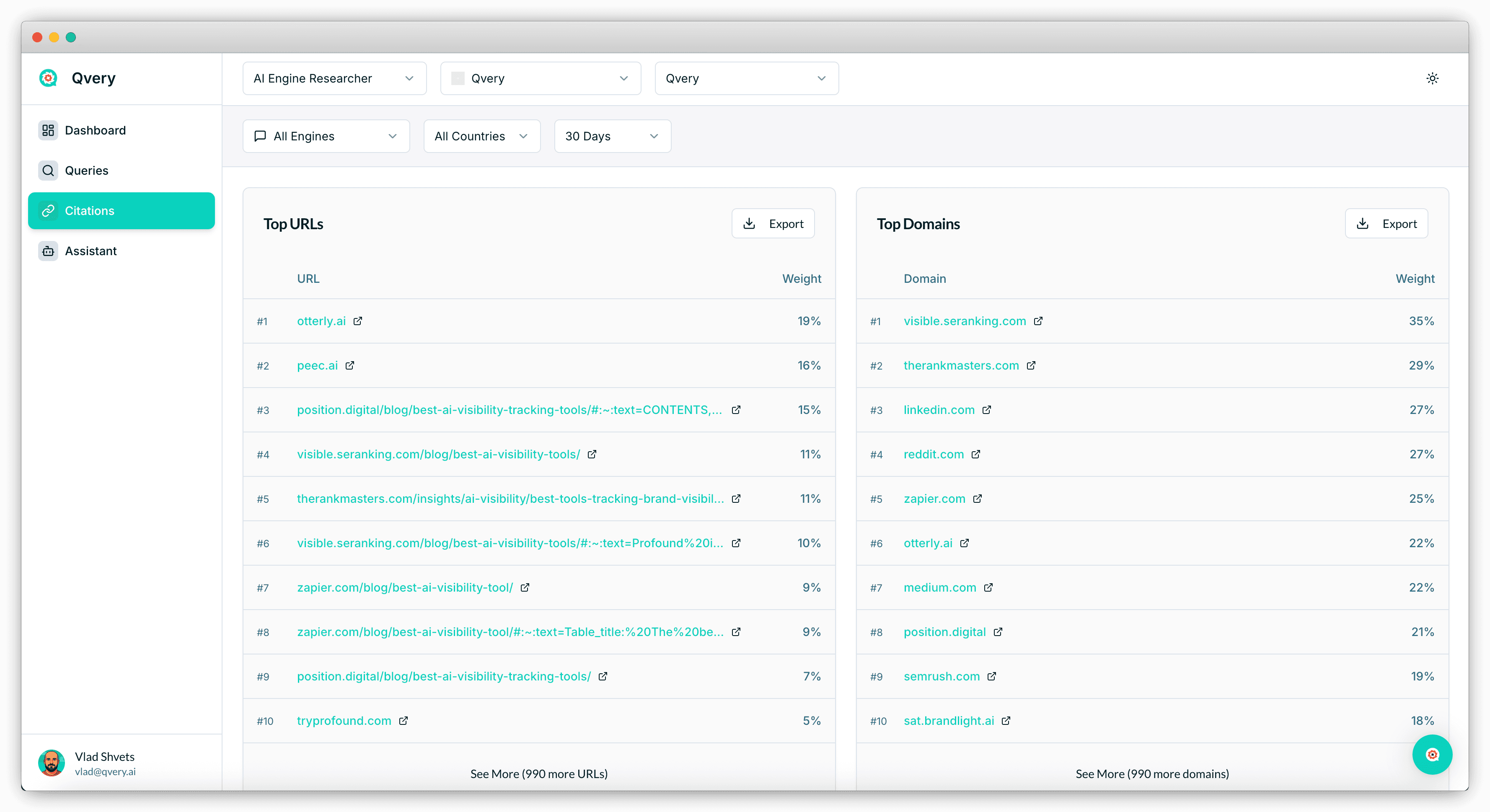
The account in that view is not an institution, and the ranked-weight read is the part that transfers.
Your Own Domain Is A First-Class Citation Here
This is the finding I would act on first, and it is the one that separates education from most categories we measured this month.
Imperial College's own domain appears in 4.88% of answers that cited any source. A University of Michigan school domain appears in 4.07%. Those are institution-owned pages being cited directly, at the same order of magnitude as Times Higher Education and the Guardian.
In most of what we have measured, a brand's own site is a minor presence next to the publishers and directories that rank it. Here it sits alongside them.
So your programme pages are retrieval surfaces as well as conversion surfaces. What sits on them gets read and quoted when somebody asks which programme to take.
Most programme pages are built for the click that follows the visit, and in this data they are being read by something that never visits.
So the work is concrete and unglamorous. A programme page needs the things a retrieval step can quote:
Entry requirements: stated, rather than linked to a downloadable prospectus.
Duration and structure: in text, including the part-time and online variants.
Fees: an actual number, since "contact the admissions office" cannot be quoted.
Outcomes: what graduates do next, which is the question underneath most programme questions.
All of it on a page that does not require a login or a PDF download to reach.
The department and school subdomains matter too. The Michigan citation in this set is a school domain rather than the university's main site, which suggests the granular page is what gets pulled, not the institutional homepage.
Course Answers Are Carried By The Platforms That Host Them
The course questions look nothing like that. On the same denominator:
Coursera: 15.00%, well clear of everything else on either side.
Forbes: 9.17%, the one property that also appears on the degree side.
Google's own training domain: 6.67%, the largest of the provider-owned academies.
Three more at 4.17%: HubSpot Academy, Class Central and Reed.
A course answer is assembled from marketplaces and corporate academies.
If you sell courses, your listing on the platform is your visibility surface, and your own site is doing much less work than an institution's does.
That asymmetry is worth sitting with if your organization does both. The same team, the same brand, and two completely different jobs: editorial and institutional presence on one side, marketplace listing quality on the other.
One thing neither side had: Reddit does not appear in the top ten of either roster.
For a category where student forums are an obvious guess, the community layer is not what these particular questions are answered from. Reddit is the most cited community source across the verticals we track, and it is still absent here, which is a fact about the question rather than about Reddit.
Our published online-course work measured the course side earlier this year, and the course questions here re-measure it rather than reusing those figures.
Building The Query Set For An Institution
Write the two families separately from the start, because merging them is what produces a number nobody can act on.
Degree questions look like programme selection with constraints attached: field, level, country, entry route, cost. Course questions look like skill acquisition: what to learn, how fast, what it costs, and whether the certificate is worth anything.
A tracked query is the whole question, kept still, which is the only way a fragmented roster stays readable across runs.
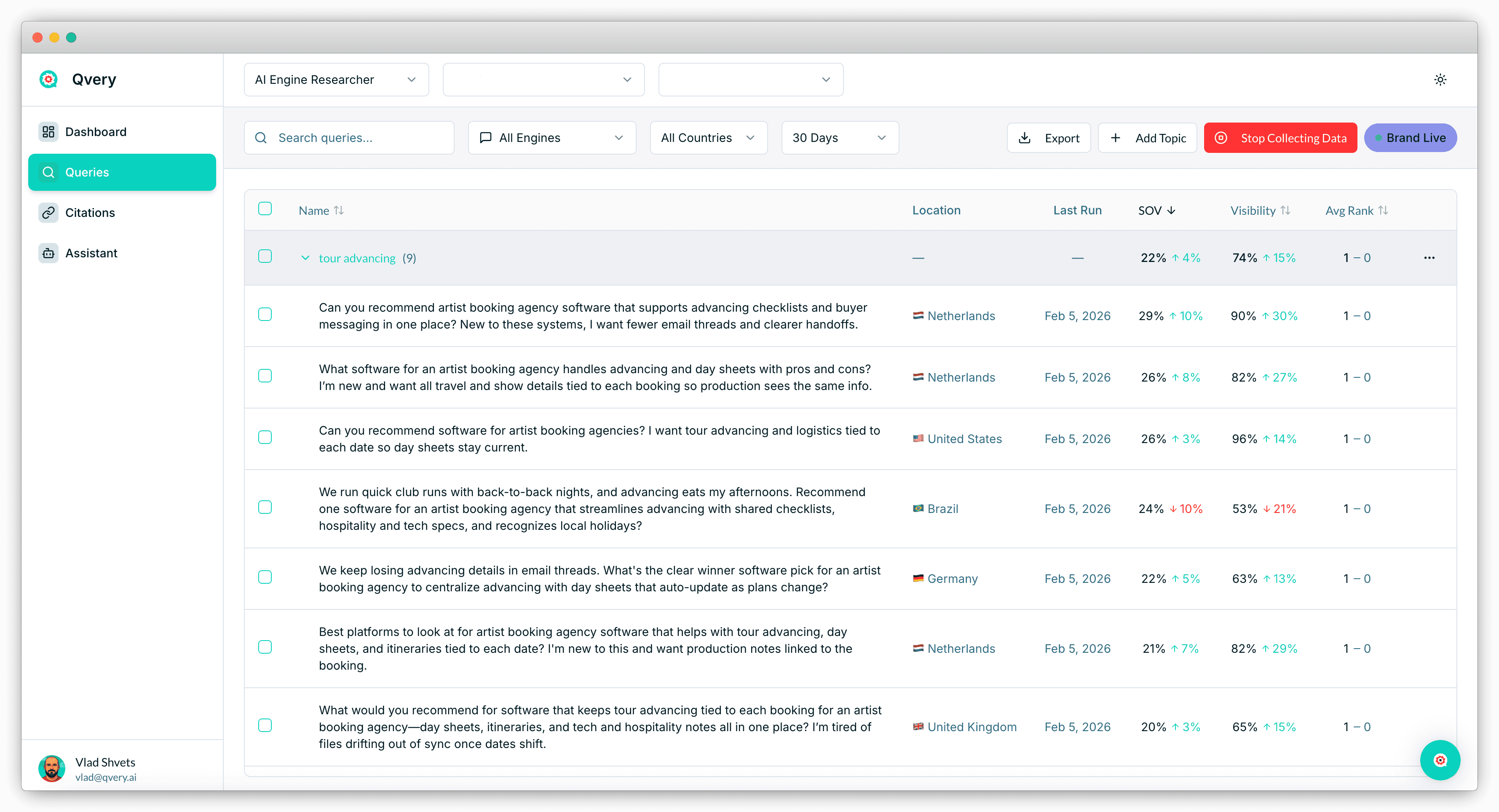
Run both on ChatGPT and Google AI Mode, more than once each. A single run is one draw, and the properties in these rosters sit close enough together that one run will reorder them for no reason.
Record the domains, not just whether you appeared. In a fragmented layer the useful question is which of the seven properties carried the answer, and that is only visible if you keep the citations.
Then hold the strings still. Editing a query starts a new series, because you are no longer asking the question you were tracking.
The questions were weighted toward the United States, with the United Kingdom behind it. A British institution and a British newspaper sit in the degree roster for that reason.
Track Degrees And Courses As Two Topics In Qvery
A fragmented layer is exactly the thing a spot check cannot see. If seven properties each carry four to six percent of the answers, checking once tells you which one happened to appear that time.
Set the two families up as two topics and let them run. Qvery asks them daily on ChatGPT and Google AI Mode, in over 200 countries, and keeps every citation against the query and the engine that produced it, so a layer stays legible as a layer.
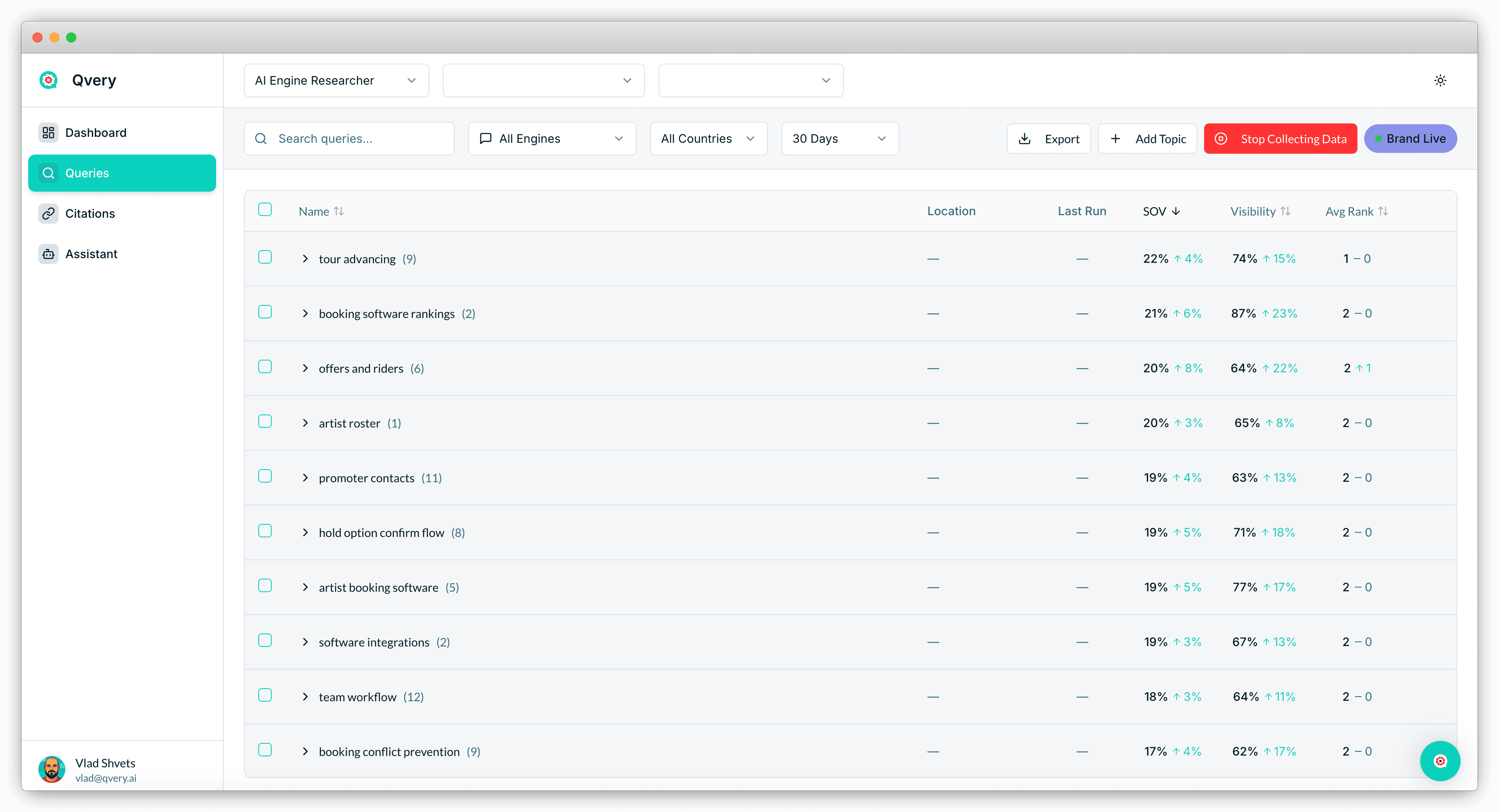
Then read the two rows against each other:
Visibility per topic: whether you are named at all on each side, which is the split this whole article is about.
Top Domains, degree topic: the ranking layer, and whether your own domain is in it.
Top Domains, course topic: the platforms, and whether your listing is carrying you there.
The delta on each: whether a three-point move came from one property or four, which the roster tells you and the number does not.
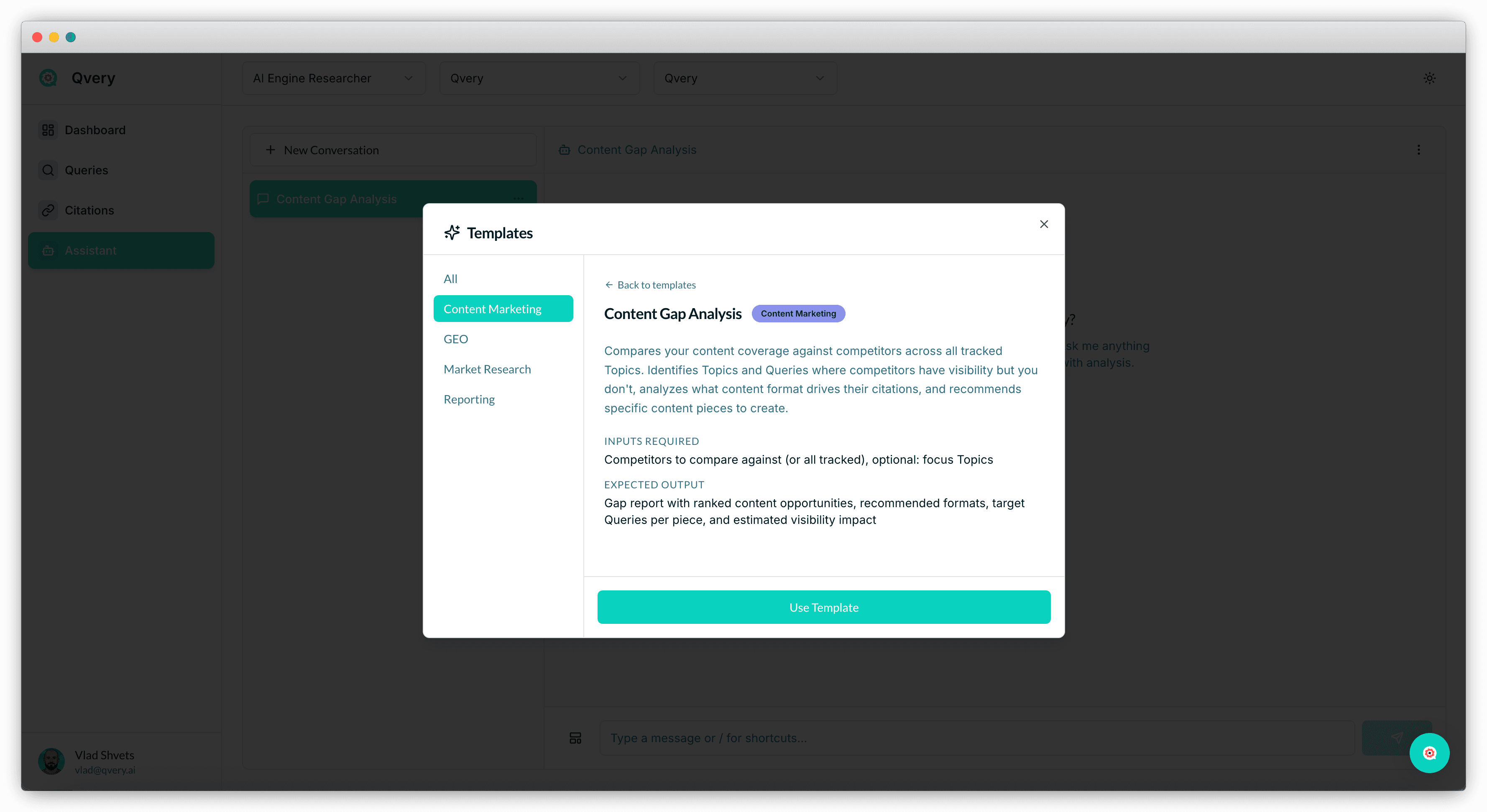
Topics and queries are generated when the account is set up, and you add the two families and edit them by asking Qvery Assistant in plain language. When the question becomes what to publish next, the shipped templates include a content gap analysis against the competitors you name.
Two things stay yours. Qvery will not classify a domain as a ranking site, an institution, or a platform. It gives you the citations, and the grouping is a judgment about your own market.
And it will not tell you which of seven near-identical properties to pursue first. In a layer this flat that is a question about your existing relationships, not about the data.
Start your free trial and split your first month into a degree topic and a course topic.
Whatever you use, start by splitting the two query families apart and running each twice this week. Then look at your programme pages and ask whether the things a buyer needs are on the page as text. In this category, unlike most, those pages are being read.
Most marketing teams at an institution carry two products under one brand. There are the degrees, sold over months to people choosing where to spend three years of their life, and there is the continuing-education division selling courses to people who want a skill by Christmas.
One team, one website, one set of reporting. When the question is how visible the institution is in AI search, it gets answered with a single figure covering both.
A question about a degree and a question about an online course get answered from almost completely different places. Out of the ten leading cited sources on each side, two appear on both, and one of those is the search engine's own link wrapper.
The short version: you have been reporting one visibility figure for two markets that share almost no sources.
What this records is which sources sat alongside the answers. It does not establish that appearing on one of them causes a programme to be recommended, and nothing here was built to test that.
Two Sets, Two Rosters, Two Sources In Common
These figures come from a targeted set of degree and course questions we ran on ChatGPT and Google AI Mode in August 2026. It is a reading of where answers come from, not a ranking of institutions.
Two properties sit in both top tens. One is the search engine's own domain, an artifact of how one of the engines cites rather than a fact about education. The other is Forbes.
Everything else is disjoint. Degree questions are answered from a ranking-and-press layer plus institutions' own sites. Course questions are answered from the platforms that host the courses.
Forbes is the one property that spans both, at 4.07% of cited degree answers and 9.17% of cited course answers. A general business publisher reaches into education from both directions, which makes it the only placement that pays twice.
Every share below is of answers that cited any source, and both sides are measured the same way, so the columns compare.
The first thing to do with this is administrative rather than strategic. Split your tracking. A degree question and a course question belong in separate reports, with separate competitor sets, because the properties that decide them do not overlap.
The Ranking Layer Leads, And No Single Ranking Owns It
Here are the degree questions, as shares of answers that cited any source:
Times Higher Education: 6.50%, the most common one.
The Guardian and Imperial College: 4.88% each.
Four more at 4.07%: Niche, Forbes, a University of Michigan school domain, and the Complete University Guide.
Look at the spread there, or rather at the absence of one. The gap between the leading property and the seventh is under two and a half points.
We expected the opposite. The guess going in was that one or two ranking sites would own most of the degree answers, the way a single directory can own a category.
The ranking layer does lead, and it is absent from the course side, so the direction held. No single property came anywhere near owning it.
The second guess failed the same way. We expected institutions' own domains to carry a large share. They are present and they are notable, and they sit at four to five points each.
Both guesses expected concentration and found fragmentation, and that changes the advice completely. There is no single ranking to get into, only a layer to be present across, and the difference between fifth and seventh place inside it is not worth chasing.
In a fragmented layer no single placement can rescue your number, which is the same fact as no single loss being able to sink it.
Practically: name the properties in that list you are absent from, and treat them as a set. A submission to one of them is worth roughly what a submission to another is worth, which is unusual and makes prioritization easier.
It also changes what your visibility number means. In a category where one property owned 40% of answers, your presence on that property would more or less be your visibility. Here your figure is a sum across seven or eight properties, and a two-point move can come from any of them.
That is an argument for reporting the roster next to the number. A share of voice figure that moved three points is a different piece of news depending on whether one property picked you up or four did.
Which of them carried you is a read off the citation list, ranked by weight.
The account in that view is not an institution, and the ranked-weight read is the part that transfers.
Your Own Domain Is A First-Class Citation Here
This is the finding I would act on first, and it is the one that separates education from most categories we measured this month.
Imperial College's own domain appears in 4.88% of answers that cited any source. A University of Michigan school domain appears in 4.07%. Those are institution-owned pages being cited directly, at the same order of magnitude as Times Higher Education and the Guardian.
In most of what we have measured, a brand's own site is a minor presence next to the publishers and directories that rank it. Here it sits alongside them.
So your programme pages are retrieval surfaces as well as conversion surfaces. What sits on them gets read and quoted when somebody asks which programme to take.
Most programme pages are built for the click that follows the visit, and in this data they are being read by something that never visits.
So the work is concrete and unglamorous. A programme page needs the things a retrieval step can quote:
Entry requirements: stated, rather than linked to a downloadable prospectus.
Duration and structure: in text, including the part-time and online variants.
Fees: an actual number, since "contact the admissions office" cannot be quoted.
Outcomes: what graduates do next, which is the question underneath most programme questions.
All of it on a page that does not require a login or a PDF download to reach.
The department and school subdomains matter too. The Michigan citation in this set is a school domain rather than the university's main site, which suggests the granular page is what gets pulled, not the institutional homepage.
Course Answers Are Carried By The Platforms That Host Them
The course questions look nothing like that. On the same denominator:
Coursera: 15.00%, well clear of everything else on either side.
Forbes: 9.17%, the one property that also appears on the degree side.
Google's own training domain: 6.67%, the largest of the provider-owned academies.
Three more at 4.17%: HubSpot Academy, Class Central and Reed.
A course answer is assembled from marketplaces and corporate academies.
If you sell courses, your listing on the platform is your visibility surface, and your own site is doing much less work than an institution's does.
That asymmetry is worth sitting with if your organization does both. The same team, the same brand, and two completely different jobs: editorial and institutional presence on one side, marketplace listing quality on the other.
One thing neither side had: Reddit does not appear in the top ten of either roster.
For a category where student forums are an obvious guess, the community layer is not what these particular questions are answered from. Reddit is the most cited community source across the verticals we track, and it is still absent here, which is a fact about the question rather than about Reddit.
Our published online-course work measured the course side earlier this year, and the course questions here re-measure it rather than reusing those figures.
Building The Query Set For An Institution
Write the two families separately from the start, because merging them is what produces a number nobody can act on.
Degree questions look like programme selection with constraints attached: field, level, country, entry route, cost. Course questions look like skill acquisition: what to learn, how fast, what it costs, and whether the certificate is worth anything.
A tracked query is the whole question, kept still, which is the only way a fragmented roster stays readable across runs.
Run both on ChatGPT and Google AI Mode, more than once each. A single run is one draw, and the properties in these rosters sit close enough together that one run will reorder them for no reason.
Record the domains, not just whether you appeared. In a fragmented layer the useful question is which of the seven properties carried the answer, and that is only visible if you keep the citations.
Then hold the strings still. Editing a query starts a new series, because you are no longer asking the question you were tracking.
The questions were weighted toward the United States, with the United Kingdom behind it. A British institution and a British newspaper sit in the degree roster for that reason.
Track Degrees And Courses As Two Topics In Qvery
A fragmented layer is exactly the thing a spot check cannot see. If seven properties each carry four to six percent of the answers, checking once tells you which one happened to appear that time.
Set the two families up as two topics and let them run. Qvery asks them daily on ChatGPT and Google AI Mode, in over 200 countries, and keeps every citation against the query and the engine that produced it, so a layer stays legible as a layer.
Then read the two rows against each other:
Visibility per topic: whether you are named at all on each side, which is the split this whole article is about.
Top Domains, degree topic: the ranking layer, and whether your own domain is in it.
Top Domains, course topic: the platforms, and whether your listing is carrying you there.
The delta on each: whether a three-point move came from one property or four, which the roster tells you and the number does not.
Topics and queries are generated when the account is set up, and you add the two families and edit them by asking Qvery Assistant in plain language. When the question becomes what to publish next, the shipped templates include a content gap analysis against the competitors you name.
Two things stay yours. Qvery will not classify a domain as a ranking site, an institution, or a platform. It gives you the citations, and the grouping is a judgment about your own market.
And it will not tell you which of seven near-identical properties to pursue first. In a layer this flat that is a question about your existing relationships, not about the data.
Start your free trial and split your first month into a degree topic and a course topic.
Whatever you use, start by splitting the two query families apart and running each twice this week. Then look at your programme pages and ask whether the things a buyer needs are on the page as text. In this category, unlike most, those pages are being read.
Most marketing teams at an institution carry two products under one brand. There are the degrees, sold over months to people choosing where to spend three years of their life, and there is the continuing-education division selling courses to people who want a skill by Christmas.
One team, one website, one set of reporting. When the question is how visible the institution is in AI search, it gets answered with a single figure covering both.
A question about a degree and a question about an online course get answered from almost completely different places. Out of the ten leading cited sources on each side, two appear on both, and one of those is the search engine's own link wrapper.
The short version: you have been reporting one visibility figure for two markets that share almost no sources.
What this records is which sources sat alongside the answers. It does not establish that appearing on one of them causes a programme to be recommended, and nothing here was built to test that.
Two Sets, Two Rosters, Two Sources In Common
These figures come from a targeted set of degree and course questions we ran on ChatGPT and Google AI Mode in August 2026. It is a reading of where answers come from, not a ranking of institutions.
Two properties sit in both top tens. One is the search engine's own domain, an artifact of how one of the engines cites rather than a fact about education. The other is Forbes.
Everything else is disjoint. Degree questions are answered from a ranking-and-press layer plus institutions' own sites. Course questions are answered from the platforms that host the courses.
Forbes is the one property that spans both, at 4.07% of cited degree answers and 9.17% of cited course answers. A general business publisher reaches into education from both directions, which makes it the only placement that pays twice.
Every share below is of answers that cited any source, and both sides are measured the same way, so the columns compare.
The first thing to do with this is administrative rather than strategic. Split your tracking. A degree question and a course question belong in separate reports, with separate competitor sets, because the properties that decide them do not overlap.
The Ranking Layer Leads, And No Single Ranking Owns It
Here are the degree questions, as shares of answers that cited any source:
Times Higher Education: 6.50%, the most common one.
The Guardian and Imperial College: 4.88% each.
Four more at 4.07%: Niche, Forbes, a University of Michigan school domain, and the Complete University Guide.
Look at the spread there, or rather at the absence of one. The gap between the leading property and the seventh is under two and a half points.
We expected the opposite. The guess going in was that one or two ranking sites would own most of the degree answers, the way a single directory can own a category.
The ranking layer does lead, and it is absent from the course side, so the direction held. No single property came anywhere near owning it.
The second guess failed the same way. We expected institutions' own domains to carry a large share. They are present and they are notable, and they sit at four to five points each.
Both guesses expected concentration and found fragmentation, and that changes the advice completely. There is no single ranking to get into, only a layer to be present across, and the difference between fifth and seventh place inside it is not worth chasing.
In a fragmented layer no single placement can rescue your number, which is the same fact as no single loss being able to sink it.
Practically: name the properties in that list you are absent from, and treat them as a set. A submission to one of them is worth roughly what a submission to another is worth, which is unusual and makes prioritization easier.
It also changes what your visibility number means. In a category where one property owned 40% of answers, your presence on that property would more or less be your visibility. Here your figure is a sum across seven or eight properties, and a two-point move can come from any of them.
That is an argument for reporting the roster next to the number. A share of voice figure that moved three points is a different piece of news depending on whether one property picked you up or four did.
Which of them carried you is a read off the citation list, ranked by weight.
The account in that view is not an institution, and the ranked-weight read is the part that transfers.
Your Own Domain Is A First-Class Citation Here
This is the finding I would act on first, and it is the one that separates education from most categories we measured this month.
Imperial College's own domain appears in 4.88% of answers that cited any source. A University of Michigan school domain appears in 4.07%. Those are institution-owned pages being cited directly, at the same order of magnitude as Times Higher Education and the Guardian.
In most of what we have measured, a brand's own site is a minor presence next to the publishers and directories that rank it. Here it sits alongside them.
So your programme pages are retrieval surfaces as well as conversion surfaces. What sits on them gets read and quoted when somebody asks which programme to take.
Most programme pages are built for the click that follows the visit, and in this data they are being read by something that never visits.
So the work is concrete and unglamorous. A programme page needs the things a retrieval step can quote:
Entry requirements: stated, rather than linked to a downloadable prospectus.
Duration and structure: in text, including the part-time and online variants.
Fees: an actual number, since "contact the admissions office" cannot be quoted.
Outcomes: what graduates do next, which is the question underneath most programme questions.
All of it on a page that does not require a login or a PDF download to reach.
The department and school subdomains matter too. The Michigan citation in this set is a school domain rather than the university's main site, which suggests the granular page is what gets pulled, not the institutional homepage.
Course Answers Are Carried By The Platforms That Host Them
The course questions look nothing like that. On the same denominator:
Coursera: 15.00%, well clear of everything else on either side.
Forbes: 9.17%, the one property that also appears on the degree side.
Google's own training domain: 6.67%, the largest of the provider-owned academies.
Three more at 4.17%: HubSpot Academy, Class Central and Reed.
A course answer is assembled from marketplaces and corporate academies.
If you sell courses, your listing on the platform is your visibility surface, and your own site is doing much less work than an institution's does.
That asymmetry is worth sitting with if your organization does both. The same team, the same brand, and two completely different jobs: editorial and institutional presence on one side, marketplace listing quality on the other.
One thing neither side had: Reddit does not appear in the top ten of either roster.
For a category where student forums are an obvious guess, the community layer is not what these particular questions are answered from. Reddit is the most cited community source across the verticals we track, and it is still absent here, which is a fact about the question rather than about Reddit.
Our published online-course work measured the course side earlier this year, and the course questions here re-measure it rather than reusing those figures.
Building The Query Set For An Institution
Write the two families separately from the start, because merging them is what produces a number nobody can act on.
Degree questions look like programme selection with constraints attached: field, level, country, entry route, cost. Course questions look like skill acquisition: what to learn, how fast, what it costs, and whether the certificate is worth anything.
A tracked query is the whole question, kept still, which is the only way a fragmented roster stays readable across runs.
Run both on ChatGPT and Google AI Mode, more than once each. A single run is one draw, and the properties in these rosters sit close enough together that one run will reorder them for no reason.
Record the domains, not just whether you appeared. In a fragmented layer the useful question is which of the seven properties carried the answer, and that is only visible if you keep the citations.
Then hold the strings still. Editing a query starts a new series, because you are no longer asking the question you were tracking.
The questions were weighted toward the United States, with the United Kingdom behind it. A British institution and a British newspaper sit in the degree roster for that reason.
Track Degrees And Courses As Two Topics In Qvery
A fragmented layer is exactly the thing a spot check cannot see. If seven properties each carry four to six percent of the answers, checking once tells you which one happened to appear that time.
Set the two families up as two topics and let them run. Qvery asks them daily on ChatGPT and Google AI Mode, in over 200 countries, and keeps every citation against the query and the engine that produced it, so a layer stays legible as a layer.
Then read the two rows against each other:
Visibility per topic: whether you are named at all on each side, which is the split this whole article is about.
Top Domains, degree topic: the ranking layer, and whether your own domain is in it.
Top Domains, course topic: the platforms, and whether your listing is carrying you there.
The delta on each: whether a three-point move came from one property or four, which the roster tells you and the number does not.
Topics and queries are generated when the account is set up, and you add the two families and edit them by asking Qvery Assistant in plain language. When the question becomes what to publish next, the shipped templates include a content gap analysis against the competitors you name.
Two things stay yours. Qvery will not classify a domain as a ranking site, an institution, or a platform. It gives you the citations, and the grouping is a judgment about your own market.
And it will not tell you which of seven near-identical properties to pursue first. In a layer this flat that is a question about your existing relationships, not about the data.
Start your free trial and split your first month into a degree topic and a course topic.
Whatever you use, start by splitting the two query families apart and running each twice this week. Then look at your programme pages and ask whether the things a buyer needs are on the page as text. In this category, unlike most, those pages are being read.
Most marketing teams at an institution carry two products under one brand. There are the degrees, sold over months to people choosing where to spend three years of their life, and there is the continuing-education division selling courses to people who want a skill by Christmas.
One team, one website, one set of reporting. When the question is how visible the institution is in AI search, it gets answered with a single figure covering both.
A question about a degree and a question about an online course get answered from almost completely different places. Out of the ten leading cited sources on each side, two appear on both, and one of those is the search engine's own link wrapper.
The short version: you have been reporting one visibility figure for two markets that share almost no sources.
What this records is which sources sat alongside the answers. It does not establish that appearing on one of them causes a programme to be recommended, and nothing here was built to test that.
Two Sets, Two Rosters, Two Sources In Common
These figures come from a targeted set of degree and course questions we ran on ChatGPT and Google AI Mode in August 2026. It is a reading of where answers come from, not a ranking of institutions.
Two properties sit in both top tens. One is the search engine's own domain, an artifact of how one of the engines cites rather than a fact about education. The other is Forbes.
Everything else is disjoint. Degree questions are answered from a ranking-and-press layer plus institutions' own sites. Course questions are answered from the platforms that host the courses.
Forbes is the one property that spans both, at 4.07% of cited degree answers and 9.17% of cited course answers. A general business publisher reaches into education from both directions, which makes it the only placement that pays twice.
Every share below is of answers that cited any source, and both sides are measured the same way, so the columns compare.
The first thing to do with this is administrative rather than strategic. Split your tracking. A degree question and a course question belong in separate reports, with separate competitor sets, because the properties that decide them do not overlap.
The Ranking Layer Leads, And No Single Ranking Owns It
Here are the degree questions, as shares of answers that cited any source:
Times Higher Education: 6.50%, the most common one.
The Guardian and Imperial College: 4.88% each.
Four more at 4.07%: Niche, Forbes, a University of Michigan school domain, and the Complete University Guide.
Look at the spread there, or rather at the absence of one. The gap between the leading property and the seventh is under two and a half points.
We expected the opposite. The guess going in was that one or two ranking sites would own most of the degree answers, the way a single directory can own a category.
The ranking layer does lead, and it is absent from the course side, so the direction held. No single property came anywhere near owning it.
The second guess failed the same way. We expected institutions' own domains to carry a large share. They are present and they are notable, and they sit at four to five points each.
Both guesses expected concentration and found fragmentation, and that changes the advice completely. There is no single ranking to get into, only a layer to be present across, and the difference between fifth and seventh place inside it is not worth chasing.
In a fragmented layer no single placement can rescue your number, which is the same fact as no single loss being able to sink it.
Practically: name the properties in that list you are absent from, and treat them as a set. A submission to one of them is worth roughly what a submission to another is worth, which is unusual and makes prioritization easier.
It also changes what your visibility number means. In a category where one property owned 40% of answers, your presence on that property would more or less be your visibility. Here your figure is a sum across seven or eight properties, and a two-point move can come from any of them.
That is an argument for reporting the roster next to the number. A share of voice figure that moved three points is a different piece of news depending on whether one property picked you up or four did.
Which of them carried you is a read off the citation list, ranked by weight.
The account in that view is not an institution, and the ranked-weight read is the part that transfers.
Your Own Domain Is A First-Class Citation Here
This is the finding I would act on first, and it is the one that separates education from most categories we measured this month.
Imperial College's own domain appears in 4.88% of answers that cited any source. A University of Michigan school domain appears in 4.07%. Those are institution-owned pages being cited directly, at the same order of magnitude as Times Higher Education and the Guardian.
In most of what we have measured, a brand's own site is a minor presence next to the publishers and directories that rank it. Here it sits alongside them.
So your programme pages are retrieval surfaces as well as conversion surfaces. What sits on them gets read and quoted when somebody asks which programme to take.
Most programme pages are built for the click that follows the visit, and in this data they are being read by something that never visits.
So the work is concrete and unglamorous. A programme page needs the things a retrieval step can quote:
Entry requirements: stated, rather than linked to a downloadable prospectus.
Duration and structure: in text, including the part-time and online variants.
Fees: an actual number, since "contact the admissions office" cannot be quoted.
Outcomes: what graduates do next, which is the question underneath most programme questions.
All of it on a page that does not require a login or a PDF download to reach.
The department and school subdomains matter too. The Michigan citation in this set is a school domain rather than the university's main site, which suggests the granular page is what gets pulled, not the institutional homepage.
Course Answers Are Carried By The Platforms That Host Them
The course questions look nothing like that. On the same denominator:
Coursera: 15.00%, well clear of everything else on either side.
Forbes: 9.17%, the one property that also appears on the degree side.
Google's own training domain: 6.67%, the largest of the provider-owned academies.
Three more at 4.17%: HubSpot Academy, Class Central and Reed.
A course answer is assembled from marketplaces and corporate academies.
If you sell courses, your listing on the platform is your visibility surface, and your own site is doing much less work than an institution's does.
That asymmetry is worth sitting with if your organization does both. The same team, the same brand, and two completely different jobs: editorial and institutional presence on one side, marketplace listing quality on the other.
One thing neither side had: Reddit does not appear in the top ten of either roster.
For a category where student forums are an obvious guess, the community layer is not what these particular questions are answered from. Reddit is the most cited community source across the verticals we track, and it is still absent here, which is a fact about the question rather than about Reddit.
Our published online-course work measured the course side earlier this year, and the course questions here re-measure it rather than reusing those figures.
Building The Query Set For An Institution
Write the two families separately from the start, because merging them is what produces a number nobody can act on.
Degree questions look like programme selection with constraints attached: field, level, country, entry route, cost. Course questions look like skill acquisition: what to learn, how fast, what it costs, and whether the certificate is worth anything.
A tracked query is the whole question, kept still, which is the only way a fragmented roster stays readable across runs.
Run both on ChatGPT and Google AI Mode, more than once each. A single run is one draw, and the properties in these rosters sit close enough together that one run will reorder them for no reason.
Record the domains, not just whether you appeared. In a fragmented layer the useful question is which of the seven properties carried the answer, and that is only visible if you keep the citations.
Then hold the strings still. Editing a query starts a new series, because you are no longer asking the question you were tracking.
The questions were weighted toward the United States, with the United Kingdom behind it. A British institution and a British newspaper sit in the degree roster for that reason.
Track Degrees And Courses As Two Topics In Qvery
A fragmented layer is exactly the thing a spot check cannot see. If seven properties each carry four to six percent of the answers, checking once tells you which one happened to appear that time.
Set the two families up as two topics and let them run. Qvery asks them daily on ChatGPT and Google AI Mode, in over 200 countries, and keeps every citation against the query and the engine that produced it, so a layer stays legible as a layer.
Then read the two rows against each other:
Visibility per topic: whether you are named at all on each side, which is the split this whole article is about.
Top Domains, degree topic: the ranking layer, and whether your own domain is in it.
Top Domains, course topic: the platforms, and whether your listing is carrying you there.
The delta on each: whether a three-point move came from one property or four, which the roster tells you and the number does not.
Topics and queries are generated when the account is set up, and you add the two families and edit them by asking Qvery Assistant in plain language. When the question becomes what to publish next, the shipped templates include a content gap analysis against the competitors you name.
Two things stay yours. Qvery will not classify a domain as a ranking site, an institution, or a platform. It gives you the citations, and the grouping is a judgment about your own market.
And it will not tell you which of seven near-identical properties to pursue first. In a layer this flat that is a question about your existing relationships, not about the data.
Start your free trial and split your first month into a degree topic and a course topic.
Whatever you use, start by splitting the two query families apart and running each twice this week. Then look at your programme pages and ask whether the things a buyer needs are on the page as text. In this category, unlike most, those pages are being read.

© 2026 Qvery AI OÜ