By
Vlad Shvets
How Tutlo Leads Polish AI Search for English Learning
People looking for English lessons in Poland increasingly start the search the same way they start any other search: they ask AI.
ChatGPT and Google AI Mode now sit at the top of the buying funnel for online education, surfacing a shortlist of schools before a single comparison post gets clicked. For Tutlo, a Polish online English school built for adults, kids, business teams, and beginners alike, that shift made one thing clear — visibility in AI search is no longer a side metric. It's where the category is being defined.
Tutlo's product doesn't fit the traditional language-school mold. There are no fixed group schedules. There are no tutors to compare and book one at a time. The platform connects a learner with an available teacher the moment the learner is ready, which means the brand has to be known across distinct audiences: adults trying to break the language barrier, parents choosing for their kids, business teams running consistent practice, beginners who need confidence before they need vocabulary.
Each of those audiences asks AI a different question. Tutlo needs to be the answer to all of them.
The Challenge
For Tutlo, AI search wasn't a beginner problem. The team had spent years building one of the strongest classic SEO footprints in the Polish education category, and that work was already translating into AI search visibility, particularly on Google AI Mode.
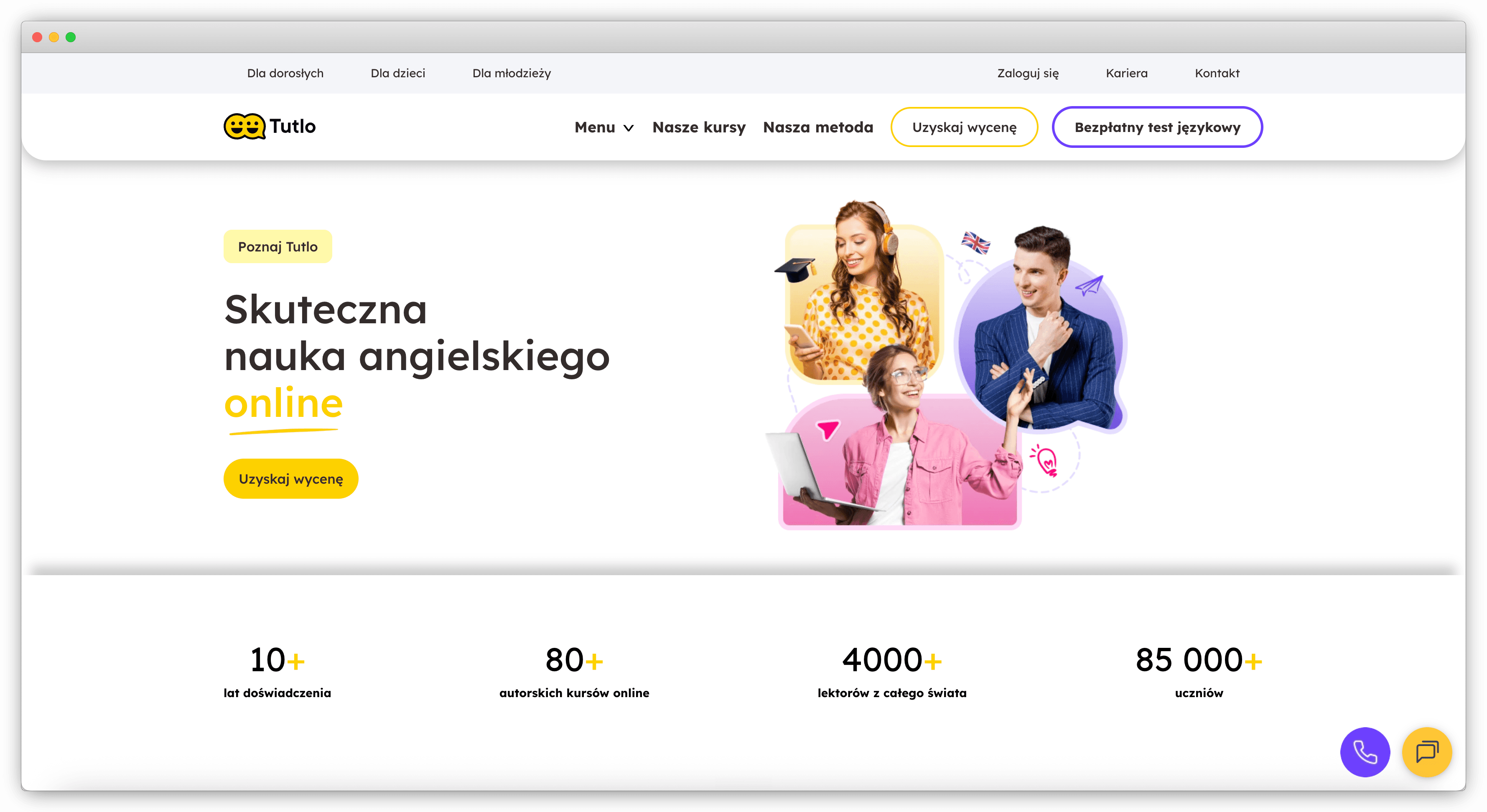
The harder question was different: in a world where AI engines compose answers from a graph of citations, comparisons, third-party rankings, and discussions, how do you know which sources shape each recommendation, what role each AI engine plays, and where the next investment should go?
The team needed to translate "Tutlo shows up in AI" into something operational. Which audience segments was the brand strongest with? Which engine was lifting most of the weight? Which sources should the team be working to be part of? And how do you avoid the trap of a citation footprint that hinges on a handful of URLs?
Qvery helped us understand how Tutlo shows up in AI-generated responses, not just whether we're visible, but why we appear in certain contexts and which sources shape those recommendations. The biggest value was being able to translate AI visibility into specific SEO, content, and technical decisions.
— Adrian Więsek, Marketing Manager at Tutlo
Why They Chose Qvery
The team had already tried solving the problem with classic SEO tools, and the gap was obvious. SEO tools tell you what's happening in Google's organic results. They don't tell you which third-party sources AI engines lean on, which audiences are seeing your brand recommended, or where the gap is between the AI engines you do well on and the ones you don't.
That last gap, the engine-to-engine performance difference, turned out to be one of the most actionable findings of the entire engagement.
Qvery's role was to translate a new kind of visibility into a working set of decisions. Where does Tutlo invest in English-language content? Where does the team build out segment-specific landing pages? Which technical signals (structured data, LLMs.txt, semantic HTML) need attention first? Each question got an answer rooted in data, not in opinion.
How They Use Qvery
Tutlo runs their AI search work through Qvery Assistant. Two templates do most of the heavy lifting, each pointed at a different program.
The Content Gap Analysis template anchors editorial. It maps the questions Polish learners actually ask AI when they're picking an English school, scores where Tutlo's content is already earning citations, and pinpoints the topics where listicles, comparison posts, and language-learning blogs are doing the talking instead.
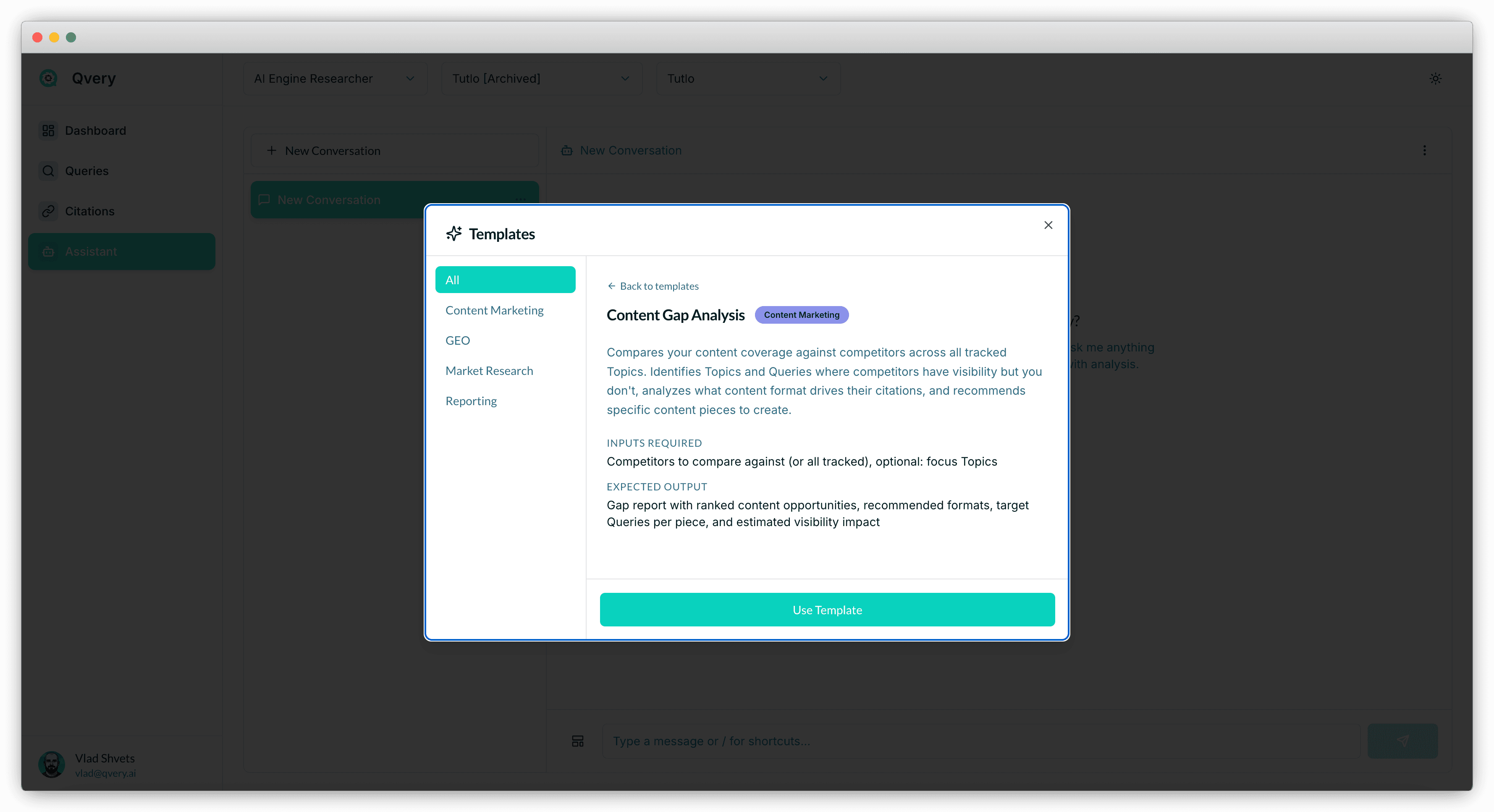
Each gap becomes a brief: the topic, the angle AI engines reward in the category, the audience segment it serves, and the supporting pages that need to exist alongside it. Each audience segment, from adult learners to business teams and parents choosing for their kids, gets its own editorial lane. The blog stops being a list of topics picked for traffic and becomes a direct response to what AI engines are actively citing.
The Citation Gap Analysis template anchors outreach and partnerships. It surfaces the third-party sources that dominate AI recommendations in the category: listicles, comparison hubs, education publications, review sites, and community discussions.
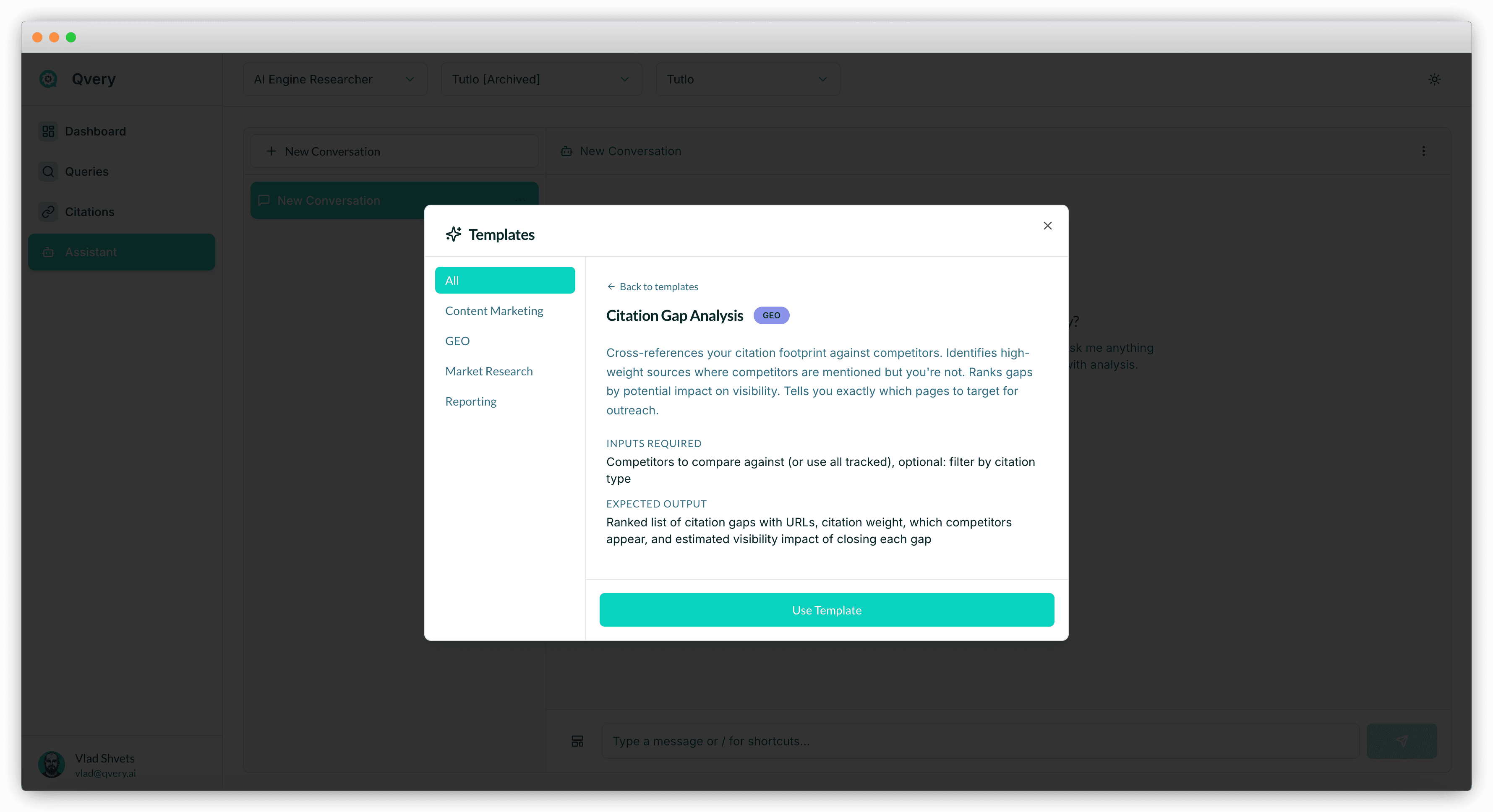
The output shows where Tutlo is already present, where competitors are owning the conversation, and which sources are open to a brand mention. That list becomes the outreach pipeline. Some plays are journalistic pitches. Others are partnership conversations or review submissions.
Results
Over the period Tutlo has been measuring with Qvery, the brand has become one of the most visible names in Polish AI Search for online English learning.
The harder result to capture in a number is the change in posture: Tutlo's team isn't guessing where to invest anymore. They're working from a map.
The audit surfaced something the team couldn't see anywhere else: a real performance gap between Google AI Mode (where Tutlo's existing SEO foundation was translating well) and ChatGPT (which leans on a different set of sources). That diagnosis isn't a curiosity. It's a roadmap. Diversify the citation footprint, build English-language presence in the sources ChatGPT relies on, fix the technical signals on the most-cited pages, monitor weekly. The work isn't done. It's just legible now.
If you want to see how your brand shows up in AI search, sign up for Qvery or reach out for a demo.