By
Vlad Shvets
How Savannah Taste Experience Wins in AI Search
Food tourism in Savannah is a short-window decision. A traveler lands on a Friday and is booking their tour by Sunday morning. They're not reading a roundup post and clicking through five options. They're asking ChatGPT or Google AI Mode for one recommendation and acting on it before the day is out.
For Savannah Taste Experience, that compresses the buying funnel into hours and makes every AI citation enormously valuable.
The team's question wasn't whether AI engines were talking about Savannah food tours. They are. The team needed to know whether Savannah Taste Experience was the name that came out of those conversations, which third-party sources were doing the talking, and what would put Savannah Taste Experience in the answer when the question got asked.
The Challenge
In a long buying cycle, missing a citation costs you a slot in the consideration set. In a short cycle like this one, missing a citation costs you the booking. There's no follow-up. Travelers don't come back to a comparison post a week later. They get one recommendation and they act on it.
The team needed to see the picture clearly. Which Savannah Taste Experience tour pages were AI engines actually citing? Which local guides, food publications, and review sites were shaping the recommendation in their absence? And what technical or editorial work would close those gaps?
Visitors are asking AI where to eat and what to do the same day they arrive. We needed to know whether we show up in those answers, what shapes the recommendation, and what we can do to be the choice that gets booked.
— Ashton Greene, Director of Marketing at Savannah Taste Experience
Why They Chose Qvery
The team didn't want another reporting tool and didn't want a consulting deck full of slides about AI search trends. They wanted to do the work. Qvery was the option that put measurement and action in the same workflow.
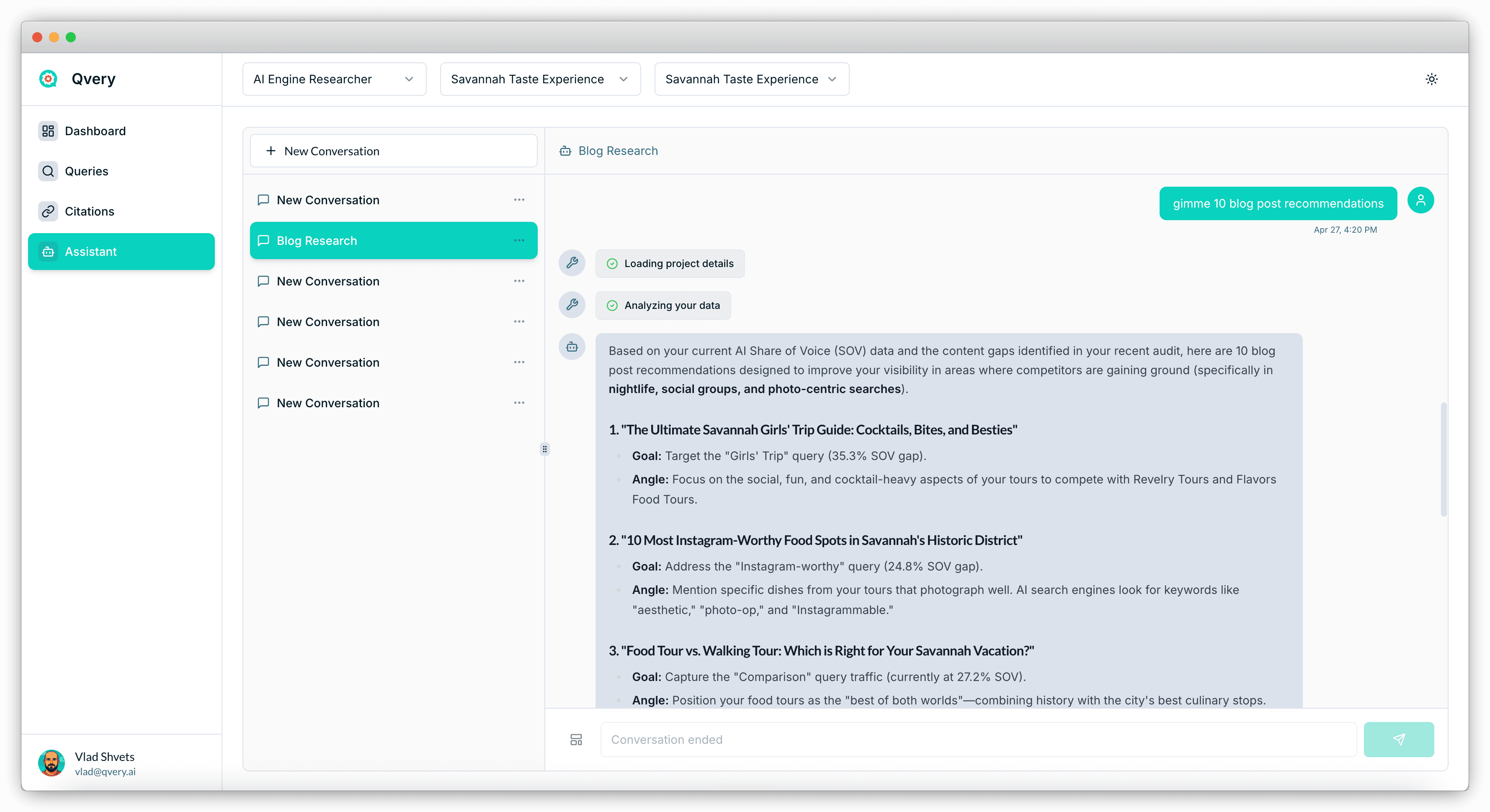
Qvery Assistant pulls the audit, the gap analysis, the content brief, and the technical fix list into one product. Ashton's team could run the cycle without an engineer in the loop and without an outside agency on retainer.
How They Use Qvery
The Content Gap Analysis template anchors every cycle. It maps the questions travelers actually ask AI when they're planning Savannah trips, scores where Savannah Taste Experience already has content earning citations, and pinpoints the topics where local guides, food blogs, and review sites are doing all the talking. That gap list is where the next blog post starts.
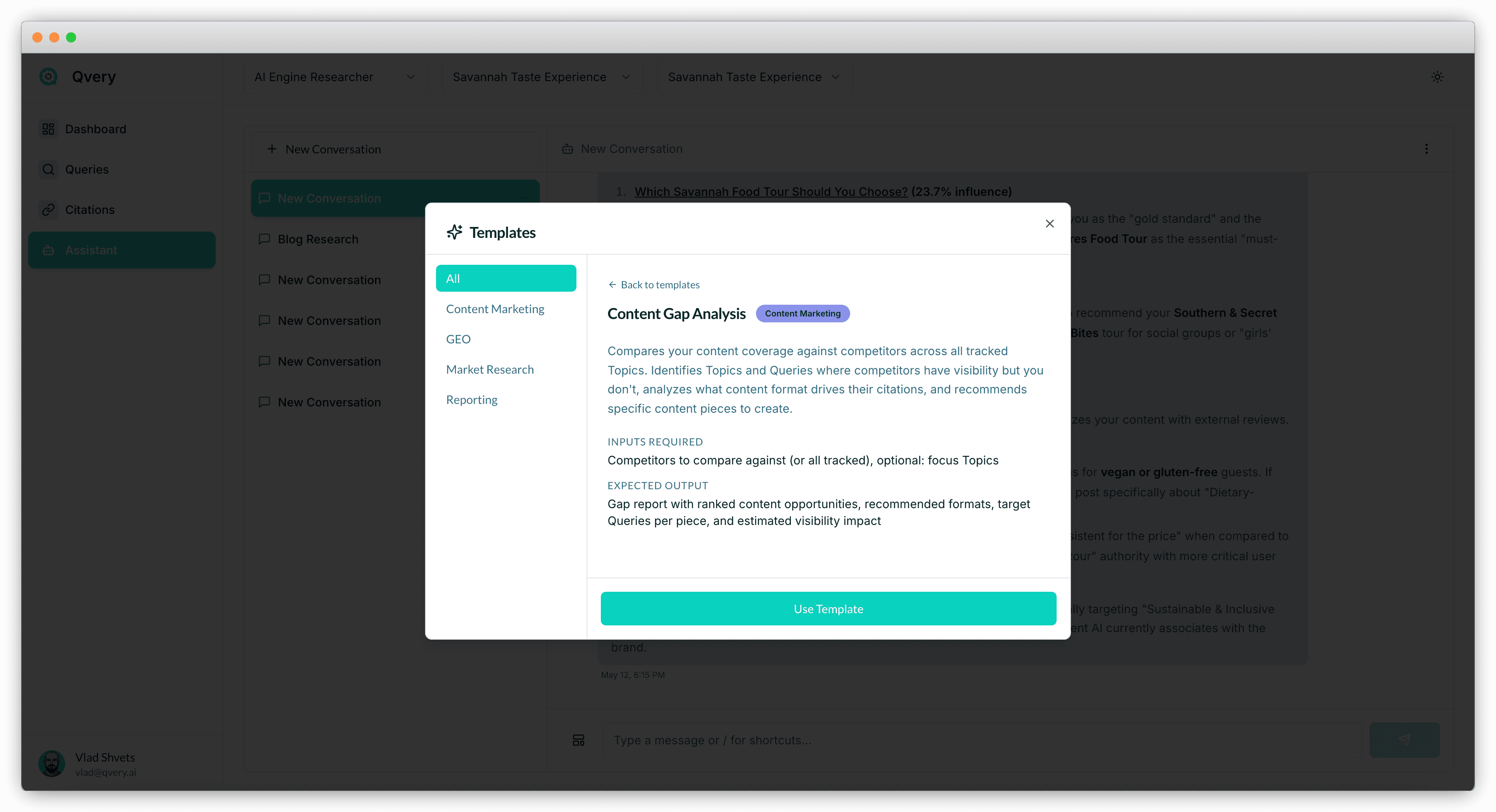
The output is an editorial roadmap, not a deck. Each gap turns into a content brief built inside Qvery Assistant: the topic, the angle AI engines reward in food and experience-tourism queries, the format the category favors, and the supporting pages that need to exist alongside it.
Ashton's team writes against those briefs the same week they get surfaced. The blog stops being a guess about what travelers might be searching for and becomes a direct response to what AI engines are actively citing.
Results
Savannah Taste Experience is operating with a measurement baseline now, not a vibes-based hunch. The team knows which tour pages are pulling weight in AI search, which need attention, and which gaps in their content footprint to close next.
The audit-to-action loop has changed the team's posture toward the channel. AI search stopped being something they hoped was going their way. It became something they actively manage week over week.
If you want to see how your brand shows up in AI search, sign up for Qvery or reach out for a demo.