
On this page
The quickest check an owner can run on AI search is to ask ChatGPT about the company by name. The answer is about the company because the question named it, so it shows what someone who already has your name reads. It says nothing about a buyer who has never heard of you. AI visibility needs the same distinction: questions that contain your name and category questions that do not.
Peec AI already draws it, labeling every question branded or non-branded on its own, from $95 a month in the US. The six below suit a different budget, other engines, or someone else running the questions. We put our own GEO Agent first and rank the rest by how they separate branded questions, then by engine cost.
1. GEO Agent by Qvery: Questions Written From Your Brand and Rivals, Read Topic by Topic
This one is our own product, so weigh it knowing we are the vendor. It prepares topics and questions using your brand, industry, and rivals, then runs them daily on ChatGPT and Google AI Mode in your chosen countries. It retains the complete answers along with their citations, the pages named as sources.
- The agent prepares questions using your brand, industry, and competitors.
- It asks each question daily on ChatGPT and Google AI Mode in your chosen countries.
- It keeps the answers in full, including their citations.
- It reports visibility and sentiment (tone) alongside share of voice (how often you are named against rivals), by topic and country, against competitors.
- You see where rivals appear instead of you and which sources the engines cite.
- Qvery Assistant answers questions about the data, changes topics and queries, starts runs, and exports reports.
It covers ChatGPT and Google AI Mode. Price: not published. Your team, or ours, decides what to publish or fix after reading the results.
We also work on the pages and sources those answers cite, and build custom agents for the recurring work. That work is quoted separately from the GEO Agent.
Pros
- Questions written for you
- Both engines daily on every question
- The fixing done by the same team, as a service
Cons
- Two engines only
- Price: not published
2. Rankscale: Branded Questions Labeled for You on Every Dashboard
Rankscale automatically labels search terms branded or non-branded using your brand name and the other names you track.
It sells credits rather than a fixed number of questions. ChatGPT and Google AI Mode cost 0.25 credits a run each, so Pro's 1,200 monthly credits ask about 80 questions a day on both. Schedules run from hourly to monthly, so branded questions can run weekly and category questions daily.
- Branded and non-branded labels from your brand's names, filterable on every dashboard tab.
- ChatGPT, Google AI Mode, AI Overviews, Gemini, Perplexity, Claude and Copilot from Pro up.
- 0.25 credits per run on ChatGPT or Google AI Mode.
- Schedules from hourly to monthly.
- Sentiment statements opened to the web sources behind them.
Reddit discussion of Rankscale is thin.
Pros
- Automatic branded labels from your names
- Both engines from Pro up
- Schedules from hourly to monthly
Cons
- Credits take arithmetic
- Two G2 reviews so far
- Prompt research only from Pro+
3. Scrunch: Opens on Category Questions, Branded Ones a Filter Away
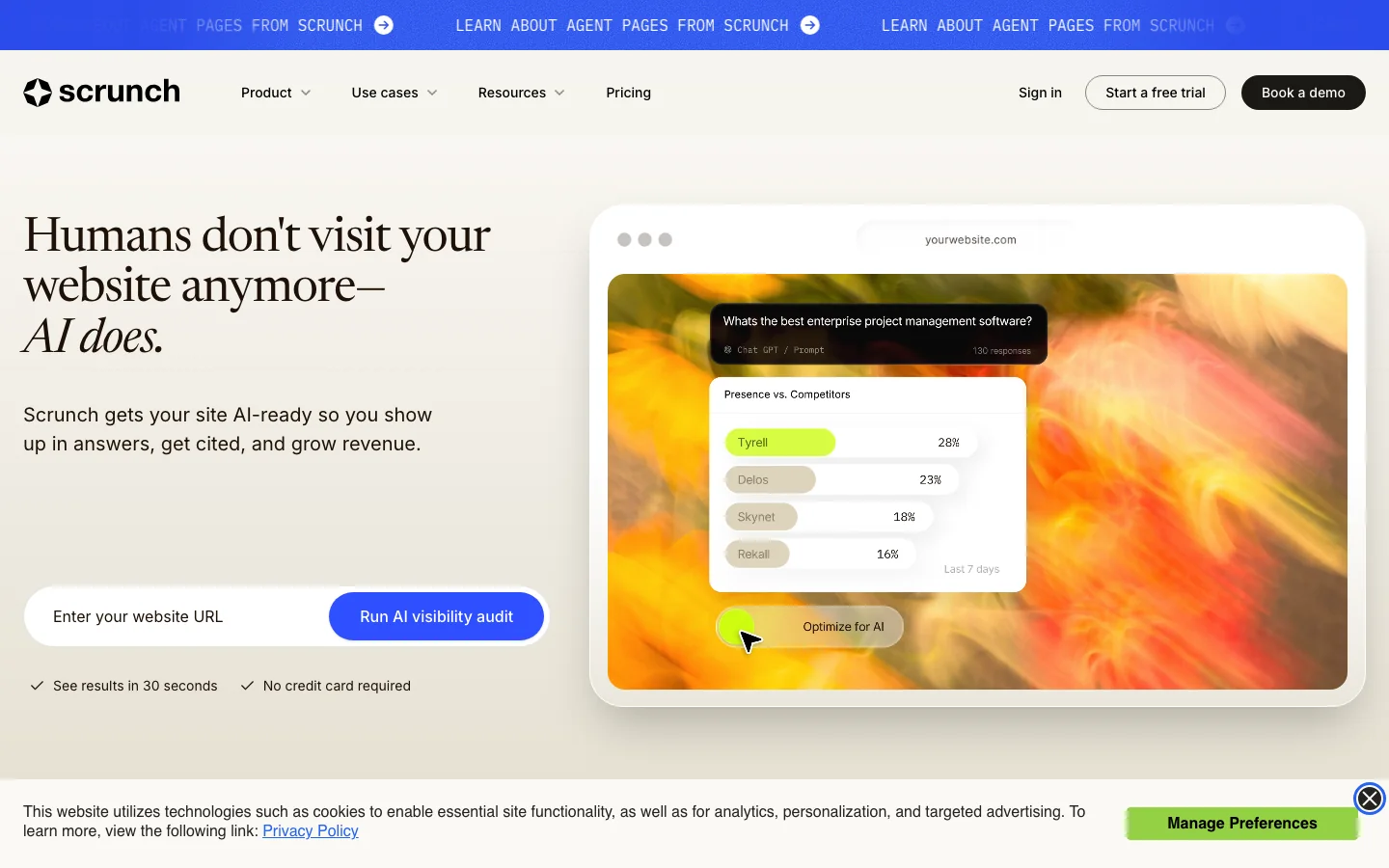
Scrunch has a Branded Query filter that sorts prompts by whether they contain your brand name, and its Home dashboard opens on non-branded prompts by default. So the first number on the screen covers category questions, and switching the filter shows the branded ones.
Core costs $250 a month for 125 questions and 5,000 answers on ChatGPT, Perplexity, Google AI Overviews and Copilot, in one country, one language and one persona (buyer type), with five user licenses and funnel stages, the steps toward a purchase.
Google AI Mode is on the custom plan only, so a company that wants both engines this list cares about is talking to Scrunch's sales team before it starts.
- A Branded Query filter: Branded or Unbranded.
- The Home dashboard on non-branded prompts by default.
- Funnel stages and citations on Core.
- Nine models (assistants), Google AI Mode among them, on the custom plan.
Independent Reddit discussion of Scrunch is thin.
Pros
- Category questions are the default view
- Branded detection built in
- Funnel stages on Core
Cons
- No Google AI Mode on Core
- One country and one language on Core
- Both engines only on a quoted plan
4. Semrush AI Visibility Toolkit: A Weekly Read of How Answers Describe You
Semrush separates two jobs. Its brand report, on how assistants describe your brand, runs common questions associated with your domain, both branded and non-branded, through ChatGPT and Google AI Mode among others. Its weekly report covers tone, attributes, and share of voice.
Prompt Tracking runs daily on your own prompts in ChatGPT Search, Google AI Mode, AI Overviews and Gemini, and there the split is yours to make: its tags (by brand, location or intent) can mark the branded questions.
It suits a company whose marketing team already works in Semrush: the description of the brand sits in one report, the tracked questions in another, and both beside the search data they already use.
- A weekly brand report on how ChatGPT, Google AI Mode and others describe your brand.
- Prompt Tracking: your own prompts daily on ChatGPT Search, Google AI Mode, AI Overviews and Gemini.
- Tags by brand, location or intent.
- Prompt Research and Competitor Research from Semrush's prompt database.
What Reddit says
I use SEMrush One, the AI integration of SEMrush classic. It tracks mentions, citation, visibility in Gemini, Chatgpt, G. Ai Mode and perplexity. It's quite interesting, but It currently only monitors a few countries.
It's quite pricey though so I wouldn't get it jus for AI tracking but I use it for all my SEO work, keyword tracking, audits etc.
Pros
- A weekly description of the brand
- ChatGPT and Google AI Mode in both reports
- Sits beside the SEO data the team already uses
Cons
- No trial
- 25 prompts on the base toolkit
- $99 a month per extra user for the toolkit
5. Profound: Fact-Checks What Answers Say About You, on a Quoted Plan
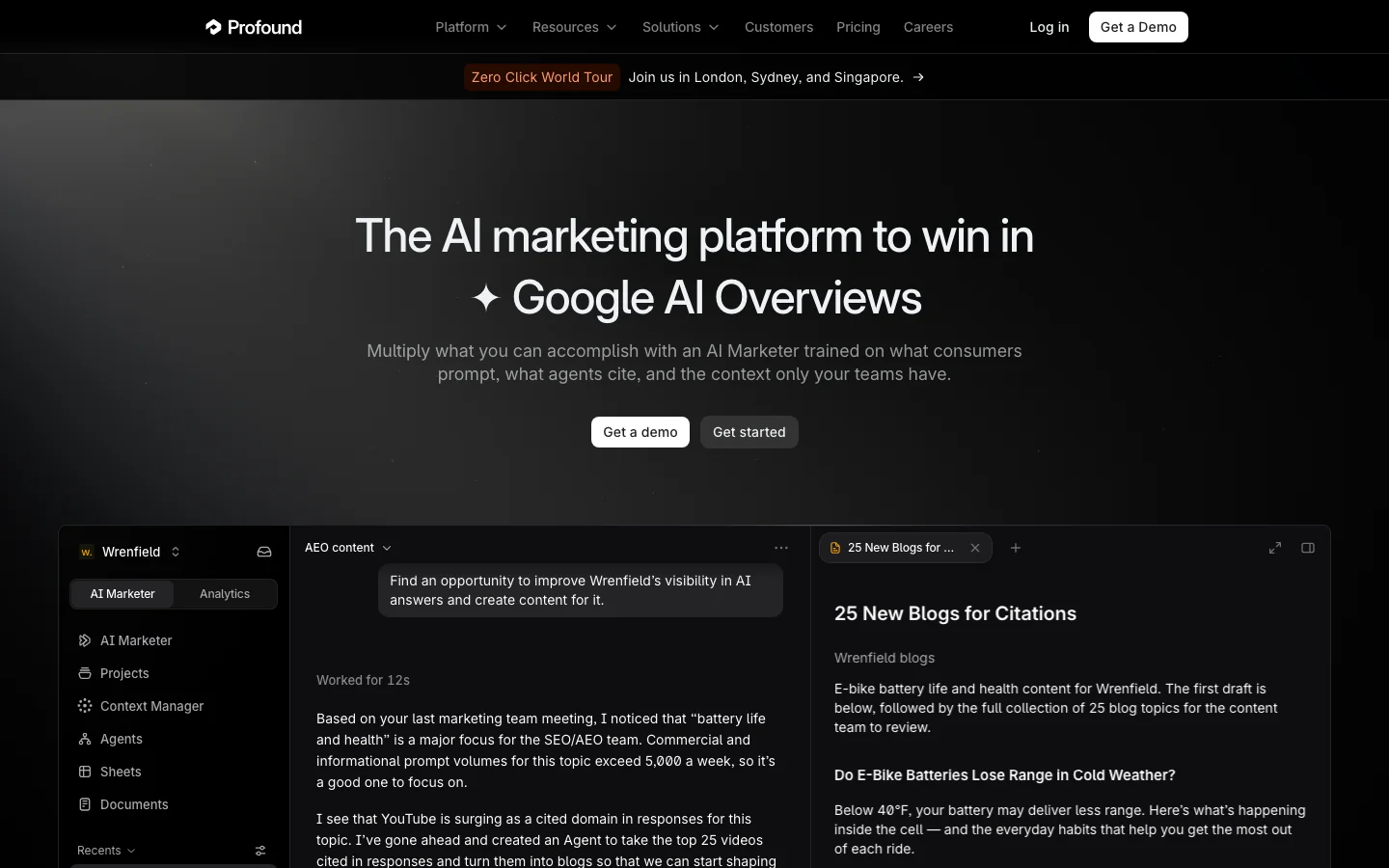
Profound gives the questions about you a type of their own. Beside its visibility questions it runs fact-check questions, which track the accuracy of what assistants say about your brand.
No other tool here gives questions about your brand a prompt type of their own, and it sits on a quoted plan. The free trial runs 50 prompts a day for seven days on ChatGPT, Gemini and Google AI Overviews, from a recommended industry set you cannot edit, with no exports.
Editing prompts, Google AI Mode and up to nine engines come with the custom plan.
- Fact-check questions that track what assistants say about your brand.
- Tabs for visibility, tone, fact checks, cited pages and questions.
- Filters by topic, platform, tag, region, competitor and language.
- Up to nine engines, Google AI Mode among them, on the custom plan.
Independent Reddit discussion of Profound is thin.
Pros
- A prompt type for what is said about you
- Accuracy tracked prompt by prompt
- Filters on every tab
Cons
- Google AI Mode only on a quoted plan
- Trial prompts cannot be edited
- No published price
6. OtterlyAI: Category Questions Only, Google AI Mode for $9 More
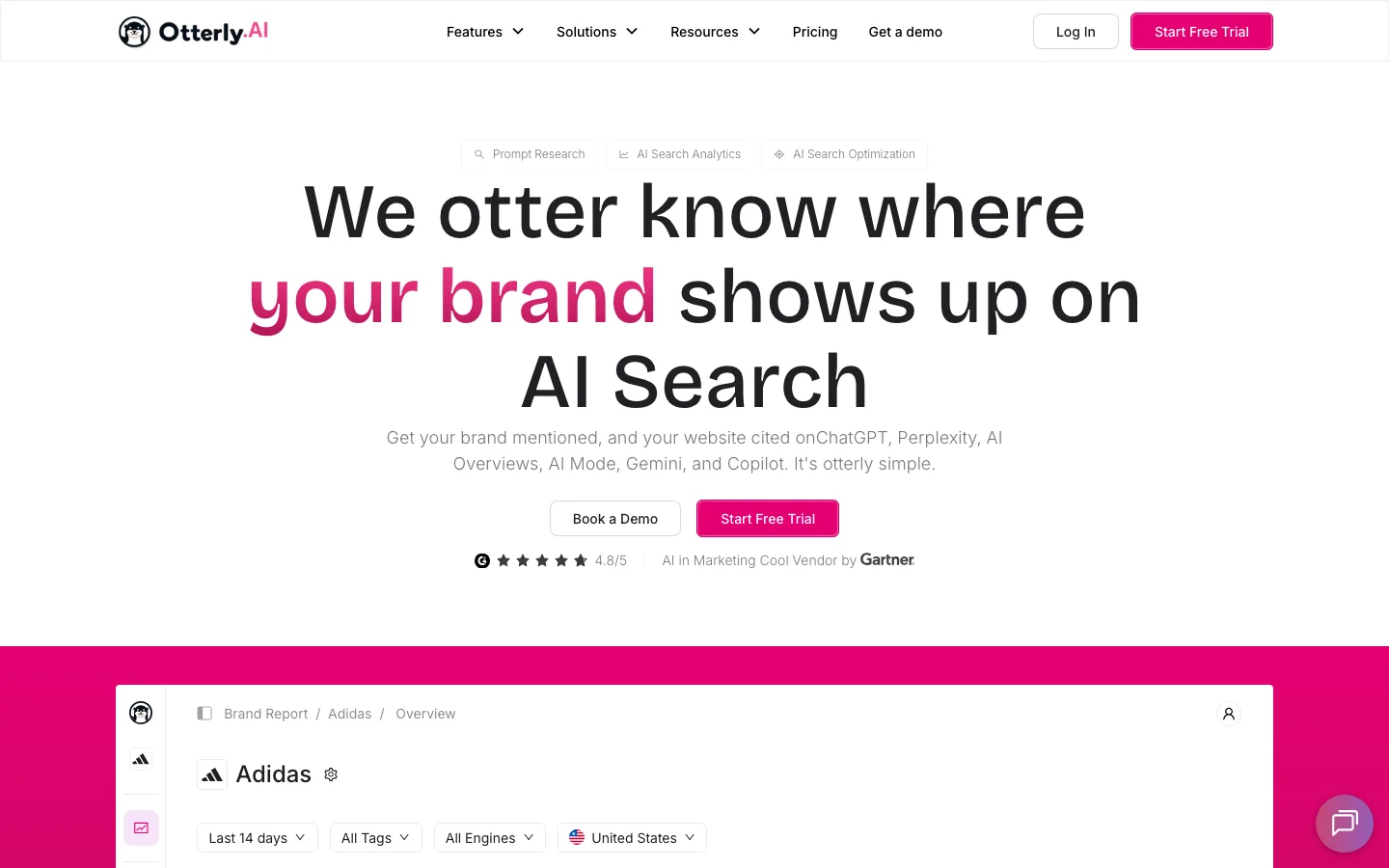
OtterlyAI's own onboarding tells you to track non-branded questions only, because branded ones bias the results, and to tag every prompt by product, funnel stage, country and language.
If category questions are all you want measured, that advice and the price make it a low-cost way in. Lite is $29 a month for 15 questions a day on ChatGPT, Google AI Overviews, Perplexity and Copilot; Google AI Mode is a $9 add-on, so both engines cost $38 a month.
Branded questions are the ones its guide tells you to skip, so you would read them somewhere else, or tag a few in yourself and read them apart.
- Daily tracking on ChatGPT, Google AI Overviews, Perplexity and Copilot.
- Google AI Mode, Gemini and Claude as add-ons.
- Tags by product, funnel stage, country and language.
- Unlimited team members, countries and languages.
Independent Reddit discussion of Otterly is thin.
Pros
- Both engines for $38 a month
- Every price on the page
- Unlimited team members
Cons
- 15 questions on Lite
- Google AI Mode costs extra
- Branded questions are not its job
The Six on Branded Questions
Rankscale and Scrunch draw the line between branded and category questions from the names you give them, and Profound gives questions about you a type of their own; Semrush and OtterlyAI leave it to tags your team sets.
 Piotr BabelPartner @ Qvery
A branded label depends on the list of names behind it. Rankscale and Scrunch mark a question branded when it contains a name you gave them, so a product name or an old spelling left off that list puts a branded question among the category ones, where its answer names you every day and lifts your share. Give the tool every name your buyers type, then read a week of category answers and check that none of the questions names you.
Here they are beside Peec, in the first row for reference.
| Tool | Branded kept apart by | Both engines from | Price shown | Start with it if |
|---|---|---|---|---|
| Peec AI (reference) | Automatic labels | Starter | $95 a month | your list is already split by Peec's labels and both engines are among your models |
| GEO Agent by Qvery | Reports by topic | ChatGPT and Google AI Mode | Not published | nobody has the hours to write and read the questions |
| Rankscale | Automatic labels | Pro | $99 a month | you want the same labels with every engine priced per run |
| Scrunch | Automatic filter | Custom plan | Quoted plan | you want the default view to be category questions |
| Semrush | Tags you set | AI Visibility Toolkit | $99 a month | marketing already lives in Semrush |
| Profound | Fact-check questions | Custom plan | Quoted plan | prospects keep quoting ChatGPT to your sales team |
| OtterlyAI | Tags; guide skips them | Lite + Google AI Mode | $38 a month | marketing only needs the category share |
Among the published plans, only Rankscale matches Peec on both counts: labels applied without anyone tagging, and both engines at a listed price.
 Vlad ShvetsPartner @ Qvery
Pay for the category number first, because it counts the buyers who have not heard of you yet, and that is where new revenue comes from. A share that mixes in branded questions looks better on a slide and tells you nothing about winning new buyers. So pick the tool that keeps the category share clean at a price you will keep paying: if Peec already does that with both engines among your models, staying costs less than any move on this list.
Where Qvery Picks Up From the Tracker
At Qvery, we help companies free up the people who read what assistants say, with custom AI agents that tie each answer to its account or deal and draft corrections.
Qvery's agents connect that review to your team's existing systems, and at first no correction goes live until a person approves it.
Both readings rest on the same raw material: a fixed list of questions asked on both engines, with every answer kept.
Connect Answer Reviews to Your Sales Work
We begin by watching how your sales and marketing teams go through stored answers today, and they choose which account records and tracker exports the agents may open. By the end of the second week with that access, sales gets its first reviews: each branded answer tied to the account that would read it, with any wrong detail marked.
From then on, when a branded answer carries a wrong price or a dated product detail, the account owner sees it, with the correction drafted, before the next call with that prospect.
Frequently asked questions
When is Peec AI's Starter plan all we need?
Peec's Starter is $95 a month for 50 daily questions on three models you choose, with unlimited users and automatic branded labels. If that covers your buyers and includes both engines you need, there is little reason to switch.
What is a branded question in AI search?
A branded question contains your company name, a variation, or one of your products, such as "[company] pricing". Category questions ask about the kind of company a buyer needs without naming you.
Should we track branded questions at all?
Yes, apart from category questions: they show what someone who already knows your name reads.
How long should our list of tracked questions be?
Cover each buyer type and product line, with branded questions kept separate. Begin with questions from discovery calls and inbound emails, then add the category questions prospects would ask before they knew your name.
Does a higher visibility share mean more leads?
Not by itself. A visibility share counts answers to the questions you chose, so read the category results beside the inquiries that mention an assistant, with branded questions kept apart.
What makes the monthly bill grow?
More questions, more readers, and more locations can each add to it. Semrush prices extra questions, extra users, and extra locations for its brand report separately.
Does a bigger plan include every assistant?
Not always. OtterlyAI charges for Google AI Mode on every plan, and Scrunch keeps it for its custom plan, so room for more questions and more assistants are separate purchases.
Do tools bill by the question or by the answer?
Each tool counts its own way. A question is the text you track; answers are what each run returns. Scrunch's Core lists 125 questions and 5,000 answers, while Rankscale sells credits per run.
Does checking more often cost more?
On credit plans, yes. Rankscale charges 0.25 credits a run on ChatGPT or Google AI Mode, so running a question hourly uses credits that could cover other questions daily.
How often should the team read what came back?
Semrush's brand report is weekly and its question tracking daily, so a weekly read can sit on top of a daily record.
Why might Scrunch and Semrush report different visibility for us?
They can count different questions. Scrunch opens on category questions, while Semrush's brand report mixes branded and non-branded questions tied to your domain, so two headline numbers can differ before anyone reads an answer.
Will sharing access raise the price?
It depends on the plan. Semrush charges $99 a month per extra user for its toolkit, Scrunch's Core includes five licenses, and OtterlyAI allows unlimited team members.
Does tracking a second country cost extra?
Country coverage is its own limit. Scrunch's Core covers one country and one language, OtterlyAI lists unlimited countries and languages, and Semrush charges for an extra location in its brand report.
Can we share answers outside the dashboard?
Where the plan has exports. Semrush's toolkit allows 10 CSV exports a day; Profound's trial has none.
Is a positive answer also an accurate one?
No. Tone and accuracy are separate readings, and Profound shows them in separate views: a kind description can still get a price or a product detail wrong.
Who should read the branded results?
Whoever answers prospects' questions about the company, often sales: branded answers show what someone who already knows your name reads. Category results belong with whoever owns reaching new buyers.
Can one question be both branded and category?
No. A question either contains your company's name, a variation, or one of your products, or it does not: "[category] software for small firms" is a category question, "[company] pricing" a branded one.
Does tone matter more on branded or category questions?
On branded ones. The answer is about you, so a wrong price or a dated product detail reaches people already weighing you; on category questions the first job is being named at all.